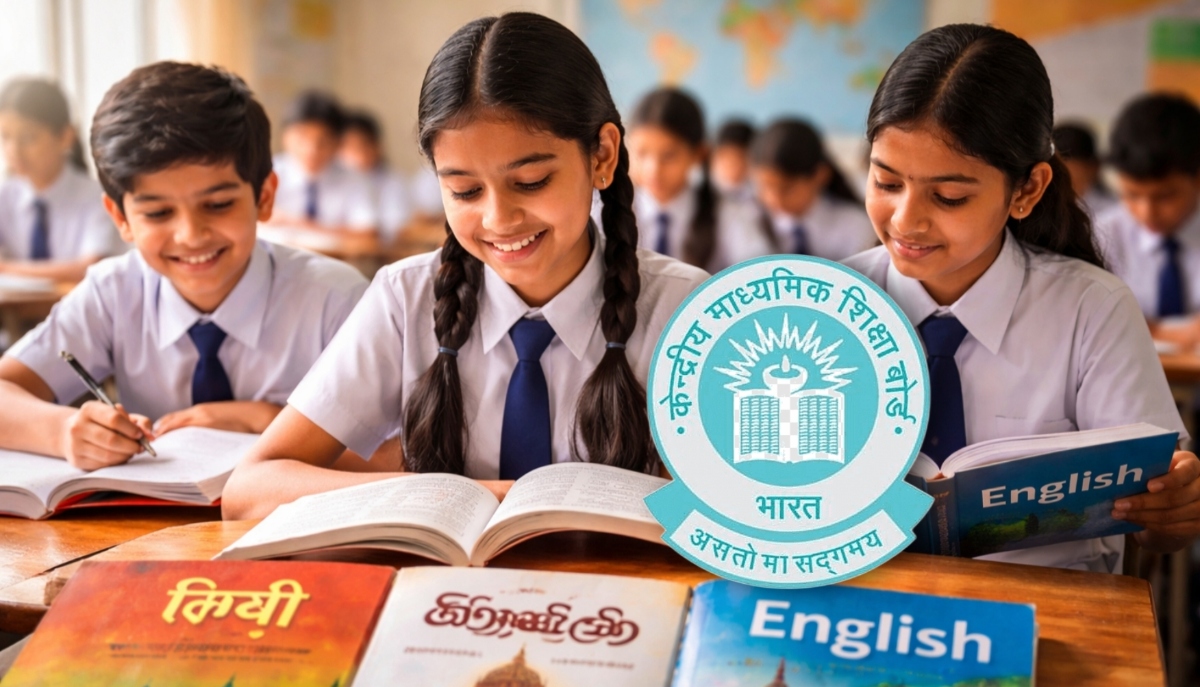
Patna: India’s Central Board of Secondary Education (CBSE) has announced a significant overhaul of its language curriculum, mandating the study of three languages from class 6 starting in the 2026–27 academic session. Under the revised framework, students will be required to learn at least two Indian languages alongside a third language, marking a shift from the existing two-language structure followed by many schools.

The reform is part of broader education restructuring recommended by the National Education Policy (NEP) 2020 and the National Curriculum Framework for School Education (NCF-SE) 2023, both of which emphasise multilingualism as central to holistic learning. Education authorities say the move is designed to enhance linguistic competence while deepening students’ understanding of India’s diverse cultural landscape.
According to the new guidelines, English will be treated as a foreign language within the three-language structure. Schools offering foreign languages such as French or German will still be required to ensure that students study at least two Indian languages. CBSE officials argue that exposure to multiple languages can improve cognitive flexibility, analytical ability and cross-cultural awareness among learners.

The policy also suggests continuity of all three languages through classes 9 and 10, with discussions underway on potentially including the third language in class 10 board examinations from 2031. To support implementation, CBSE plans to introduce third-language options across several Indian languages, including Tamil, Telugu, Malayalam, Kannada, Gujarati and Bengali, accompanied by new textbooks and curriculum resources.
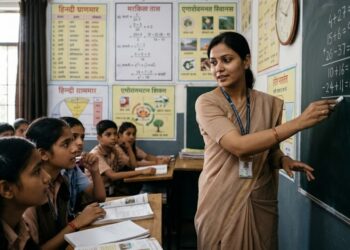
Classes 6 to 8 have been designated as the “middle stage” under the revised structure, where foundational proficiency in the third language will be prioritised. The curriculum will focus on listening, speaking, reading and writing skills, allowing students sufficient time to build comfort and fluency. Education planners say the initiative views language not merely as an academic subject but as a tool for social connection, cultural engagement and national integration.