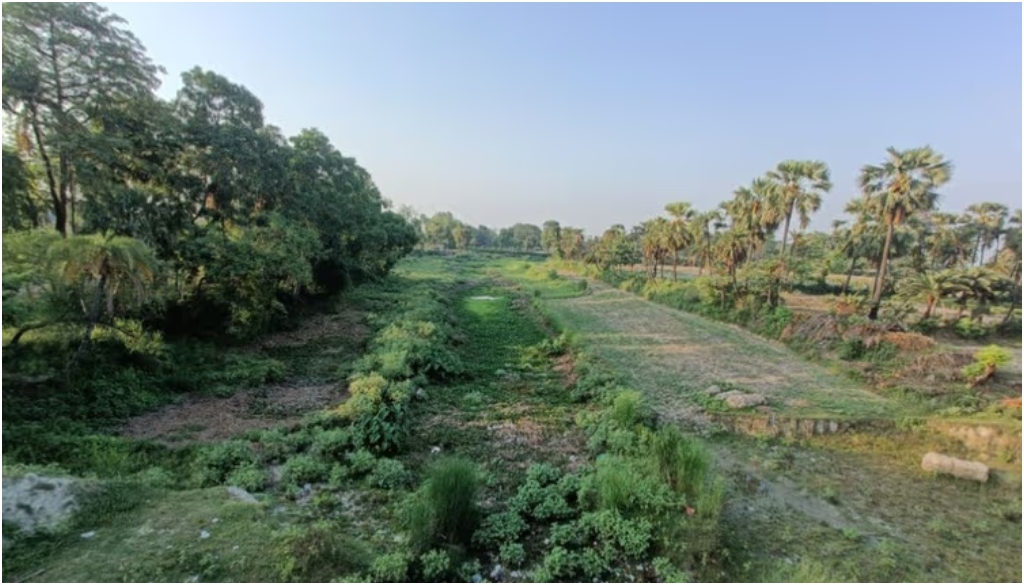
Patna: The historic Chandrabhaga River in Bihar’s Bakhri region is facing an existential crisis. Once considered the lifeline of the area and known for its fierce flooding during the monsoon, the river is now on the verge of drying up completely. Local residents blame administrative neglect, encroachment and environmental degradation for the steady decline of the river and have intensified their demand for restoration efforts.

Once a Source of Floods, Now Reduced to a Dry Channel
There was a time when the Chandrabhaga River overflowed its banks during the rainy season, flooding nearby villages and agricultural lands. To control flooding, embankments were constructed along both sides of the river several decades ago. While these measures helped reduce flood risks, they also disrupted the river’s natural flow. Over the years, the river has shrunk significantly, and in many stretches it has dried up completely.

A River Deeply Linked to Local Traditions
Flowing close to the main market area, the river has long held religious and cultural significance for local communities. For generations, residents have immersed funeral ashes and remains in its waters after cremation rituals. Because of this association, the river is also locally known as the “Chanha River.” Despite its cultural importance, the waterway has gradually fallen into neglect.
Ancient References Found in Vedic Literature
The Chandrabhaga River is believed to have a long and ancient history. References to the river are said to appear in Vedic texts and traditional almanacs. In some cremation-related descriptions, it is referred to as a “Papaharini” (sin-cleansing) river. According to local beliefs, the river originates from the Kanwar Lake (Kabar Jheel) in Manjhaul and flows through Garhpura before merging with the Gandak River near Bagras.
Encroachment and Declining Rainfall Worsen the Situation
Residents say that reduced rainfall over the years, combined with increasing encroachment along the riverbanks, has caused a sharp decline in water levels. In several areas, people have started cultivating crops on land that was once part of the riverbed. This has altered the river’s natural course and reduced the chances of its natural revival.
River-Linking Project Could Offer New Hope
Experts believe the Chandrabhaga River could be revived through the Kabar Project proposed under former Prime Minister Atal Bihari Vajpayee’s river-linking initiative. The project envisaged dredging the river and reconnecting it with the Gandak River. If implemented effectively, experts say the plan could restore water flow and benefit farmers across the region.
Environmental Imbalance a Major Cause
Environmentalists argue that deforestation, loss of biodiversity and changing weather patterns are among the primary reasons behind the river’s decline. Falling rainfall levels and growing population pressure have further aggravated the situation, pushing the river closer to collapse.
Lifeline for Five Panchayats
Stretching for nearly 15 kilometres, the Chandrabhaga River passes through Bakhri town and the panchayats of Ghaghra, Mohanpur, Bagwan, Ratan and Chakchanarpat. Local elders claim the river’s history dates back around 500 years and that it remains an important part of the region’s cultural heritage.
Calls for Restoration Grow Louder
Social activists and local representatives have urged authorities to remove encroachments, launch cleaning drives and undertake a comprehensive river restoration programme. Residents including Pankaj Chaurasia, Shankar Rai, Chandan Chaurasia, Sameer Shravan, Hira Ram, Rajesh Agrawal, Amit Kumar Dev and Yogendra Rai say that without immediate action, the region could lose one of its most significant historical landmarks.
Revival Promises Remain Confined to Election Campaigns
Many residents allege that political leaders routinely promise to restore the Chandrabhaga River during election campaigns but fail to act once voting is over. As the river continues to shrink, public attention is once again turning towards government authorities and elected representatives, with growing calls for concrete steps to save the historic waterway before it disappears altogether.