Patna: “The entire village is burdened with debt. Many people have fled their homes. Now the government is giving Rs 10,000. But tell me, should I use this to pay installments, repay old loans, or start a business? Even before the money arrives, lenders are standing at our door demanding repayment.”

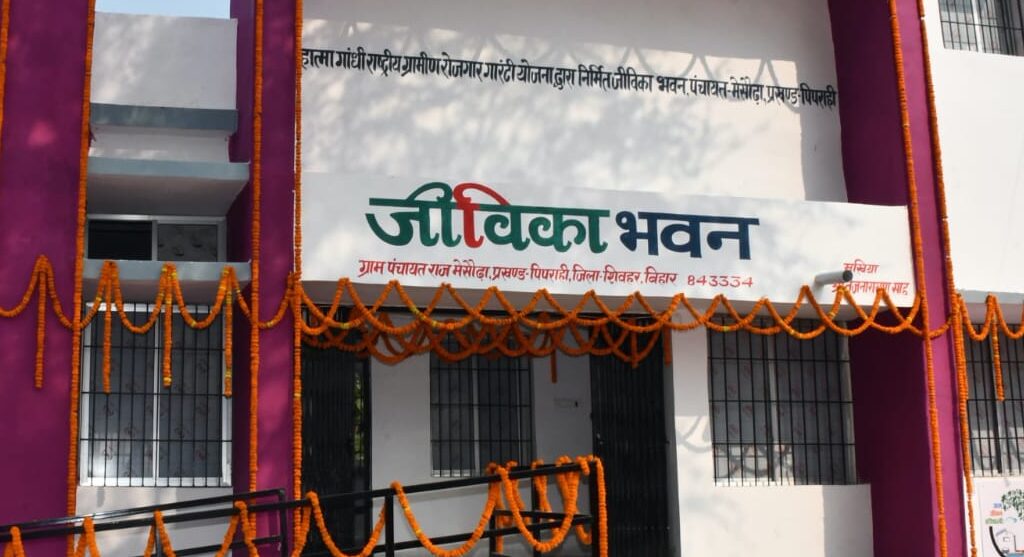
These words of Savita Devi, a Jeevika Didi from Satbhidua village in Bettiah, capture the dilemma faced by lakhs of women in Bihar. She had borrowed from one microfinance company for her husband’s medical treatment, then took more loans to repay the old ones. Today, she is indebted to at least five companies. For her, Chief Minister Nitish Kumar’s latest announcement of Rs 10,000 for every Jeevika Didi—money that will be credited on September 26—offers little relief. “Whatever comes will be swallowed by loan agents,” she says.
The Scale of the Problem
Bihar has 3.41 crore women voters, of whom 1.36 crore are Jeevika Didis—nearly 40 percent of the state’s women electorate. Nitish’s decision to transfer cash directly into their accounts is being viewed as a political masterstroke. But ground realities tell a more complicated story.

Microfinance lending in Bihar has exploded in recent years. In 2020, loans worth Rs 6,000 crore were disbursed, which skyrocketed to Rs 49,500 crore by 2023. Fresh data is not available, but reports of mounting debt and harassment by recovery agents are widespread. In Satbhidua alone, a village of 400 families, nearly half are struggling under debt. Locals say at least 10 families have already fled to escape recovery pressure.
Voices from the Villages
Savita’s story is not unique.
- Another Savita Devi, also from Satbhidua, said she borrowed from six companies—for her daughter’s wedding, her mother-in-law’s treatment, and later her son’s illness. “Recovery agents sit at our doorstep and hurl abuses if we cannot pay. I had to take fresh loans just to repay the old ones,” she said.
- Renu Devi built her home with a Rs 30,000 loan, then borrowed Rs 50,000 more. But when her husband’s income stopped, she fell into default. “My children had to drop out of school because we couldn’t pay their fees,” she said.
- Urmila Devi of Paliganj, Patna, borrowed Rs 1.9 lakh for her son’s education, only to spend more on his medical treatment. “I’ve already paid Rs 30,000 in interest, but the loan is still pending,” she said.
- Sona Devi of Siwan took successive loans of Rs 30,000, Rs 50,000, and Rs 1.5 lakh. “I have only managed to pay back Rs 50,000 as interest. The rest hangs over my head,” she said.
- Supriya Kumari of Katihar borrowed Rs 2.5 lakh to start a bakery, then another Rs 90,000 for her son’s treatment. When her business collapsed, she borrowed again. Today, she owes over Rs 6 lakh. “Recovery agents come daily and humiliate us,” she said.
Microfinance Companies Defend Themselves
Microfinance officials admit repayment is difficult but argue misuse of loans worsens the problem. An area manager of one such firm, speaking off the record, said: “Rules now restrict women from borrowing from more than three places or beyond Rs 2 lakh. But often money is spent on weddings or emergencies rather than income generation, making recovery harder.”
Recovery agents, too, describe high pressure. Rajkumar, an agent, said: “We are told not to return until we collect EMI. If clients don’t pay, we must cover it ourselves. Pressure comes from the top, and we pass it on to borrowers.”
A Burning Political Issue
The debt trap has now become an electoral flashpoint. CPI (ML) leader Dipankar Bhattacharya recently flagged microfinance harassment among Bihar’s top poll issues, along with unemployment, education, and crime. At a women’s debt relief conference in Jamui on September 18, MLC Shashi Yadav warned: “Families are being torn apart by debt. Suicides are increasing. Some are even forced to sell their children.”
Nitish’s New Women’s Employment Scheme
Against this backdrop, Nitish Kumar launched the Women’s Employment Scheme on August 29, 2025. Under it, women aged 18–60 will first receive Rs 10,000. Their business ideas will then be evaluated before they can access up to Rs 2 lakh.
Eligibility rules bar women or their husbands from receiving the benefit if they pay income tax, hold government jobs, or are already covered by another family member.
For Nitish, women remain a critical vote bank. Since 2005, he has introduced measures like 50% reservation in panchayats and liquor prohibition. Women’s turnout has consistently outstripped men’s in Bihar elections—59.7% compared to 54.6% in 2020. In 167 out of 243 seats that year, women voted more than men, helping the NDA secure 90 wins.
Relief or Political Gamble?
While Nitish’s move may consolidate his support among women, its impact on the ground is less clear. As ward member Sanjha Devi of Satbhidua put it: “Those not in debt may use the money to start small work. But those in debt? Their ₹10,000 will go straight to loan agents.”
For Savita Devi and millions like her, the government’s promised relief feels like a drop in the ocean. “Ten thousand rupees cannot create employment,” she said. “We need loan waivers, not another cycle of debt.”