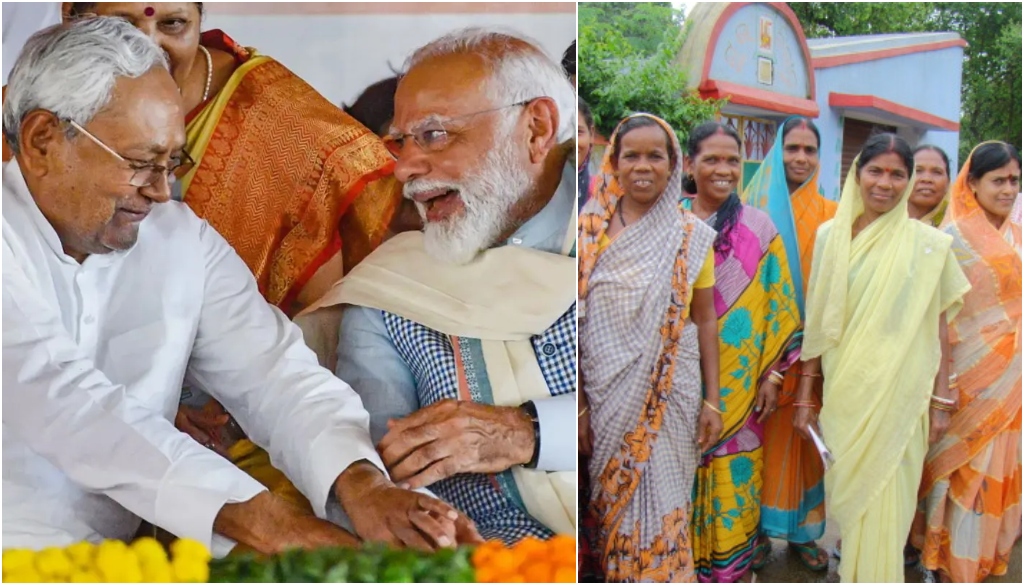
Patna: The National Democratic Alliance’s (NDA) record victory in the Bihar Assembly elections, winning 202 seats, has reignited debate over the Election Commission’s role in allowing cash transfers to women during the election period. Under the Chief Minister’s Women’s Employment Scheme, Rs 10,000 per woman was distributed statewide, even after the Model Code of Conduct (MCC) came into effect on October 6.

The scheme began with the first installment on September 26, 2025, and continued with five installments during the MCC period. Notably, one installment was released on the very day the elections were announced. Additionally, the state government ran advertisements in major newspapers in October, highlighting December payment dates.
This has prompted comparisons with previous instances where the EC intervened. Since 2004, at least ten similar schemes were halted in five states due to MCC violations.

Previous EC Interventions:
- Rajasthan (2023): The Congress government’s Indira Gandhi Smartphone Scheme was suspended. Result: Congress ousted, BJP returned to power.
- Telangana (2018–2023): The Rythu Bandhu scheme payments were halted just before elections. Result: KCR’s government was voted out; Congress won majority.
- Andhra Pradesh (2024): YSR Cheyutha, Vidya Deevena, and six other DBT schemes were stopped. Result: Jagan Mohan Reddy’s government lost; Chandrababu Naidu’s party returned.
- Odisha (2019): KALIA scheme halted for violating MCC; BJD retained power, BJP strengthened.
- Tamil Nadu (2004, 2011): Electricity bill scheme and TV distribution scheme were suspended during elections. Result: AIADMK alliance won 203 of 234 seats in 2011.
In contrast, Bihar’s cash transfers continued without EC intervention. Similarly, Jharkhand’s Maiyaan Samman Yojana funds were reportedly transferred to women’s accounts until the night before voting, despite complaints filed by the BJP. The Hemant Soren government returned to power with a two-thirds majority.
Experts Weigh In
A Patna- based political analyst said, “If money continues to flow during elections, it undermines democratic fairness. Public opinion is influenced, and governance performance cannot be assessed.”
He added, “India’s democracy values decorum, but its application is flexible. The EC should act impartially and ensure equal opportunities for all parties during elections.”