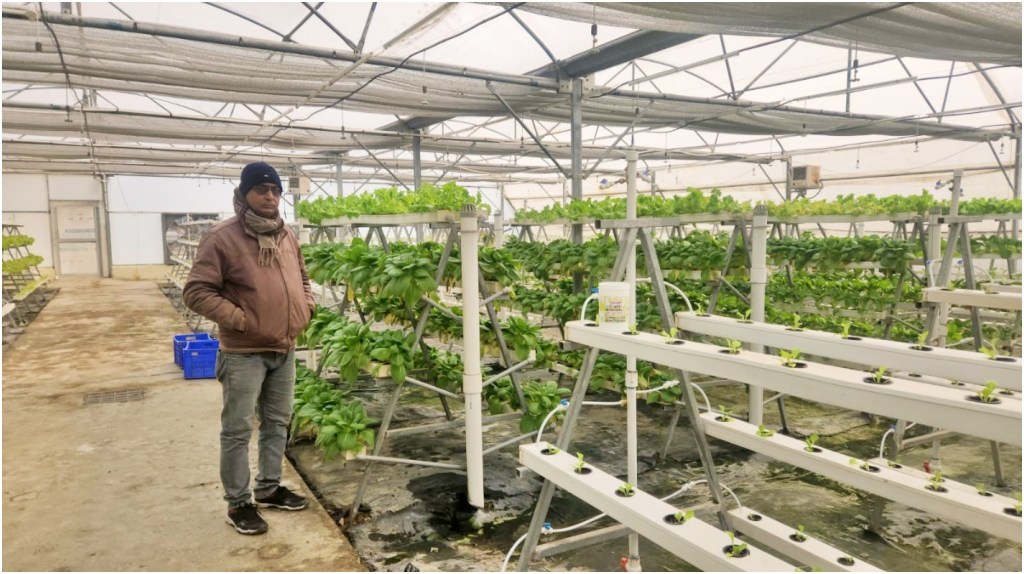
Nalanda: In Chandi, a small town in Bihar’s Nalanda district, agricultural scientists are taking farming to new heights—literally. At the state’s only Centre of Excellence for Vegetables (CoE), plants are grown in the air without soil, using minimal water, thanks to advanced Israeli farming techniques.

The CoE, established under an Indo-Israel collaboration, employs aeroponics and hydroponics—modern methods that spray nutrient-rich water directly onto suspended roots, enabling crops to thrive without traditional soil beds. These techniques are especially useful in water-scarce regions, allowing vegetables to be cultivated on concrete surfaces with minimal resources.
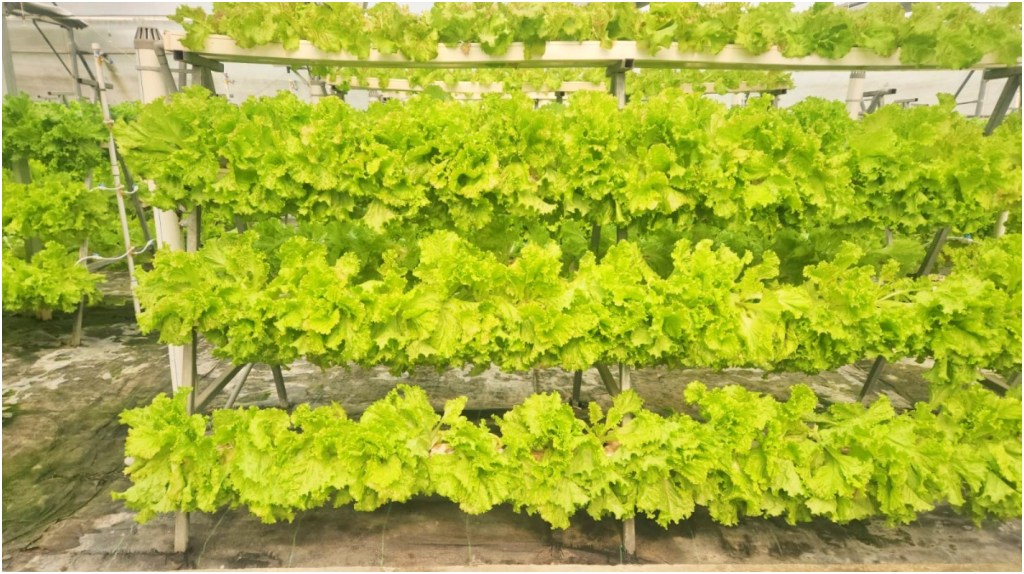

For the past three years, the centre has successfully grown potatoes, tomatoes, and exotic leafy vegetables such as lettuce, bok choy, and basil. “We prepare the plants from seeds. Saplings are ready for transplanting in 15–20 days, and the harvest comes 30–35 days later. The full cycle takes around 60 days,” explained Manoj Kumar Mishra, an agronomist at the CoE. “These crops are in demand in Patna, Gaya, and Rajgir, and they are highly beneficial for health.”
The CoE’s hydroponic unit, covering around 1,000 square metres, has already delivered consignments to hotels and markets in Patna. So far, approximately 123 kilograms of produce—including pak choi sold at Rs 50 per kilogram and basil at Rs 62 per kilogram—have generated a profit of around Rs 32,800. The leafy vegetables are expected to yield an income of up to Rs 1.25 lakh per season, with ideal growing conditions maintained between 24–28°C during the day and 18–22°C at night, at 50–60% humidity.
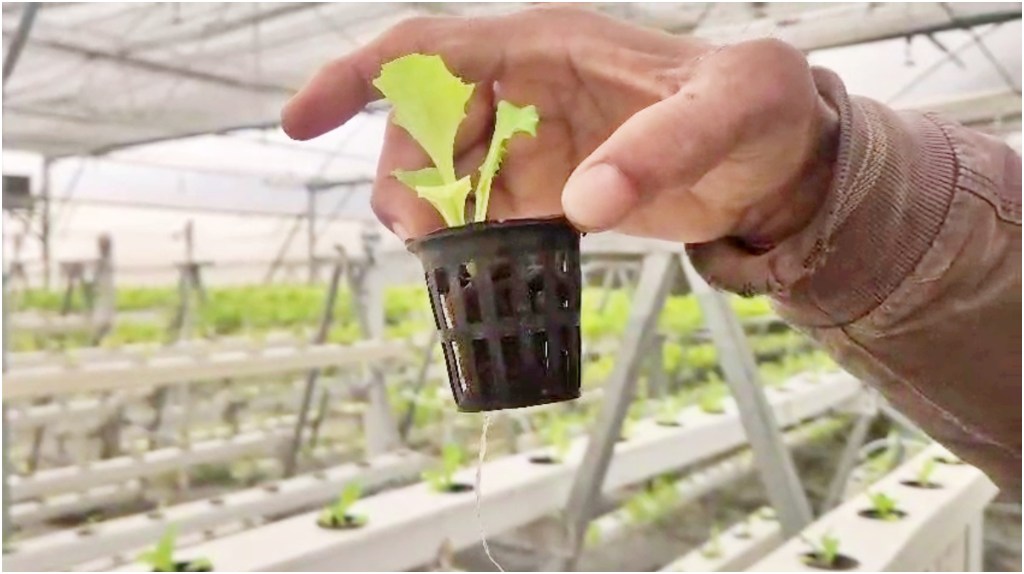
Unlike traditional farming, this method reduces the risk of diseases, as the plants do not come into contact with soil. Nutrients such as nitrogen, phosphorus, potassium, magnesium, calcium, sulfur, zinc, and iron are supplied in precise amounts, ensuring healthy and nutrient-rich produce. Multi-crop varieties like basil and bok choy are harvested at intervals of two to three weeks, while single-crop varieties such as lettuce are harvested once per cycle.
The vegetables grown here are increasingly being branded for wider markets, providing a steady source of income for the centre. “The hydroponic system allows us to grow exotic vegetables that meet the quality standards of five-star hotels,” said Rohitashwar Kumar, in-charge of the CoE.
The Centre of Excellence for Vegetables, a joint initiative of the Indian and Israeli governments, also trains local farmers in scientific and modern cultivation techniques. Its mission is to enhance agricultural productivity, improve incomes, and support self-reliance in the sector.
As the world faces increasing pressure on water and land resources, Nalanda’s “farming in the air” offers a glimpse into the future of sustainable agriculture in India.