Gaya: The historical town Gaya, known across India as a sacred city of salvation, is facing a growing water crisis at the very site where lakhs of devotees come each year to perform pinddaan for their ancestors.

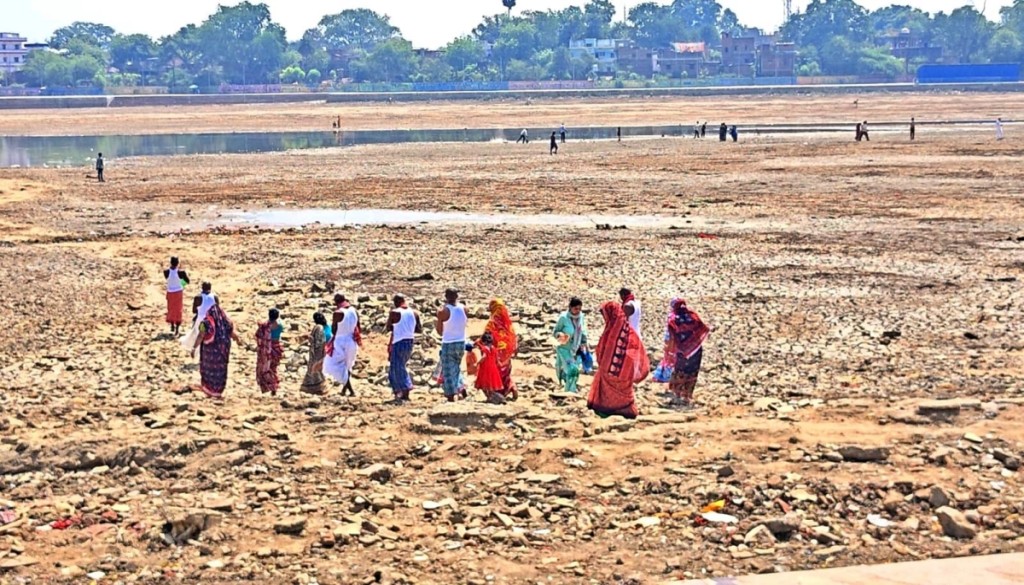
The Falgu river and the historic Vishnupad Temple are central to these rituals, especially during the annual Pitripaksh Mela. But pilgrims and the local priests say the Falgu has become increasingly difficult to use, with dry stretches, polluted stagnant water and shrinking groundwater levels disrupting ceremonies throughout the year.
Sacred river, practical crisis

According to Hindu belief, Falgu is an antahsalila (subterranian) river – flowing beneath the surface after a curse by Goddess Sita. For generations, pilgrims dug shallow pits in the sandy riverbed to draw clean water for rituals.
That practice, locals say, is no longer reliable.
Visitors now report having to buy water or depend on hand pumps, many of which yield little after repeated use.
Apoorva Sarkar, a pilgrim from Tripura, said there was no usable water available for rites.
“We came here for pinddaan, but there is no water. We have to purchase it. Even digging into the Falgu does not bring water now.”
Pollution fears and health concerns
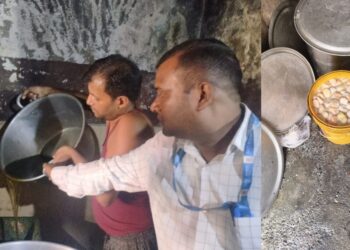
Water stored in the local dam reportedly turns foul within months as flowers, leaves and ritual offerings accumulate. Priests say the stagnant water often becomes unfit even for ceremonial sipping and may pose risks of skin disease or other illness.
Officials released stored water downstream earlier this month, residents said, leaving both the river stretch and the reservoir largely dry.
Local priests claim the water visible in some stretches is now mainly wastewater runoff rather than fresh river flow.
Pilgrims from across India affected
Sarna Ji Sah, who travelled from Assam, said earlier generations described a very different experience in Gaya.
“Our parents told us water could always be found by digging into the Falgu. Now even that is gone. In summer there is hardly any water at all.”
Priests blame silt and poor planning
Gopesh Kumar Barik, a Gayapal panda who assists pilgrims, said the riverbed has accumulated thick layers of silt and soil, reducing seepage and worsening dry-season shortages.
He argued that a flowing water management system would have been more effective than stagnant storage.
Another ritual facilitator, Antu Banerjee, said conditions are manageable only around the Pitripaksh season, when temporary arrangements are made and visitor numbers prompt action.
Religious image under strain
Residents and priests say the crisis is beginning to damage Gaya’s reputation as one of Hinduism’s most important ritual destinations.
An executive engineer in the water resources department, Vikas Kumar, said senior officials had been informed but no firm instructions had yet been issued on cleaning operations. He indicated that major work may begin closer to the monsoon.
Until then, pilgrims arriving in search of sacred rites may continue to face a basic obstacle: the lack of clean water at a holy river famed for eternity.