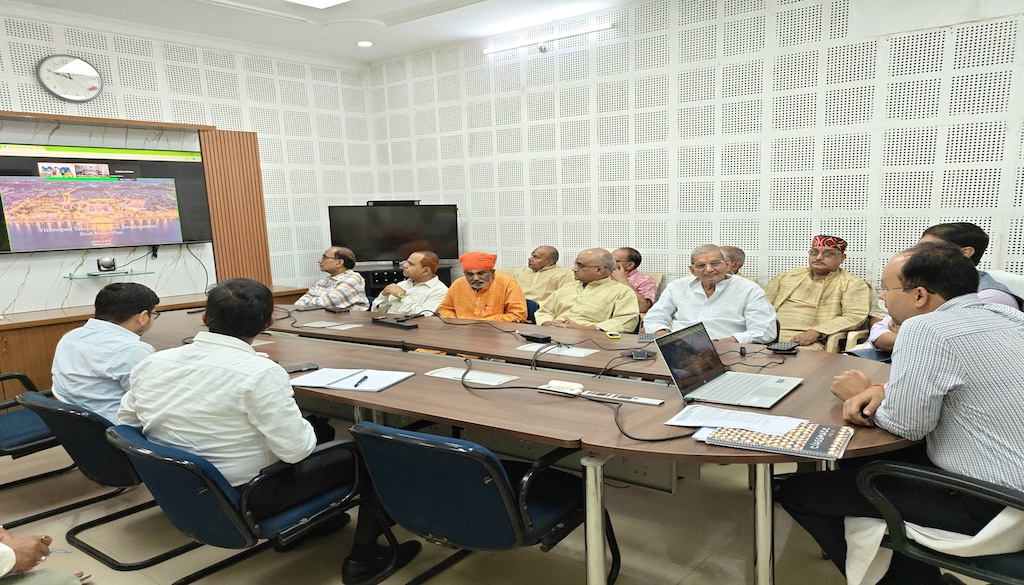
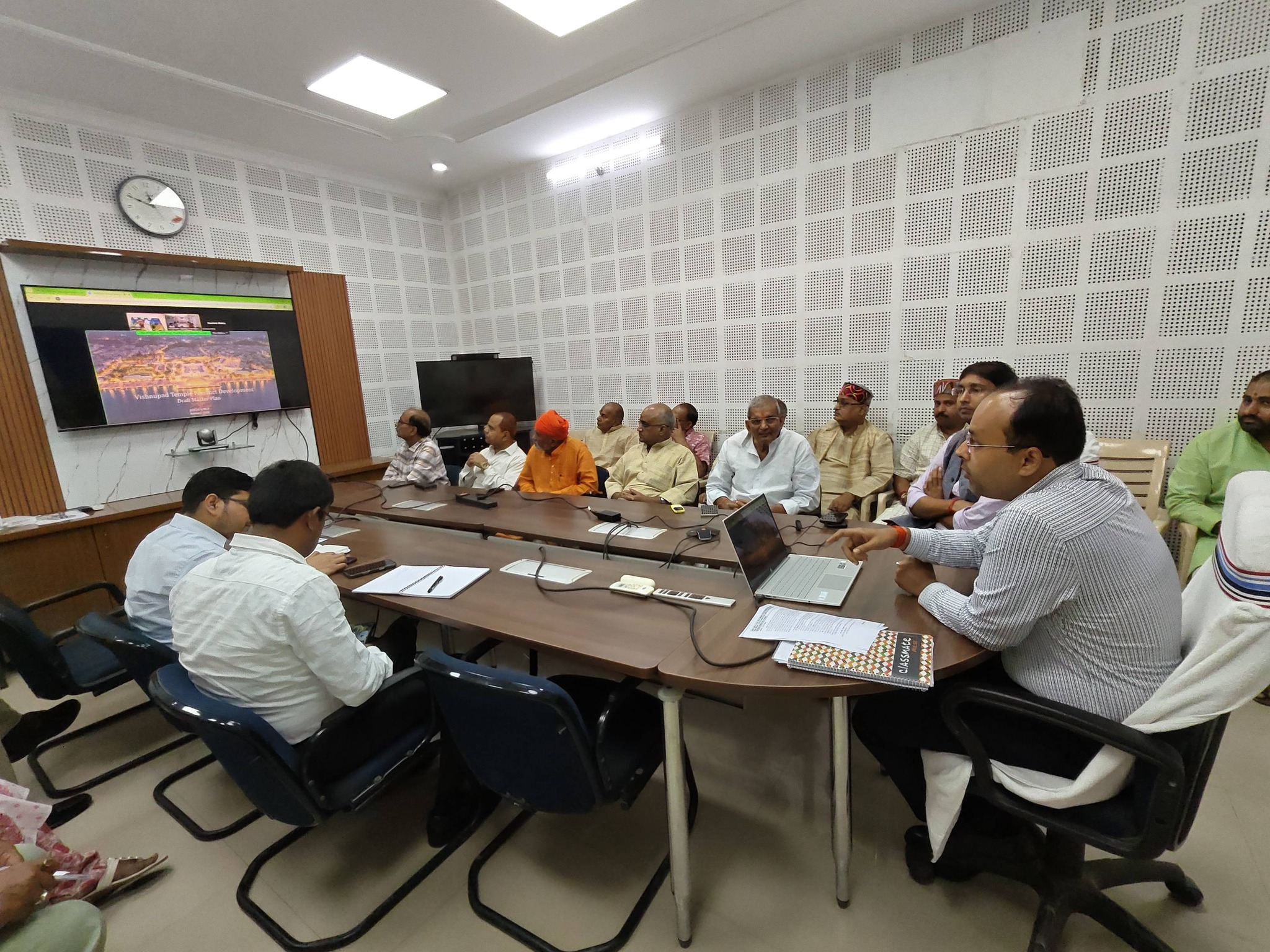
Gayaji: Authorities in Gayaji held a detailed meeting on Monday to discuss plans for the proposed Vishnupad Corridor around the historic Vishnupad Temple, with officials assuring stakeholders that development work would not interfere with centuries-old religious traditions.

The meeting, chaired by district magistrate Shashank Shubhankar at the district headquarters, brought together municipal officials, administrative representatives, priests, public representatives and members of social organisations.
After nearly two hours of discussion, participants agreed that the project would proceed while preserving the religious and cultural heritage associated with the temple.

One of the key decisions taken during the meeting was that the 16 altars located around the sanctum sanctorum of the Vishnupad Temple would remain untouched. Officials said these altars are an integral part of the temple’s religious traditions and will be preserved under the development plan.
The meeting also addressed arrangements related to the traditional Pind Daan ritual, which attracts thousands of devotees to Gayaji every year during the Pitru Paksha period.
Authorities said the centuries-old practice of performing Pind Daan on the banks of the Phalgu River would continue unchanged. However, new facilities such as shaded sheds and improved infrastructure will be developed to make the experience more convenient for pilgrims.
Officials also discussed the expansion and beautification of areas surrounding the temple complex. A proposal was made to preserve the nearby Sijuar Dharamshala as a heritage structure, while other old buildings in the vicinity may also be identified and protected as heritage properties.
Plans were also discussed to reorganise shops and hawkers in the temple area as part of the corridor project. Authorities said the aim is to reduce congestion and improve crowd management for visitors by relocating vendors to designated spaces.
The proposed Vishnupad Corridor project is expected to include a range of modern facilities such as cascade lighting, purified drinking water systems, toilets, changing rooms, underground drainage, a sewage treatment plant, CCTV surveillance and improved parking arrangements.
Other planned facilities include a police assistance centre, fire services and help desks for visitors.
The meeting also discussed including nearby religious and cultural sites such as Sitakund, Mangala Gauri and Akshayavat within the corridor development plan.
Among the proposals presented was the installation of a large statue of Lord Vishnu in the middle of the Phalgu River, along with the use of aerators to help maintain water quality.
During the discussion, priests and representatives of local organisations emphasised that Gayaji’s identity is closely linked to the traditions of Pitru Paksha and Pind Daan.
Officials assured them that the Vishnupad Corridor project would be implemented in a manner that preserves the city’s religious significance while improving facilities for devotees.