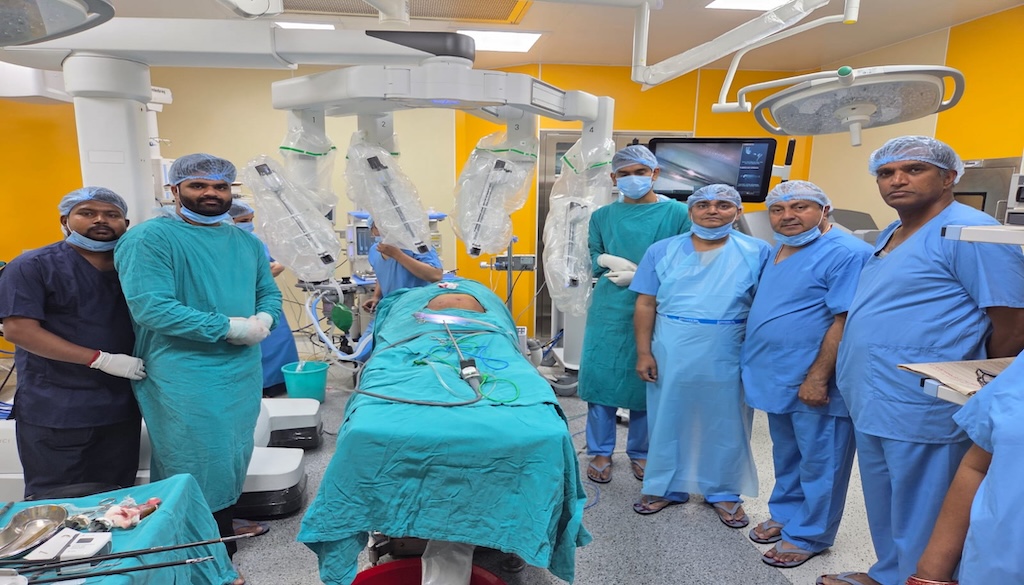
Patna: The Indira Gandhi Institute of Medical Sciences (IGIMS) in Patna has completed its sixth robotic surgery as part of an ongoing clinical trial of robotic surgical procedures, marking a significant step towards introducing advanced surgical technology in the state.

According to Dr Manish Mandal, medical superintendent of IGIMS and head of the department of gastro surgery and liver transplant, the clinical trial of robotic surgery began at the institute on March 10.
On the first day, surgeons from the gastro surgery department successfully performed two robotic procedures. These included a gallbladder surgery on a 26-year-old woman from Sheohar and a combined hernia and gallbladder operation on a 55-year-old man from Siwan.

On the second day of the trial, the institute’s general surgery department carried out two additional robotic surgeries — one gallbladder operation and one hernia surgery.
On Thursday, the third day of the trial, doctors performed two more procedures, including a gallbladder operation and a hiatus hernia surgery, bringing the total number of robotic procedures conducted during the trial to six.
The institute’s urology department has scheduled three robotic nephrectomy surgeries — procedures involving the removal of part or all of a kidney — for the fourth day of the trial. Following this, the department of paediatric surgery is also planning to introduce robotic surgery for children.
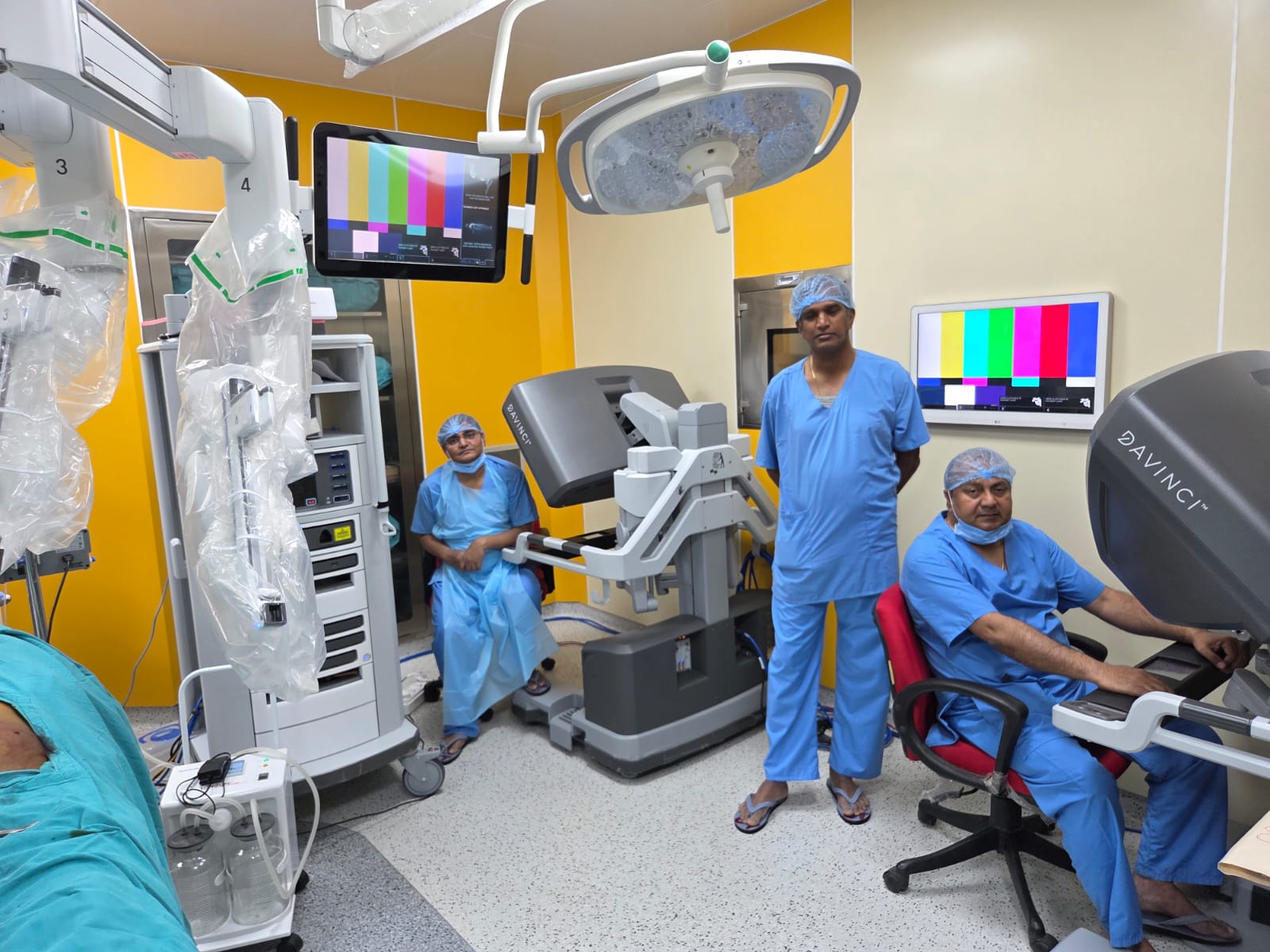
Dr Rakesh Kumar Singh, additional professor in the department of gastro surgery and IGIMS’s first trained robotic surgeon, said the technology would significantly improve the treatment of cancers affecting the oesophagus, small and large intestines and the anus.
He said robotic surgery, assisted by artificial intelligence, allows surgeons to remove cancerous tissue with high precision while preserving surrounding healthy tissue.
“The procedure involves very small incisions and minimal blood loss,” Singh said. “In many cases, patients may not require blood transfusions and can recover faster.”
He added that complex abdominal surgeries could be performed at IGIMS for around Rs 50,000, making the advanced procedure more accessible to patients in the state.
Dr Rohit Upadhyay, head of the department of urology and a robotic surgeon at the institute, said the technology would also be used to treat kidney cancer and severe kidney infections through partial and total nephrectomy procedures.
“These surgeries were previously very difficult using conventional laparoscopic techniques,” he said, adding that robotic surgery improves surgical precision and enables quicker recovery.
Officials said the robotic surgery programme at IGIMS will be formally inaugurated by health minister Mangal Pandey on March 15 after the completion of the clinical trial phase.
Dr Vimuti Prasanna Sinha, deputy director (administration) at IGIMS, said the introduction of robotic surgery would reduce the need for patients in Bihar to travel to other states for advanced surgical treatment.
Dr Binde Kumar, director of IGIMS, said the Da Vinci robotic surgical system installed at the institute is the first such machine in a government hospital in Bihar, enabling patients in the state to access world-class surgical technology closer to home.