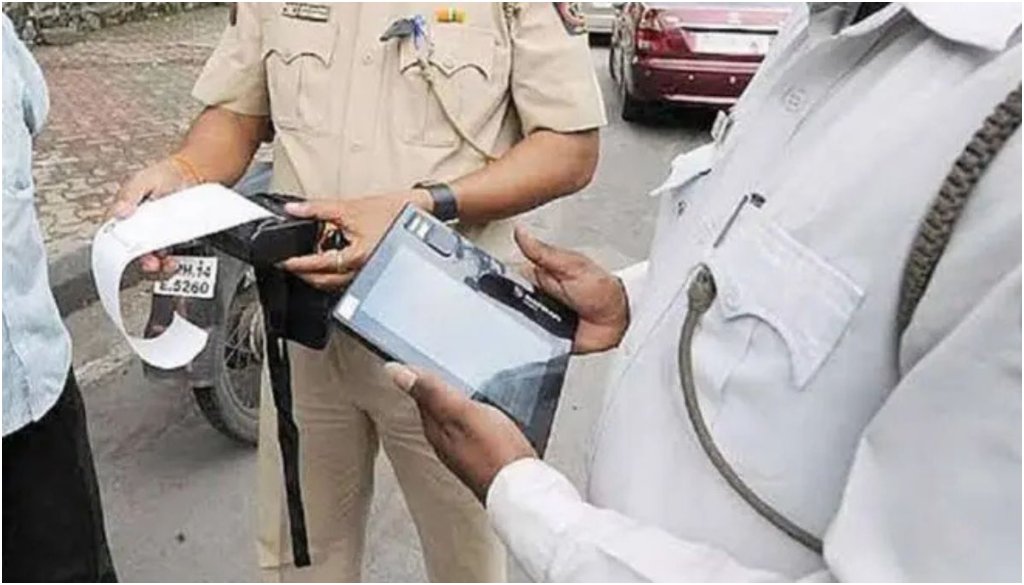
Patna: The Government of India is set to introduce stricter measures under the Motor Vehicles Act to tackle the widespread problem of unpaid traffic Challans, warning that ignoring penalties could result in the suspension of driving licences and cancellation of vehicle registration certificates.

A draft notification prepared by the Ministry of Road Transport proposes a tighter timeline for traffic challans. Under the new rules, fines will be issued immediately within 15 days, or online (e-challan) within three days. Vehicle owners or drivers will then have 45 days to pay the fine or file an online objection with supporting documents. Failure to act within this window will be treated as automatic acceptance of the challan.
The draft introduces severe restrictions for those with outstanding fines. In such cases, all Regional Transport Office (RTO) services will be suspended, with the vehicle and licence marked “Not to be Transacted.” This effectively blocks renewal of registration certificates, licence updates, address changes, or ownership transfers until fines are cleared.

The rules are particularly strict for repeat offenders. Non-payment of fines for three months can trigger licence suspension. Additionally, drivers who accumulate more than three challans in a year for violations such as red-light jumping or dangerous driving could face a minimum three-month suspension. Officials said the move is aimed at deterring habitual traffic violators.
Government data highlights the scale of the problem: only around 40% of traffic fines are recovered nationwide. Recovery rates in major states remain low, with Delhi at 14%, Karnataka 24%, and Tamil Nadu and Uttar Pradesh 27%. While the number of challans issued nearly doubled from 6.7 million in 2021 to 13.6 million in 2024, total recoveries amounted to just Rs 105 crore.
Authorities emphasise that motorists retain the right to challenge incorrect fines. Objections can be submitted online, and if the designated authority does not decide within 30 days, the challan will automatically become invalid.
The government’s move signals a shift from voluntary compliance to enforced accountability. Officials warn that drivers ignoring challans risk not only penalties on the road but administrative restrictions that could immobilise their vehicles and licences.