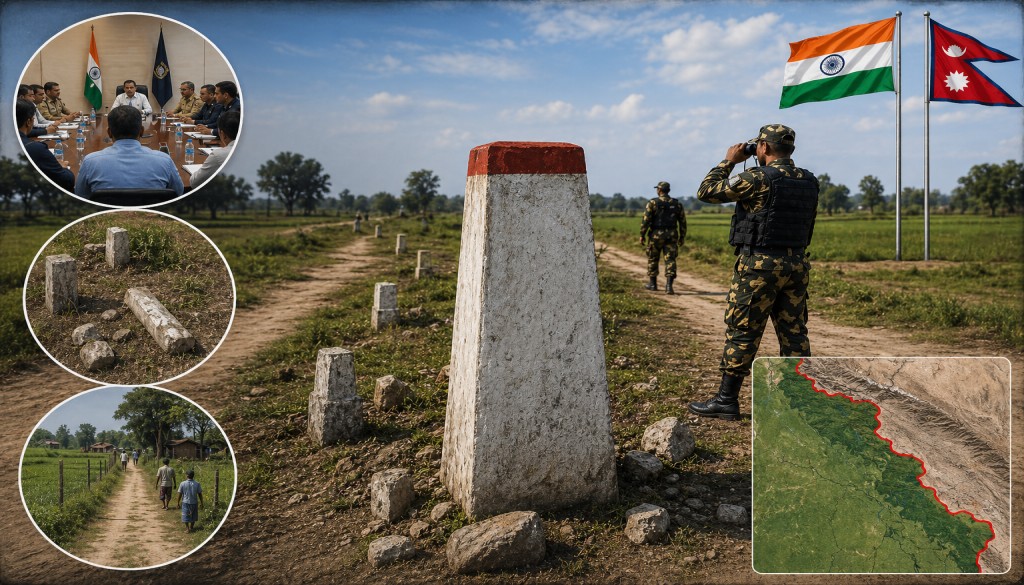
Motihari/Patna: The senior administrative officials of India and Nepal have ordered urgent corrective measures after several subsidiary boundary pillars were reported missing near pillar number 395 in the Bhaluaha border area of East Champaran district, prompting renewed concern over security and border management.

The issue emerged during a high-level review meeting held on April 18, led by Bihar chief secretary Pratyaya Amrit and the director general of police Vinay Kumar. Administrative officials from East and West Champaran, police representatives, the Sashastra Seema Bal (SSB), and other security agencies attended the meeting.
Officials reviewed a range of frontier-related matters, including the condition of border pillars, encroachment, infiltration routes and smuggling activity. Records presented during the meeting reportedly showed that several sub-pillars in the Bhaluaha sector had gone missing.

Local residents later confirmed that a number of smaller markers, which are placed between main boundary pillars to help define the exact alignment of the border, were no longer visible. Villagers said many had previously been clearly identifiable but had either been damaged over time or disappeared altogether.
Though reluctant to speak publicly, several residents privately acknowledged that the clarity of the boundary line was no longer what it once was. Security officials regard missing or tampered border markers as a serious issue, as they can create opportunities for land encroachment, illegal crossings and cross-border smuggling.
The SSB has now been tasked with inspecting damaged and missing pillars and restoring them where necessary. Officials said the process of identifying lost markers and reinstalling them had already begun.
Authorities from both India and Nepal have also agreed to remove encroachments in no man’s land along the frontier, a move seen as essential to maintaining a clear boundary and preventing future disputes.
East Champaran shares an open border of around 100 km with Nepal, making regular monitoring of physical markers critical. Officials said surveys and surveillance along the frontier would continue to ensure irregularities are detected and addressed promptly.
The episode has once again highlighted longstanding challenges in securing and managing one of the region’s busiest open borders.