Gayaji: Kenar village in Bihar’s Gayaji district was once famous across the country for its brass, bronze and copper utensils. For nearly 500 years, families in this small village of Wazirganj block earned their living by making plates, pots, bowls and other household items by hand. Almost every home worked like a small workshop. The sound of hammers on hot metal and the glow of furnaces were part of daily life. Traders from Bihar and other states, and even from Nepal, used to come here to buy utensils. Kenar was known as a village of skilled craftsmen, and its name was respected in markets far away.

The people of the Kasera community kept this tradition alive for generations. The work was hard but special. First, metal was heated in a furnace, then shaped into sheets, and finally beaten and moulded into different utensils. It took time, strength and great skill. But these handmade products were strong and beautiful, and people were ready to pay for them. For many years, this craft gave the village a stable income and a strong identity.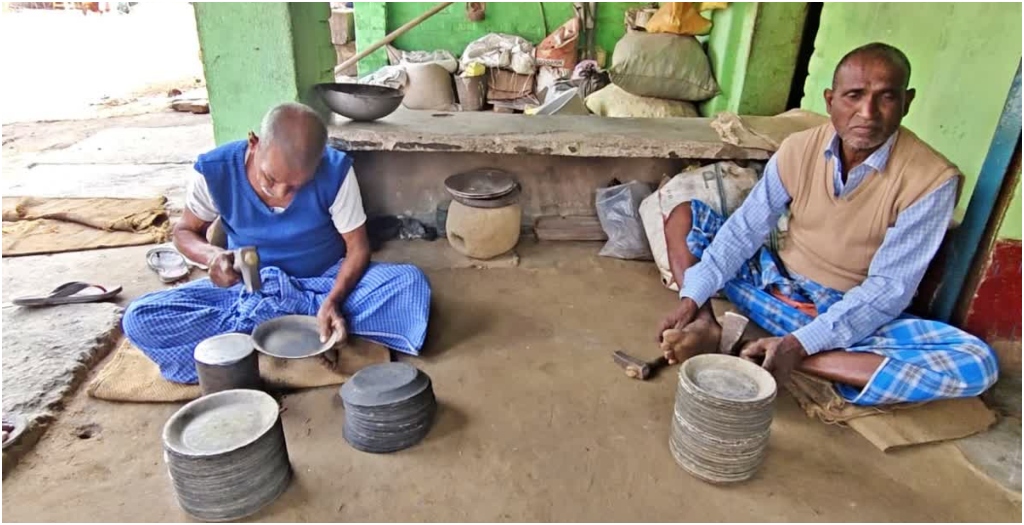
However, things began to change with the arrival of modern machines. Today, factory-made utensils can be produced quickly and cheaply. These machine-made products have flooded the market, making it difficult for handmade utensils to compete. Because the artisans of Kenar do not have enough money to buy modern machines, their products take longer to make and cost more. As a result, customers have slowly turned away from them. Without government help or financial support, the old craft started to collapse.

Many families who once made utensils have now left their ancestral work. Manoj Saw, whose family was part of this trade for generations, now sells eggs to survive. He earns only Rs 300 to Rs 400 a day. Another former craftsman, Arjun Saw, sells utensils on a bicycle. He makes around Rs 200 to Rs 300 daily. Both say that if they had access to machines and loans, they could return to making utensils. But without help, they are forced to find other ways to earn.
Village leaders are worried about the future. They say young people are leaving Kenar to find work in other cities because there are no jobs left in the village. The old utensil market that once made Kenar famous is slowly disappearing. Some people believe that if the government provides rolling machines, training and financial support, the industry can still be saved. Officials have said they will look into the matter, but so far nothing has changed.
Today, Kenar stands at a turning point. Its 500-year-old tradition is close to being lost forever. But the skills and knowledge are still alive in the hands of its artisans. With the right support, this historic craft could rise again. Without it, Kenar may only remain a name in history books — a village that once shone with the fire of its furnaces, now fading into silence.