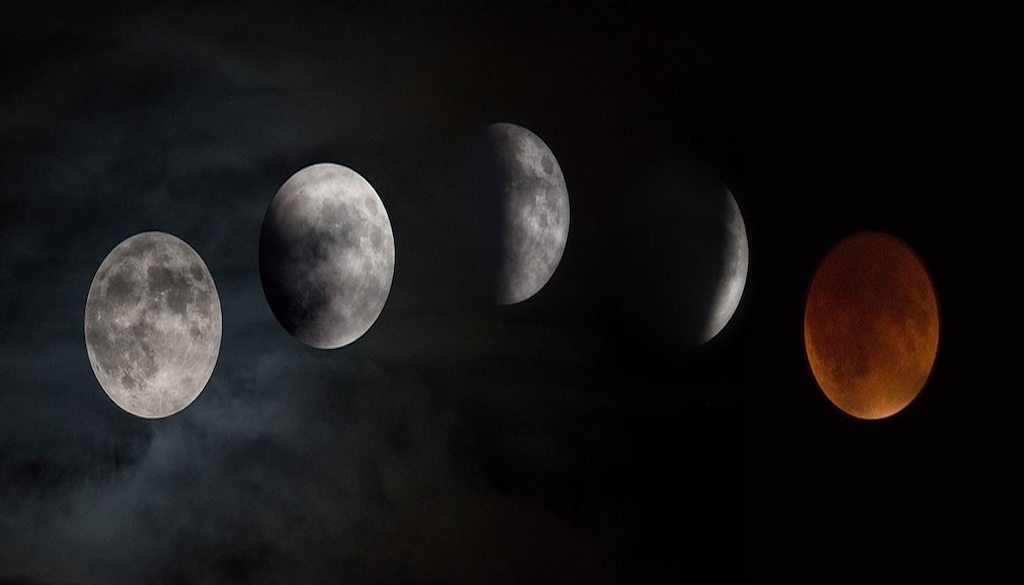
Patna: The skies over India has darkened as the last lunar eclipse of 2025 is unfolding, visible across the country for nearly three and a half hours later in the night. The celestial event, occurring on the full moon night, is steeped in religious belief and ritual practice.

According to Indian timings, the lunar eclipse will begin at 9.57pm and end at 1.26am, lasting a total of three hours and 29 minutes. The touch period starts at 11.09pm, reaches its middle phase at 11.42pm, and concludes with the moksha (end) at 12.23am.
Astrologers note that the conjunction of Rahu and the Moon forms an eclipse yoga, traditionally seen as inauspicious. Yet, within that shadow, people turn to rituals that are believed to soften its effects—reciting mantras, meditating in silence, or reading sacred texts.

Among the most recommended practices is the chanting of the Mahamrityunjaya Mantra, dedicated to Lord Shiva, and the Chandra mantra, each repeated 108 times during the eclipse. Devotees also chant “Om Namah Shivaya,” the Gayatri Mantra, or their Guru Mantra, while others listen to the Ramayana or Bhagwat Katha for spiritual calm. Reciting the Vishnu Sahasranama, Hanuman Chalisa, or Bajrang Baan is considered another way to guard against negative influences.
Temples close their doors during the eclipse, prompting believers to create sacred spaces at home. Sitting quietly, meditating, or chanting are viewed as especially fruitful at this time, with the rituals believed to bring mental peace, strengthen the position of the Moon in one’s horoscope, and ease obstacles in life.
For many, the eclipse is not only a cosmic alignment but also an opportunity: a pause in daily life to reflect inward, chant the names of deities, and embrace practices believed to invite stability and peace.