
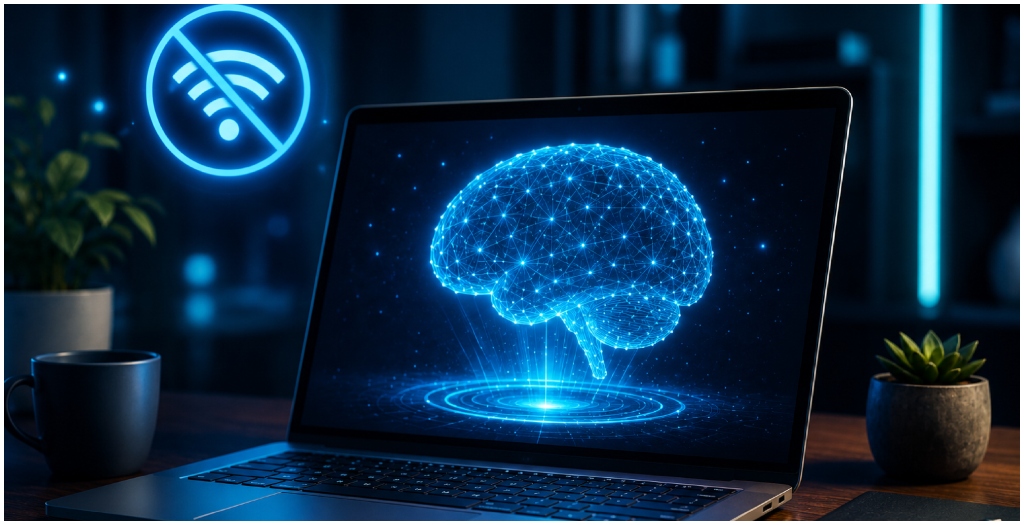
Patna: Artificial intelligence tools like ChatGPT, Gemini, and Claude have become very popular in recent years. But until now, they have always needed an internet connection to work. This is because they run on powerful cloud servers, where your questions are processed and answers are sent back to your device. While this system is fast and efficient, it also means your data leaves your computer and goes to external servers.

A new idea called “Local AI” is now changing this system. Local AI means that the AI model runs directly on your own laptop or desktop computer instead of the internet cloud. These models are called Local LLMs (Large Language Models). With this setup, everything stays on your device. You do not need internet access, and your personal data does not go outside your system.
Two popular tools making Local AI easier are Ollama and LM Studio. Ollama is simple to use and works on Windows, Mac, and Linux. It allows users to download and run AI models with just a few steps, almost like using a chat app. LM Studio is more advanced and is mostly used by developers. It gives extra details like speed, performance, and how the AI is working behind the scenes.

Local AI is useful for people who want privacy or often work without internet. It can help with writing, research, office work, and handling sensitive documents. Since everything runs locally, users do not need to worry about their data being shared online. It can also save money because there are no subscription or usage fees for cloud services.
However, Local AI is not perfect yet. It needs strong computers to run smoothly. Most systems require at least 8GB of RAM, and 16GB or more is better. It also needs a lot of storage space, sometimes up to 100GB, and works best with fast SSD drives. Some AI models are very large and may run slowly on weaker laptops.
Even with these challenges, Local AI is becoming more popular. It gives users more control over their data and allows AI to work even without internet access. Experts believe this could be an important step in making artificial intelligence more personal, private, and widely accessible in the future.