Patna: The cost of the Mandai Weir project on the Falgu river has risen by about 82% from its original estimate, with the Bihar government now approving a revised outlay of Rs 424.21 crore, up from Rs 232.83 crore.

The escalation, cleared by the state cabinet on Wednesday after a third revision of estimates, has been attributed primarily to delays linked to land acquisition and associated logistical challenges.
Despite the cost overrun, officials say the project is nearing completion, with around 90% of the work already finished. The government is aiming to make the scheme operational by May or June this year, ahead of the upcoming kharif season.

Once completed, the project is expected to provide irrigation benefits to farmers across Jehanabad, Patna, Gaya and Nalanda districts, potentially improving agricultural productivity and incomes in the region, where cultivation is heavily dependent on monsoon rainfall.
The idea for the weir was first conceived in 2007, when initial cost estimates were drawn up. However, progress has repeatedly been slowed by disputes over land compensation, with landowners demanding updated rates in line with revised valuations.
In total, land was acquired from 722 farmers, with compensation fixed at Rs 56 crore. According to the state’s water resources department, Rs 34.28 crore has so far been disbursed. Authorities say acquisition and payment processes have recently been expedited in several villages, including Banduganj, Pariyawan and Maiyawan.
A senior official in the department said remaining hurdles had now been addressed and that the final stages of construction could be completed within the next one to two months, subject to continued deployment of machinery and manpower.
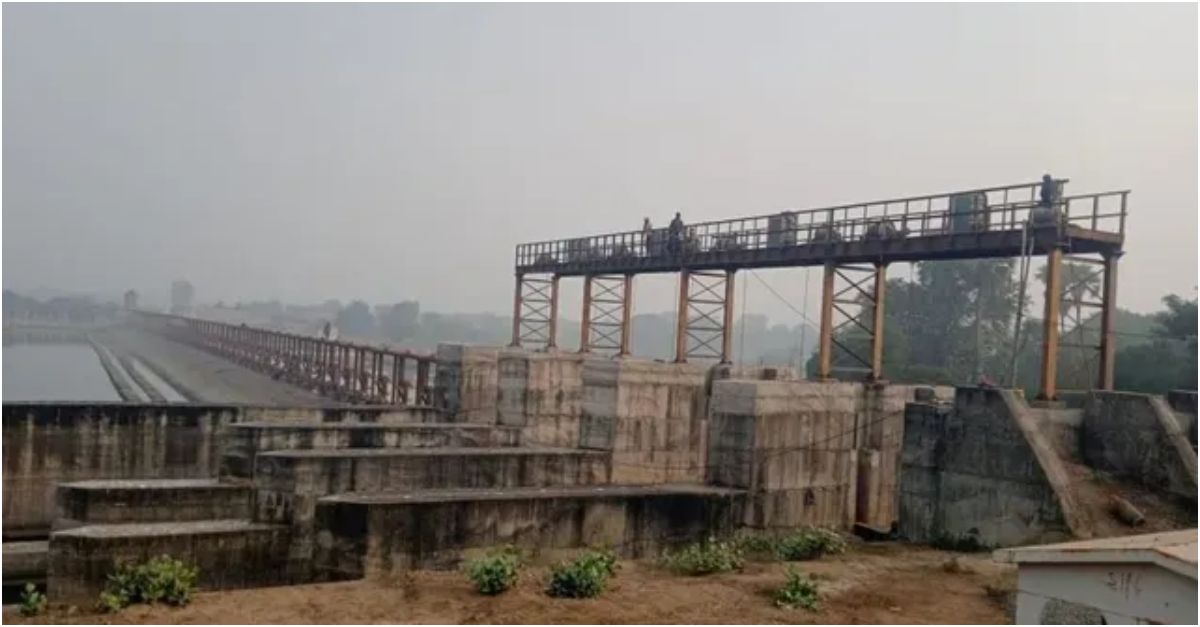
The Mandai Weir itself is a 365-metre concrete structure fitted with 1.20-metre automatic shutters, designed to maintain a pond level of around 61 metres. Alongside the main structure, work is ongoing on a network of right and left bank canals and related infrastructure intended to distribute water across agricultural fields.
During a recent review meeting, the state’s chief secretary directed officials to increase the deployment of excavators and tippers at the site to ensure there are no further delays.
While the sharp rise in costs is likely to draw scrutiny, the project is being positioned by officials as a long-delayed intervention that could bring more reliable irrigation to thousands of farmers in central Bihar, particularly for water-intensive crops such as paddy and maize.