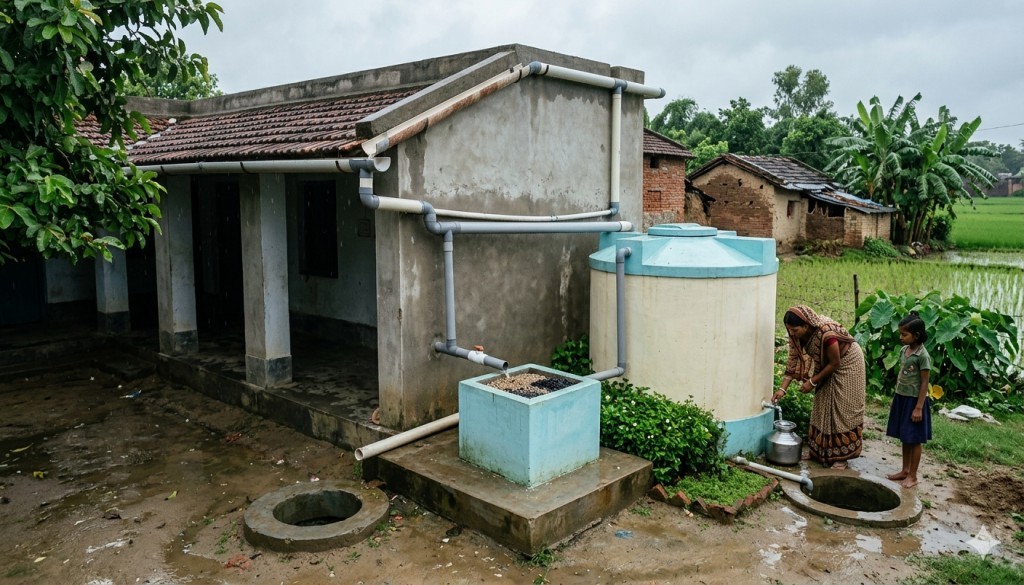
Muzaffarpur/Patna: The non-compliance for installation of rainwater harvesting system in most of the newly constructed buildings in Muzaffarpur hs once again left the residents to grapple with a severe summer water shortage as groundwater levels in the city’s urban areas fall sharply with the onset of rising temperatures, leaving municipal pumps struggling to extract water and private household pumps increasingly ineffective.

The recurring crisis has highlighted the failure to implement groundwater conservation measures introduced by the Bihar government in 2019. The rules made rainwater harvesting systems and soak pits mandatory in government, private and commercial buildings, with penalties including fines and building closures for non-compliance.
Six years later, however, the regulations appear to have made little progress beyond official paperwork.

Under the guidelines, buildings taller than 15 metres or spread across more than 500 square metres were required to install rainwater harvesting systems. Smaller properties were instructed to construct soak pits to aid groundwater recharge. Despite this, compliance across the city remains limited.
Even in public offices, implementation has been patchy. Soak pits were reportedly built in the premises of the municipal corporation and district magistrate’s office, but were never connected to drainage pipes, rendering them largely symbolic rather than functional.
Muzaffarpur has around 60,000 houses and a population of nearly 500,000. With growing dependence on groundwater to meet daily demand, the city’s water table is said to fall by 15 to 25 feet each summer.
Experts warn that rapid urbanisation is worsening the problem. As open land is replaced by concrete surfaces, rainwater is unable to seep into the ground. Instead, paved drains channel rainfall directly out of the city, reducing opportunities for natural recharge.