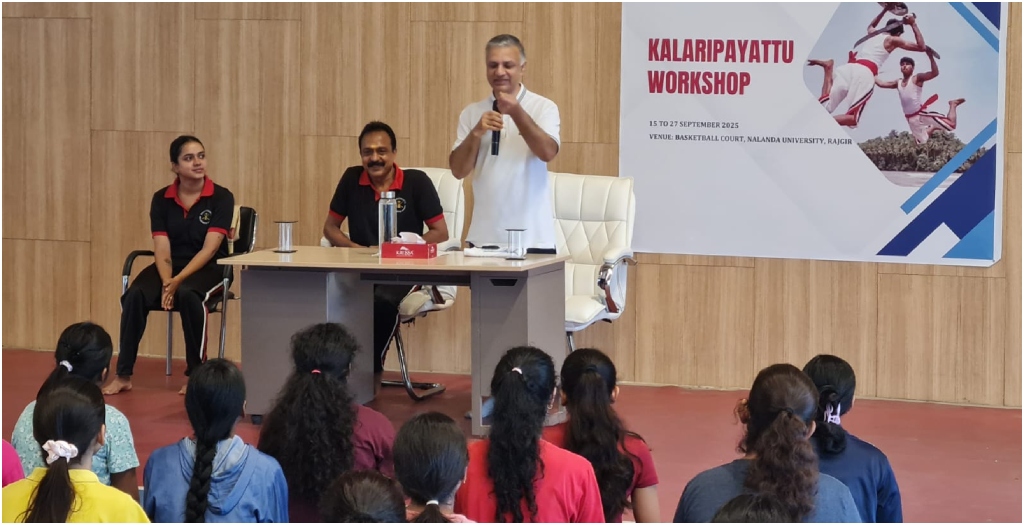
Nalanda: Nalanda University in Rajgir has started a special two-week Kalaripayattu workshop on its campus, giving students a rare chance to experience one of the world’s oldest martial arts. Kalaripayattu, which originated in Kerala, is not just about combat — it brings together physical training, weapon practice, philosophy, meditation, and breathing exercises. This unique art form is often called the “mother of all martial arts” and is known for its graceful movements that improve strength, flexibility, and mental focus.

The event was inaugurated by Vice Chancellor Professor Sachin Chaturvedi, who highlighted the importance of such workshops for today’s generation. He said that Kalaripayattu is not only a fighting technique but a complete practice that unites the body and the mind. He explained that it is deeply rooted in India’s Sanatan tradition and has strong links to yoga and meditation. According to him, learning this art form helps students become more patient, focused and disciplined — qualities that are very useful in today’s stressful world.
The sessions are being led by two renowned teachers from Kerala — Mr Krishnadas, associated with the Parashuram Vallabhatta Kalari Academy, and Ms Kavya Shree. Both of them have years of experience and are dedicated to preserving this traditional practice. They will train students in basic postures, kicks, weapon techniques and breathing exercises that are part of Kalaripayattu. The workshop is designed to help students improve their physical health, sharpen their concentration and develop inner calmness.

Over the next fortnight, students will attend regular morning and evening practice sessions. The training will include physical conditioning to build strength and flexibility, as well as lessons on the philosophy behind Kalaripayattu. The aim is to make students understand that this art is about more than just self-defence — it is a way to achieve harmony of body, mind and spirit.
Nalanda University has been taking steps to bring India’s rich heritage closer to its students through such unique activities. The university believes that learning traditional arts alongside modern subjects creates a balanced education that connects the past with the future. This Kalaripayattu workshop is part of a larger effort to promote experiential learning and to give students opportunities that go beyond the classroom.