
Rajgir: Nalanda University took part in a national conference in New Delhi focused on using technology to improve the lives of tribal communities across India. The two-day event, held at Bharat Mandapam, brought together government officials, researchers and industry experts to explore how science and digital tools can support development in remote and underserved areas. The programme was organised by the Department of Science & Technology along with NECTAR and other partners.

The conference was inaugurated by Vice President C. P. Radhakrishnan, who highlighted the importance of technology in reducing inequality and improving access to opportunities. Speakers at the event discussed how tribal communities often face challenges such as poor connectivity, limited infrastructure and lack of access to modern services, making it harder for them to benefit from India’s rapid digital growth.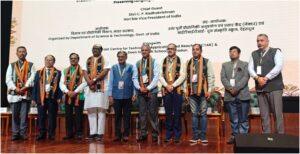
On the second day, Sachin Chaturvedi chaired an important session on technology for livelihoods, entrepreneurship and community empowerment. The discussion included experts like Arun Kumar Sarma, professors from IIT Kanpur, and entrepreneur N. Irabanta Singh. They spoke about how digital tools, local innovation and skill development can help create jobs and improve income in tribal regions.

During his address, Chaturvedi stressed that financial inclusion will only be successful if digital systems work even in areas without stable internet or electricity. He said that strong and reliable infrastructure is necessary to ensure that people in remote regions can access banking and government services. He also noted that schemes like the Pradhan Mantri Jan Dhan Yojana can have a greater impact when combined with digital public infrastructure.
Nalanda University said it remains committed to supporting discussions and initiatives that connect education, technology and inclusive development. The conference highlighted that while technology has the power to bring change, special efforts are needed to ensure that tribal communities are not left behind.