West Champaran: In a world where many old customs are disappearing, a small village in Bihar continues to follow a unique tradition that has been passed down for generations. Naurangiya village, located in the Bagaha area of West Champaran district, becomes completely empty for 12 hours every year on Baisakh Navami, also known as Sita Navami. On this special day, every resident leaves their home and goes into the nearby forest, believing the ritual protects the village from illness, fire and other disasters.

Early in the morning, before 6am, families begin leaving the village with their children, elders and even their cattle and goats. By sunrise, the entire village is deserted. Homes are left open and unlocked, yet villagers say there has never been any theft during the ritual. For the people of Naurangiya, this day is not only about faith but also about trust and community spirit.
According to local belief, the tradition began nearly 100 years ago when the village was facing repeated fires and deadly diseases. A holy man known as Baba Paramhans is said to have prayed deeply to the Mother Goddess to save the village. Villagers believe the Goddess appeared in his dream and ordered everyone to leave the village once every year. Since then, the custom has continued without a break.

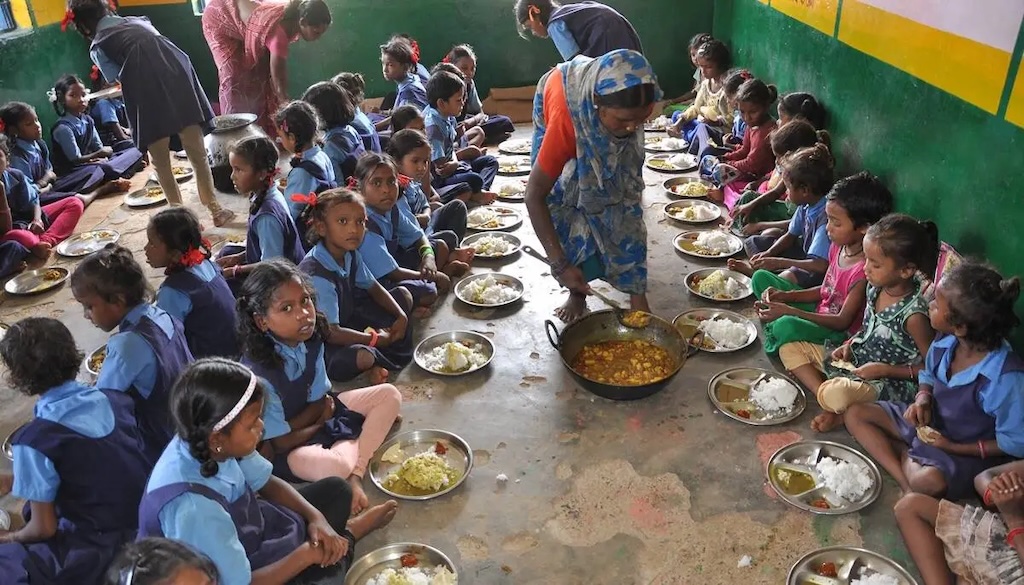
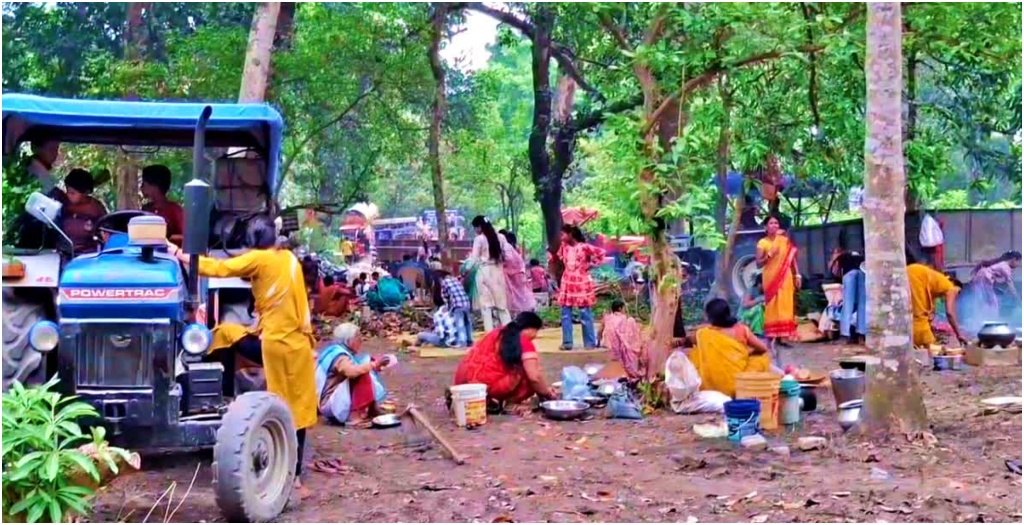
The villagers gather at Bhajani Kutti, a place inside the Valmiki Tiger Reserve forest. There, they worship Goddess Durga, offer prasad and pray for the safety and happiness of the village. After the prayers, everyone cooks food together and shares a meal, creating a festive atmosphere in the forest. The day becomes a celebration of faith, unity and togetherness.
Village priest Deonarayan Puri said the exact beginning of the ritual is not known, but it has been followed by their ancestors for many generations. Village head Sunil Mahto said the tradition is a matter of faith and social harmony. He explained that even sick people are taken into the forest because no one is allowed to stay behind in the village on that day.
Despite modern science and changing times, the people of Naurangiya continue to follow this ancient custom with full devotion. They believe the ritual has protected them from major crises for decades. For them, it is more than a tradition — it is a sacred promise to their ancestors and a prayer for the safety of future generations.