
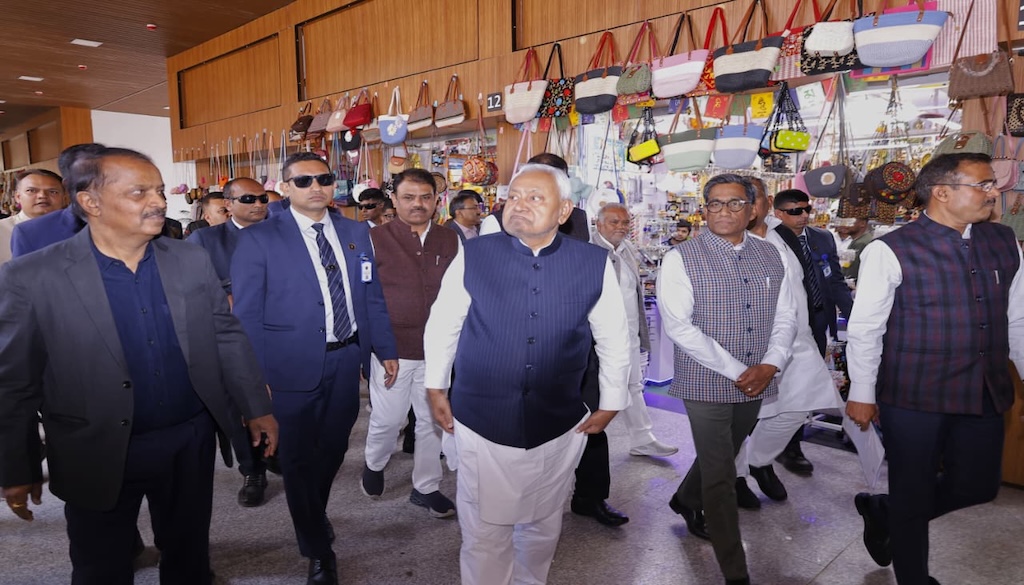
Patna: As Nitish Kumar prepares to step away from Bihar’s chief minister’s office and move to the Rajya Sabha, attention is turning to a powerful but less visible pillar of his two-decade rule: the state bureaucracy.

For years, Nitish’s governance model relied heavily on a small group of senior IAS officers who were entrusted with executing key policies and flagship programmes. With the long-serving chief minister now shifting his political focus to Delhi, many observers believe Bihar’s administrative power structure may be headed for its most significant reset in decades.
A Political Constant For Two Decades

Nitish Kumar has been the defining figure in Bihar’s politics for nearly 20 years. Despite changing alliances several times, he managed to retain the chief minister’s chair and remained the central axis of governance in the state.
Alongside that political continuity emerged another enduring feature of the Nitish era — the prominence of bureaucrats in decision-making.
Officials familiar with the workings of the Patna secretariat say Nitish often preferred to drive policy through senior civil servants rather than rely on his ministers. Over time, this created a system where key administrative officers became central to both policy formulation and implementation.
Bureaucracy Over Politics
Many in Bihar’s political class have long argued that bureaucrats enjoyed unusual authority during Nitish’s tenure.
At times, ministers themselves publicly complained about being sidelined. In 2021, social welfare minister Madan Sahni, a JD(U) leader, even offered to resign after alleging that the additional chief secretary of his department, Atul Prasad, ignored his directions regarding transfers and postings.
Similarly, BJP legislator Haribhushan Thakur “Bachol” once remarked that elected representatives had been reduced to “peons” before the powerful bureaucracy.
Such tensions reflected a broader complaint within political circles that bureaucrats often held the upper hand in administrative decisions.
The “Kitchen Cabinet” Of IAS Officers
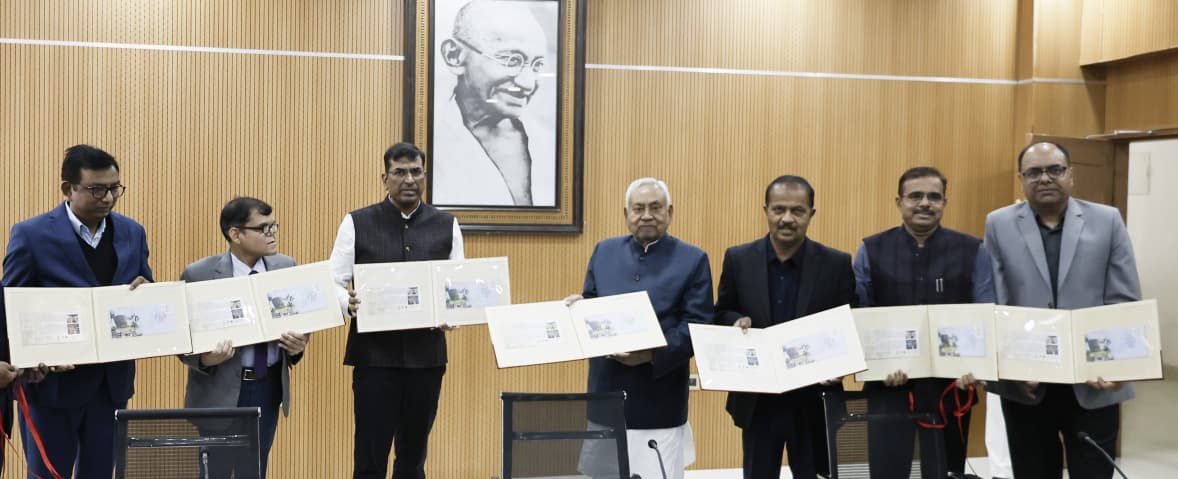
Several of Nitish’s most significant policy initiatives — from road construction to improvements in electricity supply — were closely associated with particular IAS officers.
Within the chief minister’s secretariat and key departments, a small circle of influential officers was widely referred to in political circles as Nitish’s “Nav-Ratan” or informal “kitchen cabinet”.
These officials were believed to play a central role in shaping policy decisions, overseeing flagship programmes and coordinating across departments.
Their influence extended beyond their formal administrative roles, with some receiving key postings, service extensions after retirement or appointments to boards and state corporations.
Limited Accountability Debate
Critics of the system have long argued that the concentration of power within a few bureaucratic circles reduced political oversight.
Anti-corruption drives in Bihar have frequently focused on lower-level officials — such as clerks or block-level staff — caught accepting small bribes, while senior administrative officers rarely faced similar scrutiny.
Opposition leaders have often raised this issue. Political strategist-turned-politician Prashant Kishor has repeatedly alleged that Bihar’s government was effectively run by “a handful of bureaucrats”.
The Rashtriya Janata Dal has also accused Nitish of relying excessively on a bureaucratic coterie rather than elected representatives.
Leader of opposition Tejashwi Prasad Yadav has previously argued that key decisions in the government were being taken by advisers and officials rather than the chief minister himself.
A Bureaucratic System Facing Uncertainty
With Nitish stepping away from the chief minister’s office, many bureaucrats who rose to prominence during his tenure are now facing uncertainty about their future roles.
Within the secretariat in Patna, discussions have already begun about how a new political leadership — particularly if led by the BJP — may reshape the administrative structure.
Senior officials who enjoyed close proximity to Nitish may find themselves reassigned or replaced, while officers who remained outside his inner circle could see new opportunities.
For Bihar’s bureaucracy, which evolved alongside Nitish Kumar’s long rule, the transition may mark the end of a distinctive administrative era — and the beginning of a new political-administrative balance in the state.