By Sudhanshu Kumar
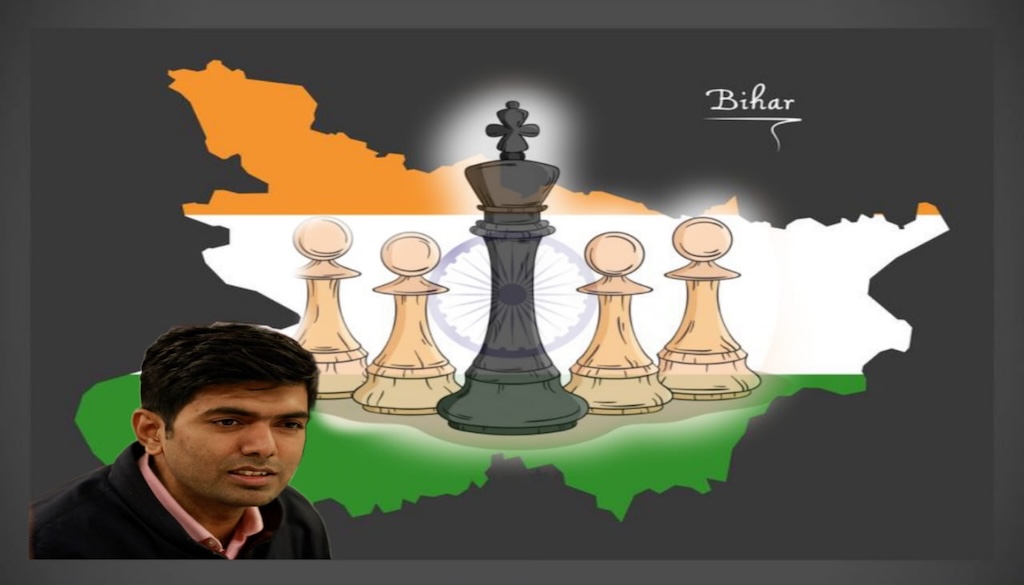
Patna: In geometry, the sum of any two sides of a triangle always exceeds the third. In Bihar’s political arithmetic also, however, alliances prove the point: any two major players—BJP, RJD, or JDU—dominate a third in a triangular contest. The 2025 assembly results affirm these three as the state’s enduring forces, each commanding captive vote banks rooted in caste and religious divisions. This rigid voter alignment defines Bihar’s electoral landscape.

Within the NDA, Narendra Modi’s national appeal and the BJP’s superior election machinery offset anti-incumbency against Nitish Kumar’s long tenure as Chief Minister. The BJP’s growing dominance is evident in the JDU’s reduced numbers of seat share contested within the alliance—a steady decline over successive elections.
Anti-incumbency Overwhelmed by Engineering

Election engineering trumped, substantive issues failed to sway preferences. Prashant Kishor’s Jan Suraj Party, though new, captured public attention and reshaped the narrative around education, migration, employment, and corruption. This forced the ruling coalition to recalibrate their election strategy: relying on last-minute freebies, cash transfers, and leveraging networks like JEEViKA alongside administrative and fiscal resources. Notably, this marked a sharp departure from Nitish Kumar’s earlier opposition to such populism when JDU held greater sway in the state.
Vacant Opposition Space
The RJD’s lower number of seats—first in the Lok Sabha polls, then in the 2025 assembly—signals an opposition vacuum. All three major parties have shared power in the past five years, and similar fluidity cannot be ruled out ahead. This blurs the opposition identity for BJP and RJD, neither of which led the government in the last two decades. The RJD, moreover, carries the lingering baggage of its past rule.
What sustains opposition votes is hyper-local candidate selection tailored to caste demographics. Yet consistency eludes: parties alternate between government and opposition, eroding the RJD’s credibility as a reliable alternative to Nitish Kumar.
Conclusion
The results ensure governmental continuity but leave Bihar’s opposition space contested and open. The government returns unchanged, but Bihar’s opposition space lies open. Jan Suraj has name recognition and issue ownership; converting sympathy into votes demands patience, consistency, and relentless pressure on the regime. Until a new force fills the vacuum, Bihar’s triangle will keep tilting toward the duo in power.
(The author is Patna based Professor of Economics and Public Policy. Views are personal. He can be reached at X handle @onlysudh)