Patna: Nearly 9,822 teachers of 1,637 madrasas recognized by the Bihar Madrasa Board have been teaching without salaries for more than a decade. Despite repeated assurances, no action has been taken, leaving around 50,000 family members of these teachers in financial distress.

Teachers allege that they have been running from the Madrasa Board to the Education Department and the District Education Officers (DEO), but their pleas remain unheard. “Our files are gathering dust in government offices. We have been waiting for over 12 years,” a teacher said.
Of the 1,637 affected madrasas, 95 percent are Wastania (up to Class 8) and 5 percent are Fauquania (matriculation level). Most teachers are forced to take tuitions, earning just ₹4,000–₹5,000 per month to sustain their families.

Background of the Issue
In 1987, the Bihar government recognized 2,460 madrasas. In 2005, it was announced that teachers of these institutions would be paid salaries. Later, on 15 February 2011, the state cabinet issued a notification that salaries would be disbursed after verification by DEOs.
In 2013, teachers of 205 madrasas began receiving salaries. In 2015, grants were extended to 609 more madrasas, and subsequently to 9 girls’ madrasas. However, salaries of 1,637 madrasas remain pending to date.
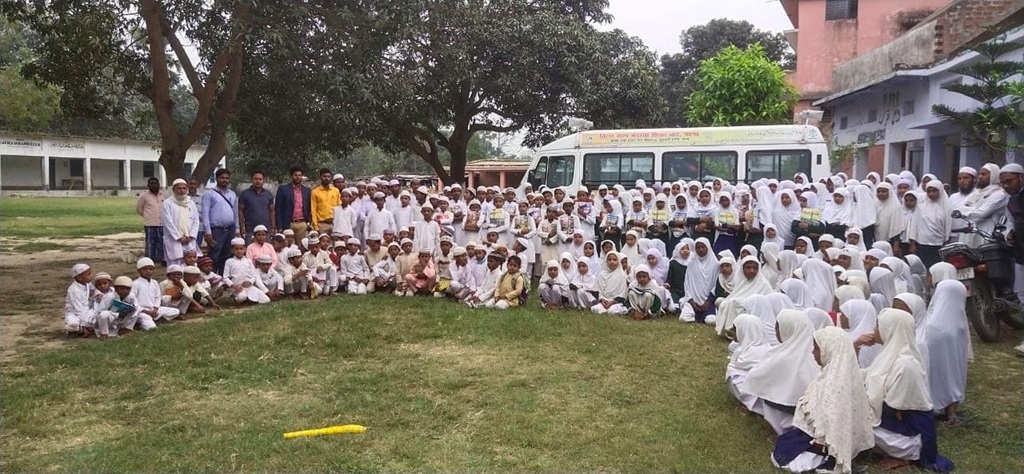
Teachers say their institutions were thoroughly inspected multiple times at the DEO level, with details collected on infrastructure, staff strength, and land. Despite this, the files remain stuck between the DEOs, the Board and the Education Department. Even after High Court intervention, no progress has been made.
Science Teachers Hit Hard
The plight of science teachers in madrasas paints an equally grim picture. In 2008, 226 science teachers were appointed in 100 madrasas under the 1128 category. A graduate teacher was paid ₹6,000 and a postgraduate ₹12,000.
Seventeen years later, their salaries remain unchanged, forcing nearly 40 teachers to quit. Today, only 186 science teachers continue to work under the same pay structure.
Comparisons with other schemes add to their frustration. “In 2013, the government launched Talimi Markaz where teachers were appointed at ₹3,500. Today, they earn ₹22,000, but we are still stuck at ₹6,000–₹12,000,” said one science teacher.
Teachers’ associations have demanded immediate government intervention, warning that the delay in salary payments is pushing thousands of families into poverty and threatening the education of madrasa students across Bihar.