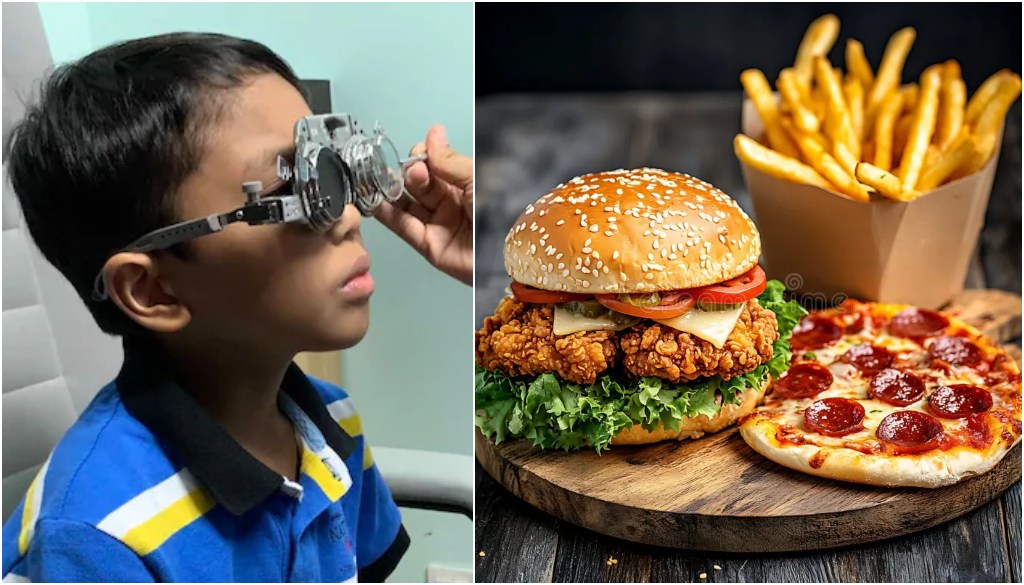
Patna: Doctors in Bihar have raised concerns about a growing number of children presenting with eye problems that they say may be linked to frequent consumption of fast food such as pizzas and burgers.

According to a recent assessment by the Patna Ophthalmological Society, examinations of hundreds of children attending outpatient departments at major hospitals in the city – including AIIMS Patna, PMCH, NMCH and IGIMS – suggest a pattern of deteriorating eyesight associated with poor dietary habits.
Ophthalmologists involved in the review said children who consume fast food several times a week are increasingly being diagnosed with retinal inflammation, early-onset myopia and other vision-related problems, often requiring strong corrective lenses at a young age. The findings have prompted plans for an awareness campaign targeting both children and parents.

Dr Vidyabhushan Kumar, an assistant professor in the ophthalmology department at IGIMS, said many young patients report symptoms such as eye irritation, redness and blurred vision. “On examination, we often find that these children have low levels of physical activity, rising obesity and a diet dominated by processed foods,” he said. “This combination is contributing to conditions such as dry eye, computer vision syndrome and progressive short-sightedness.”
The Patna Ophthalmological Society’s president, Dr Sunil Kumar Singh, said the way fast food is prepared could also be a factor. He pointed to the repeated use of cooking oil in commercial kitchens, which he said can generate harmful compounds that may trigger inflammation in the retina. “High levels of preservatives, excessive cheese and a lack of essential vitamins in these foods can lead to nutritional deficiencies, including vitamin A deficiency, which is critical for eye health,” he said.
Doctors warned that if such eating habits persist, children could face a higher risk of long-term vision impairment, including cataracts and macular degeneration later in life.
Health specialists emphasised that diet and lifestyle changes can significantly reduce these risks. They recommend a balanced diet rich in green leafy vegetables, carrots, fruits, eggs, fish and nuts, along with regular outdoor activity in natural light. Limiting screen time and ensuring proper lighting while reading or studying are also seen as essential steps in protecting children’s eyesight.
“Small changes in daily habits can make a big difference,” Dr Kumar said. “Ignoring them could have lasting consequences for a child’s vision.”