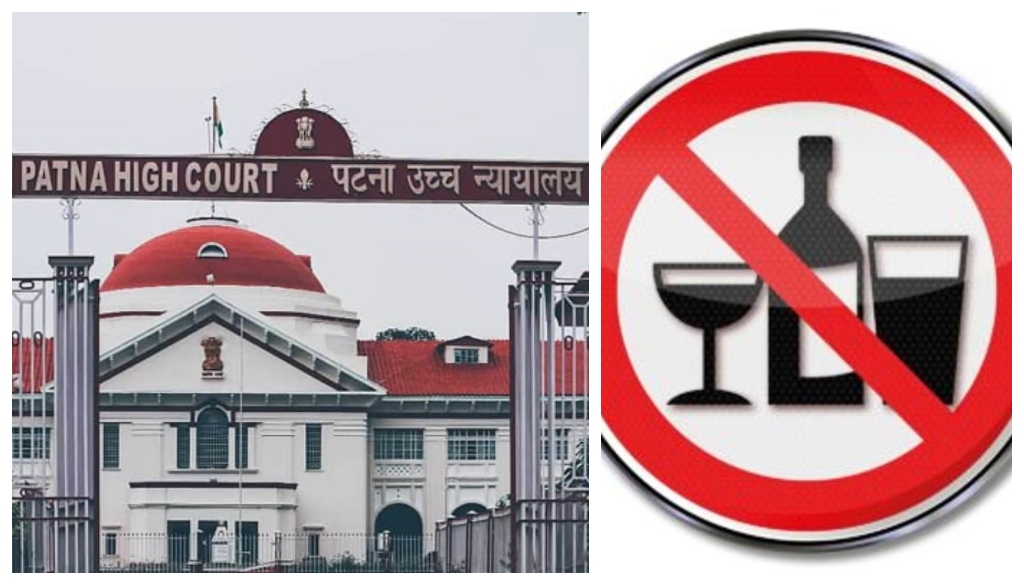
Patna: The Patna high court has ruled that property cannot be sealed or confiscated merely because liquor is recovered from a premises, clarifying that authorities must prove the owner’s direct involvement in the storage or trade of illicit alcohol before taking such action.

The division bench of Justice Mohit Kumar Shah and Justice Alok Kumar Pandey delivered the order while hearing a petition filed by Dayamanti Devi. The court declared the land seizure by the administration illegal, set it aside and directed officials to de-seal the property within two weeks.
The case arose from Excise Police Station Case No. 873/2024 in Nawada district. According to records, on 13 December 2024 police recovered around 1,500 litres of illicit foreign liquor from two accused persons. Separately, about 2.625 litres of liquor was found in a sack concealed in garbage on land owned by the petitioner. The administration subsequently sealed the land and initiated confiscation proceedings.

Appearing for the petitioner, advocate Deepak Kumar argued that Dayamanti Devi had no connection with the case. She was neither named as an accused nor was any direct or indirect link established between her and the recovered liquor. He contended that sealing property solely on the basis of recovery, without establishing complicity, violated both statutory safeguards and principles of natural justice.
The state, during the hearing, was unable to demonstrate any evidence showing the landowner’s involvement in storing or smuggling illicit liquor. The court observed that sealing a citizen’s property without concrete proof infringes the fundamental rights guaranteed under Articles 14 and 300A of the Constitution.
In its order, the bench emphasised that discovery of alcohol on a premises, by itself, cannot justify confiscation. Unless the owner’s participation in illegal activity is established through due process, such action would be unlawful, the court said.
The administration has been directed to de-seal the petitioner’s land within two weeks and to ensure that future action under the prohibition law is taken strictly in accordance with legal requirements.