
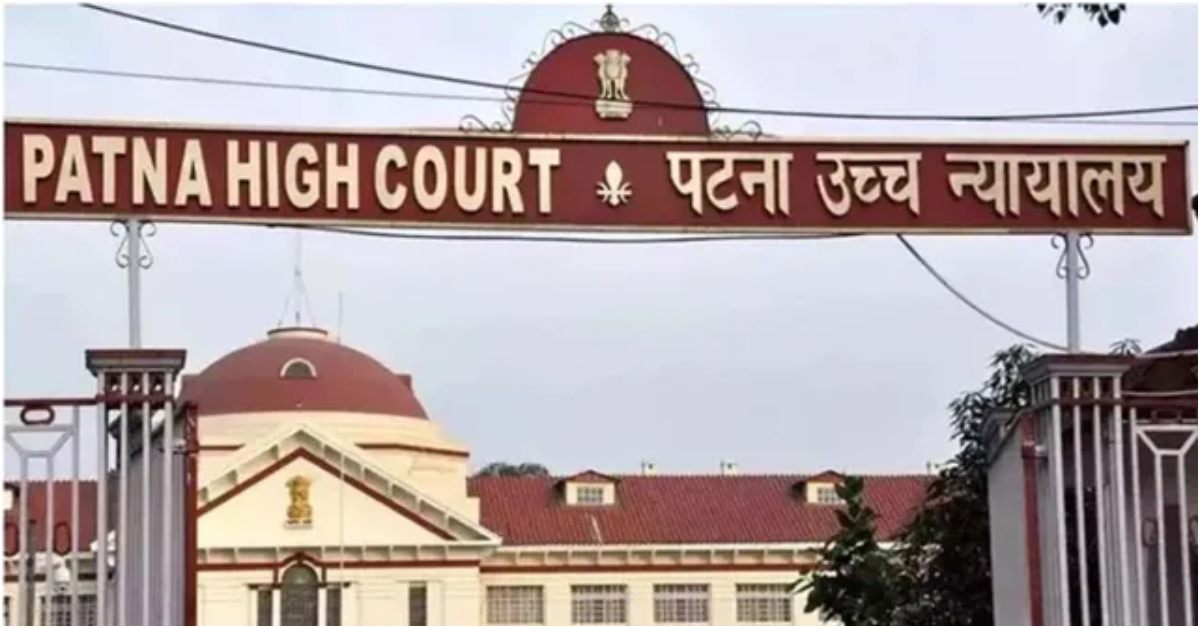
Patna: The Patna High Court has ruled that in cases of a married woman’s unnatural death, her brother can be regarded as a “victim” and may join criminal appeals as a party, expanding the interpretation of legal standing in such matters.

A division bench comprising Bibek Choudhary and Anshuman delivered the judgment in Criminal Appeal (DB) No. 1486/2025. The case concerns the death of a woman in Sheikhpura district, where initial charges of attempted murder under section 307 of the Indian Penal Code were later converted to homicide under section 302 after she succumbed to gunshot injuries.
Her husband, Manoj Kumar, was convicted of murder and sentenced to life imprisonment by the trial court in Sessions Case No. 10/2024. He appealed the conviction before the high court. During appellate proceedings, the woman’s brother filed an intervention petition seeking recognition as a victim and party to the appeal.

Senior counsel for the appellant, Ajay Kumar Thakur, argued that the brother lacked legal standing as neither guardian nor direct heir. However, the bench cited provisions of the Hindu Succession Act to determine that a brother of a deceased married woman qualifies as a legal heir, granting him the right to participate in the proceedings. The court allowed the intervention and directed that his name be added as respondent in the appeal, which will now proceed expeditiously.
In a separate ruling, the high court quashed criminal proceedings against a mother-in-law in a dowry harassment case, observing that allegations against her were general and unsupported by specific evidence. The matter originated from Aurangabad, where the complainant alleged demands for additional dowry and subsequent harassment. Although police filed charges under multiple sections of the Indian Penal Code and the Dowry Prohibition Act, the high court noted the absence of concrete material linking the mother-in-law to the alleged offences and cited precedent cautioning against the prosecution of extended family members based solely on broad accusations.
The judgment resulted in the cancellation of an earlier order taking cognisance of the case against the mother-in-law.