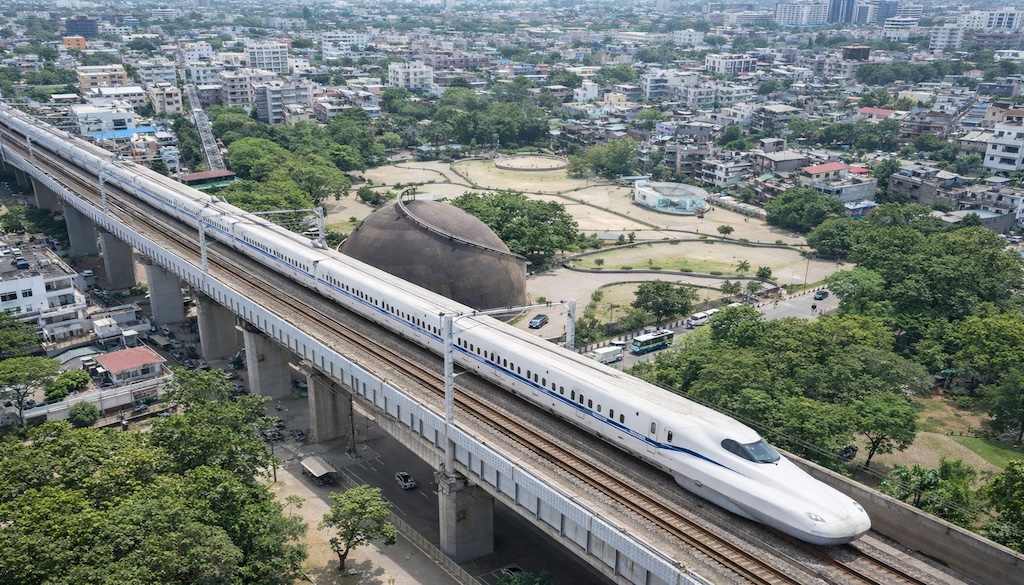
Patna: A proposed high-speed rail corridor connecting Delhi with Siliguri could significantly reduce travel times for passengers travelling to and from Patna. According to the project details reported on September 18, the plan targets a journey of around two hours from Patna to Siliguri and 4 hours 41 minutes from Delhi to Patna.

The proposed corridor would span around 1,500 km and connect several major cities across northern and eastern India. The project is currently in the planning and design stage, so the proposed journey times should not be treated as operational train schedules.
What Is The 1,500-Km Plan?

The proposed Delhi-Siliguri high-speed rail network would be developed in two sections. The first section would extend from Delhi to Varanasi for around 756 km, while the second would connect Varanasi to Siliguri over approximately 744 km.
Together, the two sections would cover nearly 1,500 km.
The proposed network is intended to create faster rail connectivity between Delhi, Uttar Pradesh, Bihar and West Bengal, with Patna positioned as an important point on the wider high-speed rail network.
Patna To Siliguri In 2 Hours
One of the key figures for Bihar is the proposed two-hour travel time between Patna and Siliguri.
The plan also targets a journey time of around 4 hours 41 minutes between Delhi and Patna. The complete Delhi-Siliguri journey is proposed to take approximately 6 hours 45 minutes.
These figures are based on the proposed project design and operating parameters. The final travel time will depend on the route, station locations, number of stops and operating plan once the project advances.
Which Cities Could Be Connected?
The proposed Delhi-Varanasi section would begin at Sarai Kale Khan in Delhi and pass through areas including Noida and Jewar.
The route would then connect Mathura, Agra, Etawah, Kanpur and Lucknow before moving towards Varanasi through Rae Bareli, Prayagraj and Bhadohi.
A separate Lucknow-Ayodhya link has also been proposed as part of the wider high-speed rail network.
The Varanasi-Siliguri section would provide the connection towards eastern India, bringing Bihar and West Bengal into the proposed high-speed rail framework.
Trains Planned For Up To 350 Kmph
The proposed corridor is being designed for high-speed trains capable of operating at 320 to 350 kmph.
The infrastructure planning will cover double-line tracks along with bridges, stations, depots, maintenance facilities, approach lines and feeder sections.
The high-speed specifications mean that the track and supporting infrastructure will need to be designed differently from conventional railway lines to safely accommodate higher operating speeds.
Stations And Underground Sections
The project design will also cover high-speed rail stations and underground structures.
According to the reported project specifications, platforms are proposed to be around 415 metres long, while station blocks would be approximately 425 metres.
Where tunnels and underground stations are required, their designs will also take into account trains operating at speeds of up to 350 kmph.
Consultancy Work To Continue For Six Years
A consultancy agency is proposed to undertake the design and technical advisory work for the project.
According to the reported tender details, the consultancy assignment would run for six years. The first two years would primarily focus on design-related work, followed by four years of advisory support.
The scope is expected to include design basis reports, tunnel and underground station designs, technical specifications and final designs for different components of the corridor.
Survey And Planning Work
Ground-level survey work for the proposed corridor has already progressed through different stages, according to the supplied project details.
The next major step involves the selection of a consultancy agency through the global request-for-proposal process. The agency would then undertake detailed design and technical preparation for the corridor.
The project will still require further planning, approvals, detailed engineering and construction before high-speed passenger services can begin.
What It Means For Patna
For Patna, the proposed corridor could provide a faster connection towards Siliguri, Delhi and other major cities on the network.
The headline figures are a proposed two-hour Patna-Siliguri journey and a 4-hour-41-minute Delhi-Patna journey. However, these remain project targets rather than confirmed future train timings.
If the proposed network progresses through its subsequent planning, approval and construction stages, Patna would become part of a wider high-speed rail system connecting major urban centres across northern and eastern India.