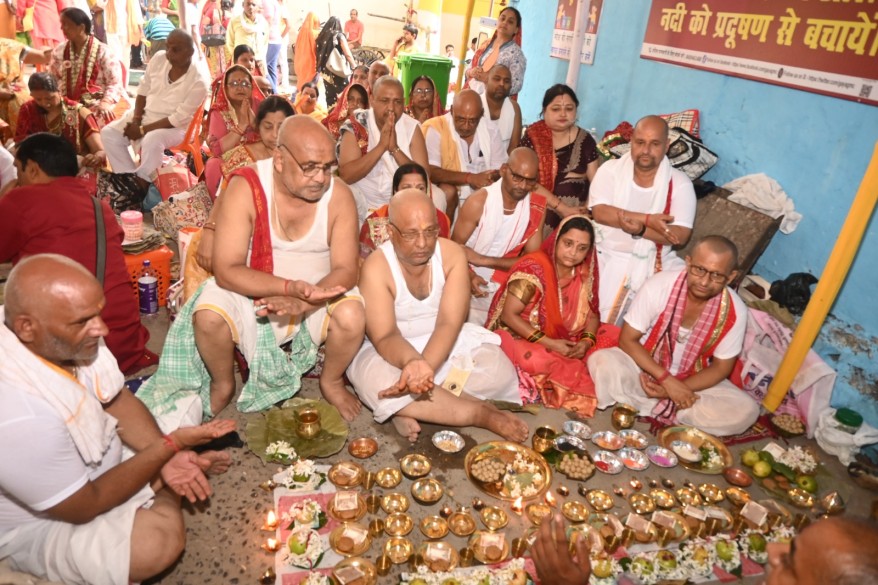
Gayaji: The Pitru Paksha fair in Gaya, one of Hinduism’s most significant religious gatherings dedicated to the peace and salvation of ancestors. Marking the tenth day of the Gaya Shraddha, devotees performed the ritual of Pind Daan at two of the holiest sites in the city, Gaya Sir and Gaya Koop.

According to belief, offering pind (sacred food balls) at these altars grants liberation to the souls of ancestors and frees them from suffering. Gaya Sir, situated south of the Vishnupad temple, is said to open the “door of salvation” for ancestors believed to be in hell. Gaya Koop, located to the west, is thought to release souls trapped by untimely deaths or ghostly obstructions. Pilgrims also offer coconuts at Gaya Koop as part of the ritual.
Both sites are closely tied to the mythology of Gayasur, a demon whose body, according to Hindu scriptures, formed the sacred geography of Gaya. Gaya Sir is regarded as his head and Gaya Koop as his navel. Religious texts describe the benefits of performing Pind Daan here, with the tradition said to date back to ancient times.

After completing the rituals, pilgrims often visit the nearby Sankata Devi temple. Worship of the goddess is believed to dispel obstacles and bring peace to families.
More than 2.2 million devotees — known locally as Pinddaanis — have already visited Gaya for the fair, with crowds expected to grow in its final days. Pilgrims have come from across India and abroad, underscoring the fair’s cultural as well as religious significance.
Gayapal priest Gajadhar Lal Katariyar emphasised the importance of the rituals: “On the 10th day of Gaya Shraddha, there is a ritual of Pind Daan in Gaya Koop and Gaya Sir. By doing Pind Daan here, ancestors facing any kind of obstacle get salvation and attain heaven. These two altars hold immense importance in Hindu tradition.”