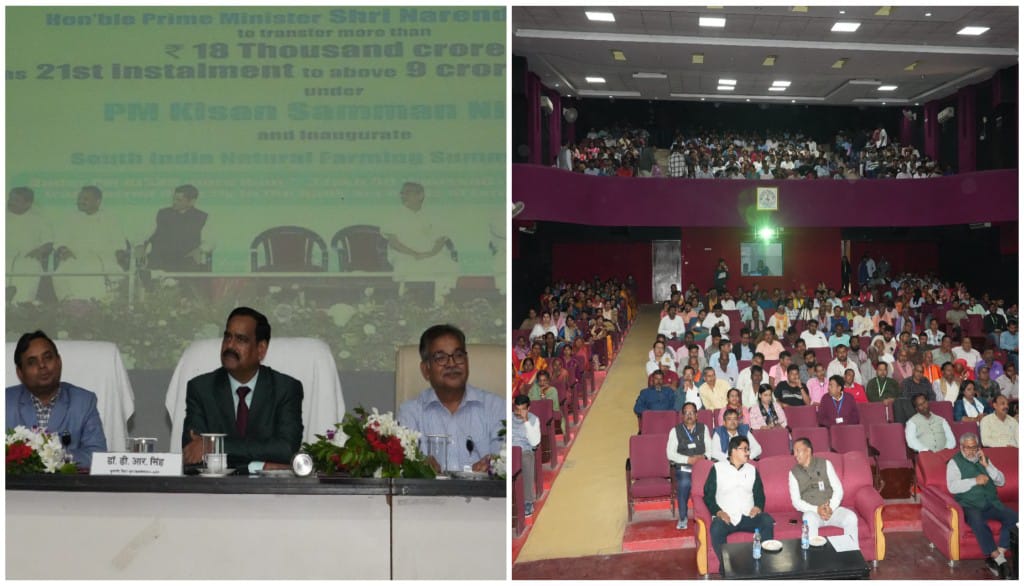
Patna: A special programme was held at Bihar Agricultural University (BAU) Sabour on Wednesday to mark the release of the 21st installment of the PM-KISAN scheme, under which Rs. 18,000 crore was transferred to the accounts of millions of farmers across the country. Around 300 farmers, along with scientists, university officials and students, participated in the gathering, taking the total attendance to nearly 600.

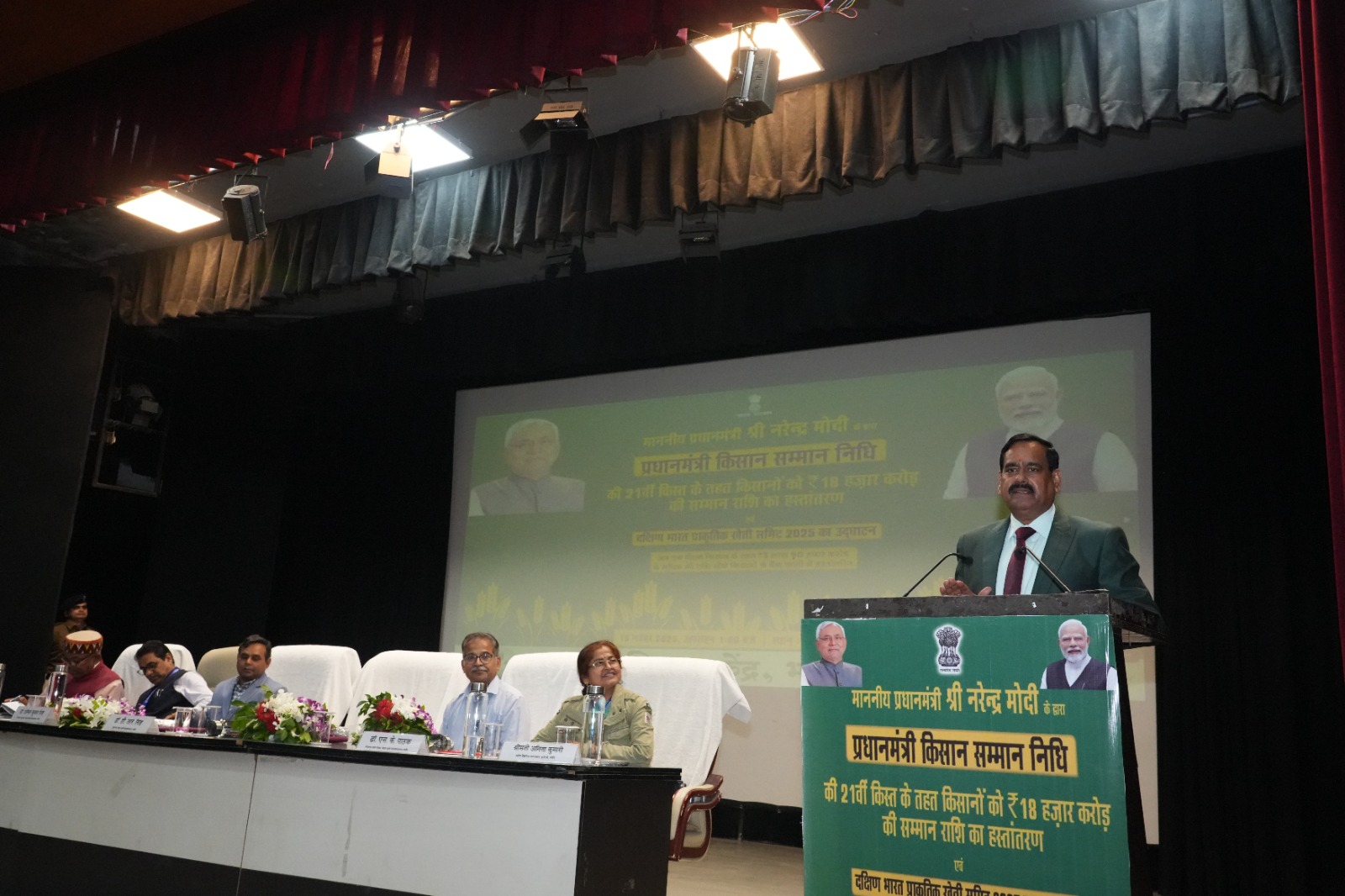
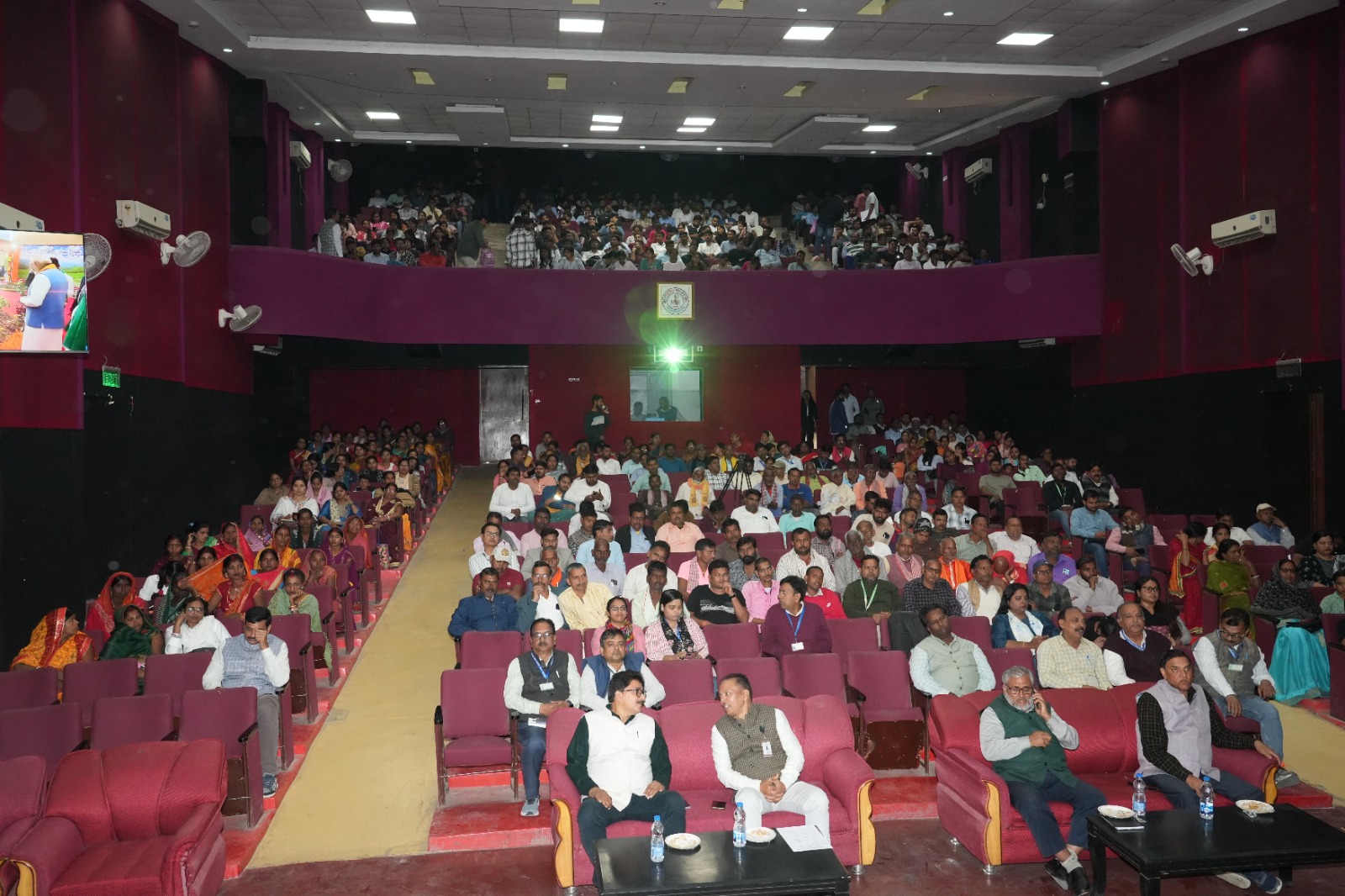
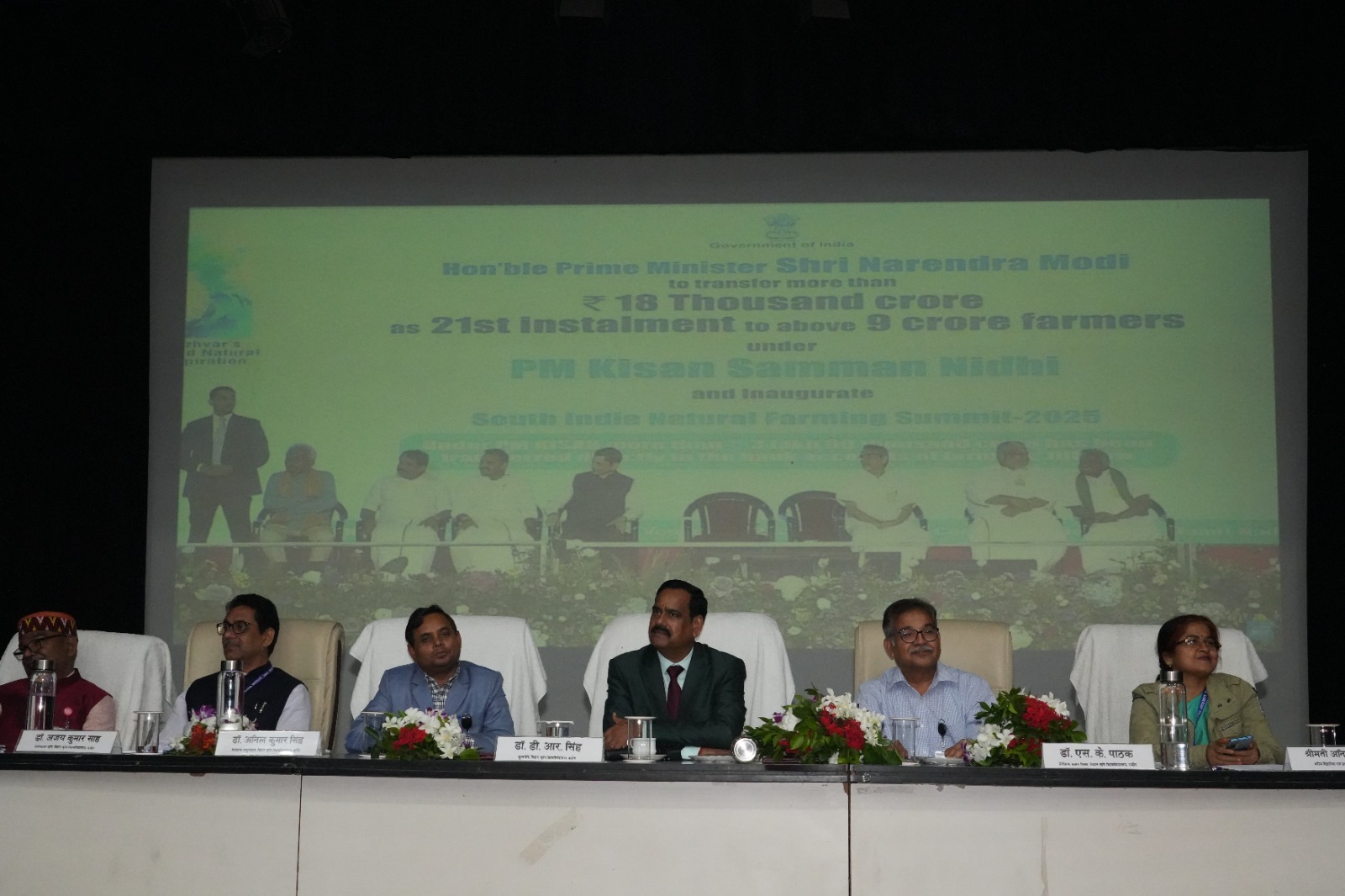
The event coincided with the inauguration of the National Summit on Natural Farming in Coimbatore, where Prime Minister Narendra Modi addressed farmers and innovators across India via live broadcast.

“Natural farming is the necessity of the 21st century,” the Prime Minister said, warning that the overuse of chemical fertilisers is damaging soil fertility and threatening long-term productivity. He argued that natural farming and crop diversification must become the country’s dominant agricultural focus.
Modi highlighted the transformation of India’s farm sector over the past 11 years, noting that agriculture exports have nearly doubled and stressing that natural farming could play a decisive role in combating climate change.
The Prime Minister also honoured farmers, scientists and extension workers who have made significant contributions to natural farming initiatives.
Farmers raise concerns on dairy, pest outbreaks and flood damage
Before the live address, BAU Sabour and the local Krishi Vigyan Kendra (KVK) held a technical session chaired by Vice-Chancellor Dr D. R. Singh, who invited farmers to present their concerns directly.
Issues raised included:
-
Dairy sector challenges, highlighted by Mithilesh Kumar from Madhubani
-
Pest and disease outbreaks in brinjal, raised by local farmers
-
Flooding and waterlogging impacts on paddy, detailed by farmer Shravan Kumar
-
Demand for flood- and drought-resistant paddy varieties from farmers of Benipatti, Madhubani
Dr Singh instructed scientists and officials to respond promptly and move solutions forward without delay.
‘Natural farming must expand across all agro-climatic zones’: BAU VC
Addressing the gathering, the Vice-Chancellor said the university must fully align with the Prime Minister’s vision:
“Our scientific community must review the last two years of natural farming trials, especially their impact on soil organic matter, and develop the next phase of strategy accordingly.”
He emphasised the need to:
-
Expand work to all agro-climatic zones in Bihar
-
Align crop planning with district-specific cropping patterns and ecological needs
-
Adopt villages as natural farming laboratories
-
Treat farmers’ field-level problems as the highest priority
-
Strengthen the presence of scientists in “khet–khalihan” (fields and farms)
The Vice-Chancellor urged researchers not to limit their outreach to select pockets but to build a comprehensive district-wide approach to agricultural transformation.
The programme opened with a welcome address by Dr S. K. Pathak, Director of Extension Education.
It was followed by insights from Dr A. K. Singh, Director of Research, and was conducted by Anita Kumari, Senior Scientist and Head of KVK Sabour.