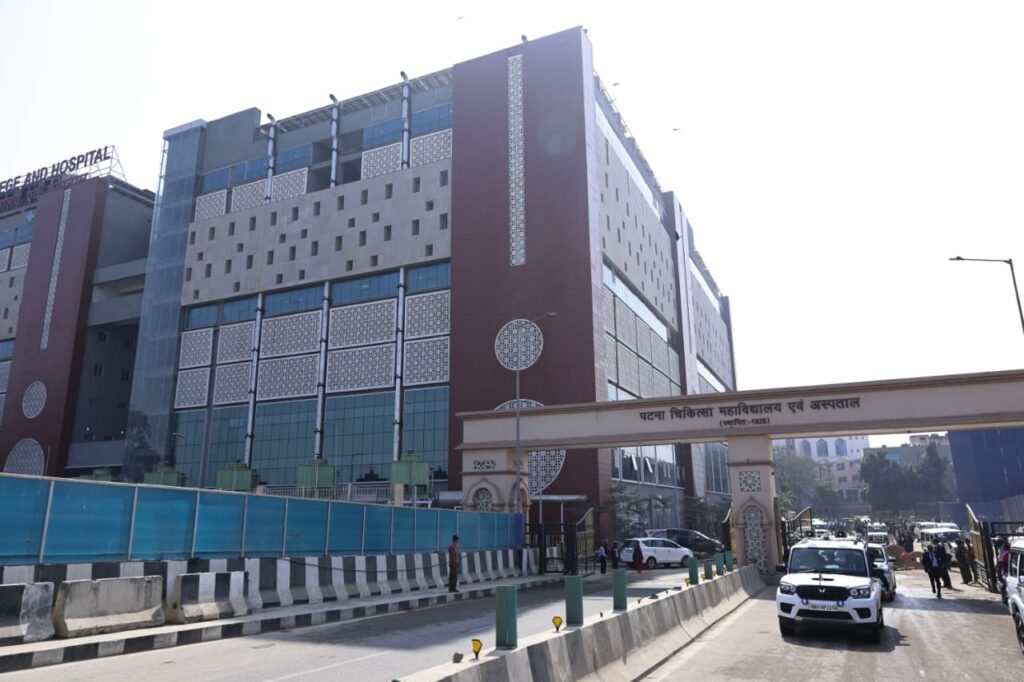
Patna: Blood tests at Patna Medical College and Hospital (PMCH), Bihar’s largest government-run hospital, will now be conducted on only three days a week, according to a notice posted in the institution’s pathology department, raising concerns about delays in diagnosis and treatment.

Under the new schedule, a range of commonly prescribed blood tests will be carried out only on Mondays, Wednesdays and Fridays. The notice, displayed in the pathology department in the Rajendra Surgical Ward, attributes the decision to a shortage of doctors and faculty members.
Among the tests affected are FT3, FT4, T3, T4 and TSH – routinely used to assess thyroid function – along with Vitamin D and Vitamin B12 levels, anti-CCP, prolactin and prostate-specific antigen (PSA), both free and total. These investigations are frequently recommended by doctors across departments, particularly in cases involving endocrine, autoimmune and prostate-related conditions.

The move is expected to affect a large number of patients. PMCH receives thousands of people each day, many travelling from rural and remote districts for specialist care. Those who arrive on days when the tests are not conducted may now have to wait until the next designated day, potentially delaying the start of treatment.
Patients and relatives said the restricted schedule has already led to longer queues and repeat visits, increasing both travel costs and the financial burden on families. In some cases, treatment plans are being postponed as doctors await test results.
Hospital sources said the decision reflects mounting pressure on limited resources amid rising patient numbers. Although PMCH is undergoing reconstruction and expansion to increase bed capacity and upgrade facilities, staff shortages remain a persistent challenge.
The superintendent, Dr Rajiv Kumar Singh, said he was not aware of the notice and that a review of the matter would be undertaken. He said action would be taken after examining all aspects of the issue and added that efforts were under way to address human resource shortages across several departments.
Healthcare experts say that without adequate staffing, maintaining quality services in large public hospitals is difficult, particularly in states where government institutions serve as the primary referral centres. Patients, meanwhile, hope the testing services will soon return to a daily schedule to ensure timely diagnosis and uninterrupted treatment.