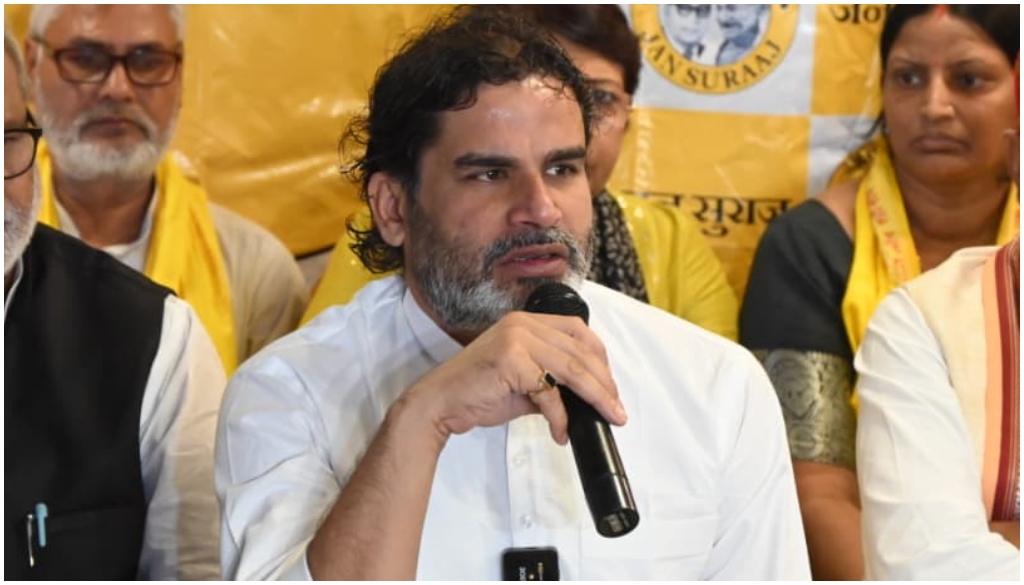
Patna: Political strategist-turned-politician Prashant Kishor will address the media on Monday for the first time since his party’s poor performance in the Bihar Assembly elections. The press conference is scheduled at 11:30 am at the Jan Suraaj Camp near Patliputra Golambar in Patna, where Kishor is expected to speak on the electoral setback and his future roadmap.

This marks Kishor’s first public appearance after his ambitious attempt to “transform Bihar politics” fell flat. Despite a high-pitched campaign and claims of a massive grassroots network, the Jan Suraaj Party failed to win a single seat. The party, which claims over one crore members, could not secure even 10 lakh votes.
98% Candidates Lose Deposits; Only One Constituency Reached Second Position

Of the 238 seats contested, deposits of 233 candidates were forfeited—accounting for 98% of the party’s total candidates. Jan Suraaj managed to finish second only in Madhaura, and that too after the NDA candidate’s nomination was cancelled.
The Election Commission’s data indicates that Jan Suraaj is likely to end with nearly 2% vote share. In comparison, Asaduddin Owaisi’s AIMIM, which contested 28 seats, won 5 and achieved 1.9% vote share. Mayawati’s BSP contested 181 seats, won one seat, and secured 1.6% votes—performing better than Jan Suraaj in terms of seats won.
Despite hailing from Rohtas district, Kishor could not save the deposit even in any of the seven constituencies there. In his own seat, Karakhar, the party secured only 7.42% votes.
Tall Claims vs Ground Reality
Kishor had made several bold predictions ahead of the polls:
- ‘Nitish will not become CM; JDU won’t cross 25 seats’
- Kishor repeatedly claimed that Nitish Kumar’s government would fall after November 14 and that JDU would win fewer than 25 seats. He also asserted that if he was proved wrong, he would “quit politics.”
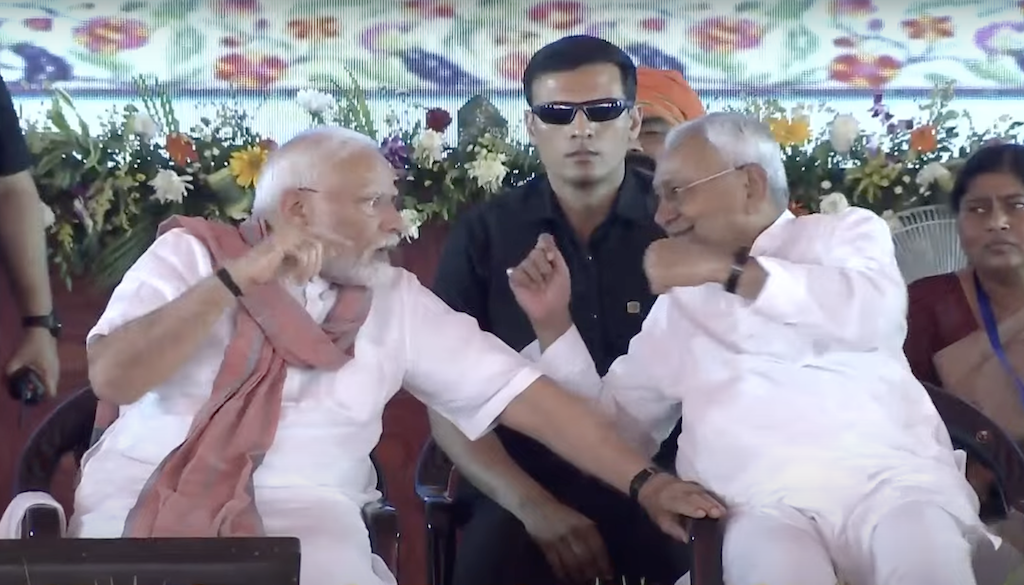
- Reality: The NDA returned to power with 202 seats. JD(U) alone won 85 seats and emerged as the second-largest party. Jan Suraaj failed to open its account.
- ‘Even if Jan Suraaj wins 130 seats, I will call it a defeat’
- Kishor had said multiple times in September that Jan Suraaj would create history and form the government.
- Reality: The party could not win a single seat. Nearly all candidates lost their deposits.
- ‘The real fight is between NDA and Jan Suraaj’
- For months, Kishor maintained that the Grand Alliance was irrelevant in this election and that the main contest was between NDA and Jan Suraaj.
- Reality: Results showed a direct contest between NDA and the Grand Alliance. Jan Suraaj was not in contention anywhere.
- ‘Clean politics’ vs ADR data
- Kishor claimed that Jan Suraaj would promote clean politics by selecting honest candidates.
- Reality: According to the ADR report, 108 of 231 Jan Suraaj candidates have criminal cases, including 100 with serious charges. These include 25 candidates facing attempted murder cases, 12 facing murder charges and 14 accused in cases related to crimes against women.
Kishor had also alleged that his candidates faced pressure from Union Home Minister Amit Shah during the elections.
1,280 Days of Ground Campaign, But Zero Seats
Jan Suraaj’s campaign narrative highlighted Kishor’s padayatra—6,000 km across 5,000 villages over 1,280 days. He held 5,000 meetings and travelled extensively by road, avoiding helicopter campaigns entirely.
Kishor said he travelled an average of 200 km per day since October 21, covering 8–10 constituencies daily. However, the extensive outreach failed to translate into electoral support.
₹98 Crore Donated to Jan Suraaj
On September 29, Kishor had disclosed his party’s finances, stating that consultancy fees earned between 2021 and 2023 amounted to ₹241 crore. He said he paid 18% GST and nearly ₹20 crore in income tax. After expenses, he claimed to have donated ₹98 crore of his personal earnings to Jan Suraaj.
Jan Suraaj was formally launched on October 2, 2024, at Patna’s Veterinary Ground, where Manoj Bharti was elected as the party’s acting president.
Kishor’s press conference today is expected to address the reasons behind the electoral failure, internal challenges, and the party’s future plans.