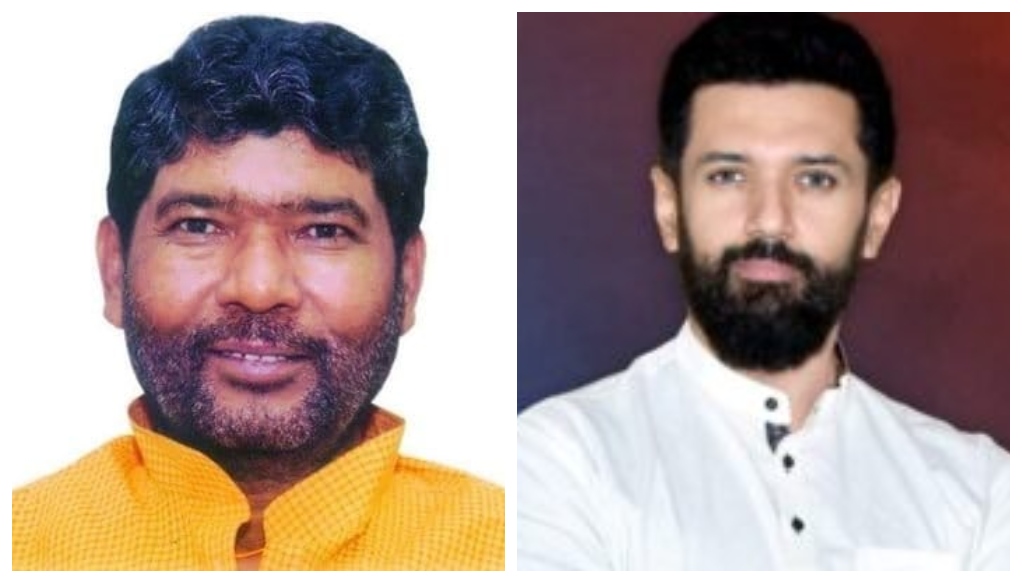
Patna: The political landscape in Bihar is rapidly heating up ahead of the Assembly elections, driven by an escalating electoral battle between the two factions of the late Ram Vilas Paswan’s party. The Rashtriya Lok Janshakti Party (RLJP), led by the Pashupati Kumar Paras, has formally declared an aggressive strategy to contest every single seat where their estranged nephew, Chirag Paswan’s Lok Janshakti Party (Ram Vilas), fields a candidate.

RLJP National Spokesperson Shravan Agarwal confirmed the decision following a Central Parliamentary Board meeting, framing the move as a “mission to change the 100 percent strike rate to 0 percent” for Chirag Paswan. This unprecedented, head-to-head confrontation guarantees a dramatic “uncle versus nephew” political war across the state and promises to deepen the complexity of the upcoming polls.
Pressure on the Grand Alliance

While primarily focused on neutralizing Chirag Paswan, the RLJP is simultaneously putting pressure on the opposition Grand Alliance (Mahagathbandhan). Agarwal expressed public frustration that the RLJP, despite its commitment to the coalition’s goal of making Tejashwi Prasad Yadav the next Chief Minister, has not been invited to crucial seat-sharing discussions.
“We are not anyone’s wedding party,” Agarwal stated, warning the alliance not to take the party for granted. He asserted the RLJP’s readiness to contest all 243 seats independently if seat-sharing talks fail, emphasizing the party’s organizational strength and capable candidates. The RLJP leader urged the coalition partners to finalize seat distribution immediately, given the impending nomination process.
Targeting NDA’s ‘Mahabharata’
Agarwal also took aim at the internal friction plaguing the ruling NDA (National Democratic Alliance) in Bihar. He characterized the tensions within the alliance as a “Mahabharata” among the five key partners.
The RLJP pointed to the constant changes in statements from Jitan Ram Manjhi, the ongoing lack of concession from Chirag Paswan regarding seats, and the demands for “respectable seating” made by Upendra Kushwaha as evidence of deep-seated internal discord. This analysis suggests that both major political formations in Bihar—the NDA and the Grand Alliance—are currently consumed by internal conflicts over seat allocation, creating an atmosphere of palpable uncertainty for voters and political observers alike.