Patna: As winter tightens its grip, room heaters have become a staple in homes across cities, offering quick relief from biting cold. But health experts warn that what feels like a simple comfort can quietly turn dangerous if basic safety measures are ignored.

Many people use heaters with doors and windows tightly shut to retain warmth. While this practice may seem logical, it significantly increases health risks, particularly due to poor ventilation. According to health authorities, including the US Centers for Disease Control and Prevention (CDC), inadequate airflow can lead to a dangerous build-up of carbon monoxide and a sharp reduction in oxygen levels inside closed rooms.
Carbon monoxide, a colourless and odourless gas often emitted by gas-based heaters, is especially hazardous. Research cited by the National Library of Medicine shows that prolonged exposure can interfere with the blood’s ability to carry oxygen, leading to headaches, dizziness, breathing difficulties, and in severe cases, loss of consciousness or death. Because the gas is undetectable without alarms, people may be exposed while sleeping without any warning signs.

Doctors also point out that extended heater use can significantly dry indoor air. Low humidity levels may irritate the eyes, causing redness, itching and excessive watering. The dry air can also affect the skin and respiratory tract, leading to cracked skin, sore throats, coughing and breathing discomfort — problems that can be particularly severe for people with asthma or allergies.
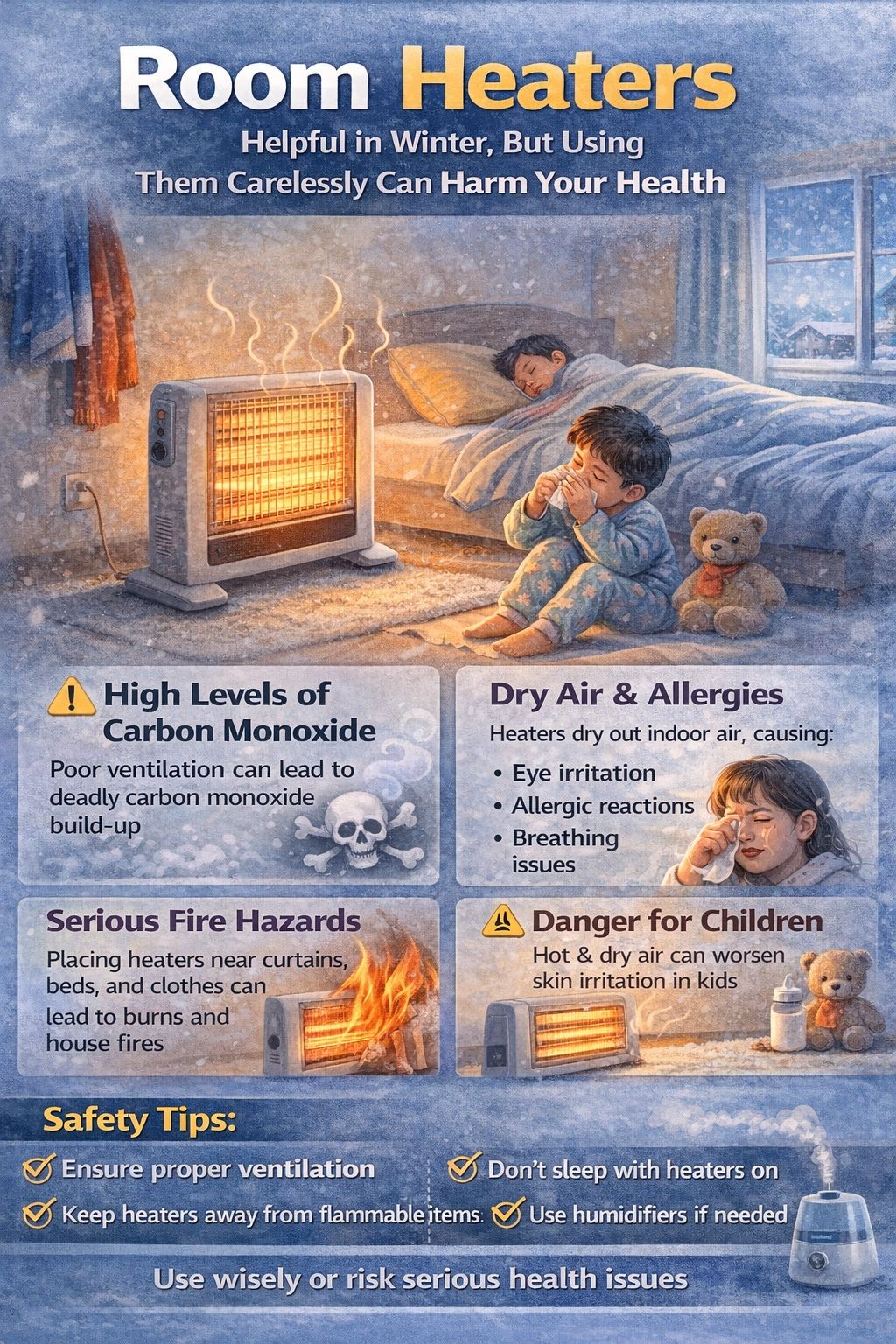
Fire hazards are another major concern. Many users place heaters close to beds, curtains or clothing to stay warm overnight. This practice dramatically increases the risk of burns and house fires, especially if heaters are left unattended or used while sleeping.
Children face additional risks. Dry, hot air can worsen skin irritation, and even warm woollen clothing may trigger itching or rashes in such conditions. For young children and infants, dehydration of airways can also aggravate respiratory issues.
Allergists warn that heaters can stir up dust and allergens settled indoors, triggering allergic reactions and asthma attacks. Continuous circulation of dry, warm air can make indoor environments particularly uncomfortable for those with chronic respiratory conditions.
Health experts advise simple precautions: ensure proper ventilation, avoid sleeping with heaters switched on, keep heaters away from flammable objects, use humidifiers where possible, and install carbon monoxide detectors if using gas-based heating devices. Used wisely, room heaters can offer comfort — but ignoring safety basics may turn winter warmth into a serious health risk.