
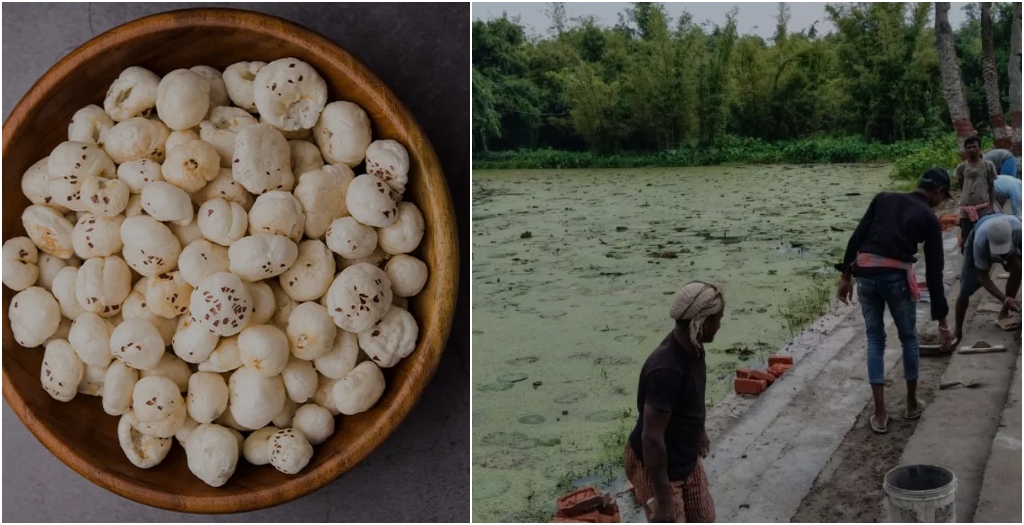
Patna: Farmers in Bihar are transforming adversity into opportunity, as waterlogged fields in Saharsa district are being converted into productive makhana farms, significantly improving rural incomes.

In Sahasual village panchayat of Saharsa, nearly two dozen farmers have adopted makhana cultivation to tackle chronic flooding that had rendered their land unsuitable for traditional crops such as paddy and wheat.
For years, large stretches of farmland remained submerged throughout the year, forcing many villagers to migrate or depend on daily wage labour. However, the launch of the Jal Jeevan Hariyali Abhiyan by the state government marked a turning point.

With support from the rural development department and labour under MNREGA, farmers converted stagnant, unused land into ponds and began cultivating makhana. Today, 19 farmers in the village are earning an additional annual income of up to Rs 50,000 each from the crop.
Ganesh Kumar Mahato, a local farmer, said the cost of cultivation is relatively low, with expenses reaching up to Rs 15,000. In comparison, returns are more than three times higher, making it a sustainable and profitable alternative.
Farmers added that makhana fetches a market price ranging between Rs 600 and Rs 1,200 per kilogram, further strengthening their financial stability. The initiative has not only boosted incomes but also led to the creation of new water bodies, contributing to environmental balance in the region.
Officials say the model is helping address both economic and ecological challenges, turning flood-prone areas into productive assets.
State rural development minister Shravan Kumar said makhana cultivation is emerging as a key driver of rural self-reliance. He added that the government is supporting farmers through subsidies on improved seeds and toolkits under the Makhana Development Scheme.
Authorities believe that with growing global demand, makhana produced in Bihar is gaining wider recognition, offering new opportunities for farmers across the state.