
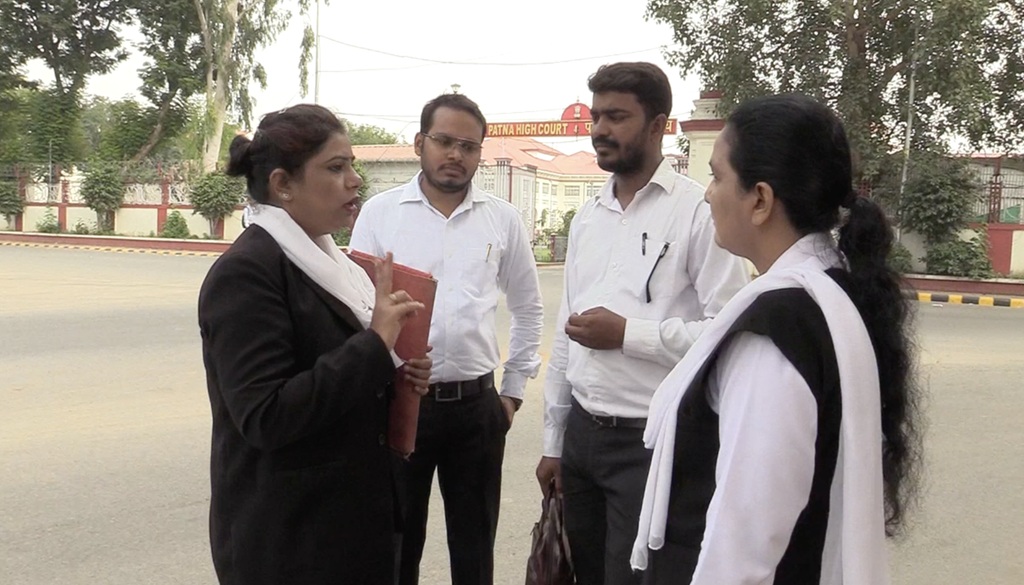
Patna: In a society where change is often gradual, the work of Savita Ali stands out as a determined effort to empower women and girls to claim their rights and build independent lives.

A lawyer by profession, Ali has spent years working at the grassroots level in Bihar, helping women navigate legal systems while also addressing deep-rooted social issues such as child marriage and lack of access to education.
Her journey into activism began after she witnessed the struggles of women around her who were not only economically vulnerable but also unaware of their legal rights. Realising that empathy alone was not enough, she began intervening directly — raising awareness, filing legal cases and offering sustained support.

In 2019, she founded the Eva Foundation in Patna, an organisation that provides free legal assistance, counselling and social support to women. Since then, nearly 7,000 women and adolescent girls have benefited from her work.
Ali’s activism has also focused on preventing child marriages. In one instance, she intervened to stop the marriage of a 12-year-old girl to a man nearly three times her age. Through counselling and administrative support, the marriage was halted, and the girl is now continuing her education.
She has been involved in around 20 such interventions, often acting swiftly after receiving information from local residents. In one case in Phulwari Sharif, she alerted police after receiving a late-night call, leading to authorities stepping in and preventing a minor’s marriage.
Beyond legal battles, Ali has worked to change social attitudes. In areas such as Janipur in Patna, where girls dropping out of school was once common, she conducted door-to-door awareness campaigns, encouraging families to prioritise education. As a result, school attendance among girls has improved significantly.
Her efforts have enabled many young women to pursue higher education and prepare for competitive exams. Some, like Riya Paswan, are now aiming for admission to institutions such as Jawaharlal Nehru University.
Ali has also focused on economic empowerment. In one case, she supported a woman from Jehanabad who had been abandoned by her husband. After helping her secure her legal rights, Ali arranged training in basic computer skills, enabling her to earn a livelihood and regain independence.
Originally from Haryana, Ali moved to Bihar after marriage. She has said that her own experiences of adapting to a new social environment shaped her resolve to work for women facing marginalisation.
Today, backed by a growing team, she continues her efforts to promote education, legal awareness and self-reliance among women, positioning grassroots activism as a powerful tool for social change.