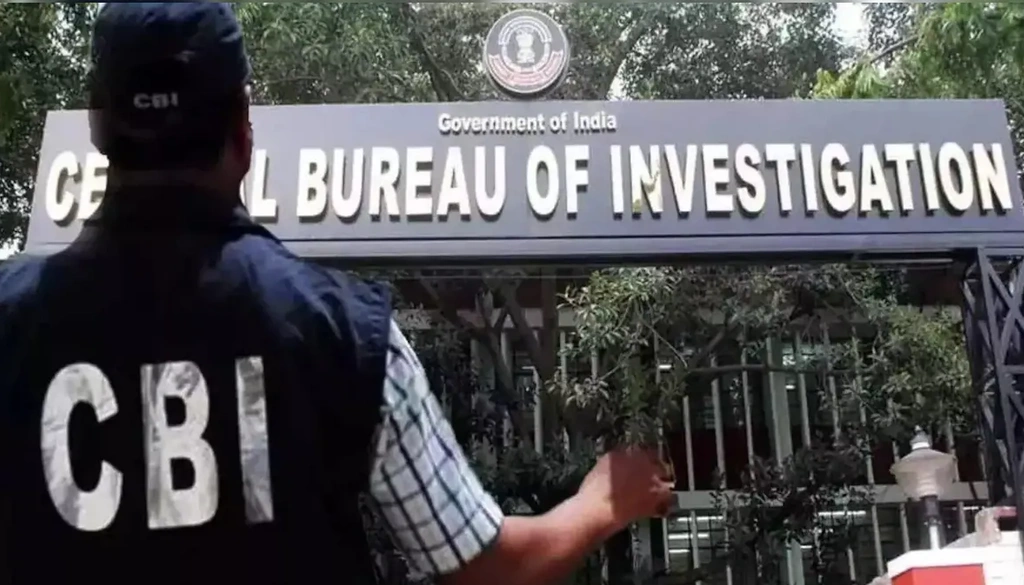
Patna: The Central Bureau of Investigation (CBI) has launched a major crackdown on an international cybercrime syndicate allegedly operating illegal telephone exchanges, or SIM boxes, across several districts of Bihar and facilitating cyber fraud by criminals based in Cambodia, Thailand, Myanmar and China.

The agency took over the case following directions from the Supreme Court and a recommendation from the Bihar government and has since begun conducting raids and interrogations linked to the network. In the latest action, the CBI arrested Pankaj, an area distributor of a mobile telecom company, from Mahua in Vaishali district.
The investigation has allegedly uncovered a wider racket involving the unauthorised activation of SIM cards using the biometric data of unsuspecting customers in rural areas. More than 25 telecom distributors and Point of Sale (PoS) operators are now under the agency’s scanner following searches at 10 locations, including places in Vaishali in Bihar and Jagatsinghpur in Odisha.

Investigators have also found indications that mobile data of Indian customers, including Bihar residents, was being sold to cybercriminals operating from scam compounds in Southeast Asia.
SIM boxes allegedly smuggled into Bihar through Nepal
The illegal SIM box network in Bihar was initially exposed by the state’s Economic Offences Unit (EOU).
In July 2025, SIM boxes were seized from Gayaspur in Supaul and Narayanpur in Bhojpur. Further seizures were made in Purnia and Samastipur in September 2025.
Investigators found that the sophisticated SIM boxes, manufactured in China, had allegedly been smuggled into Bihar through Nepal and supplied to operators in border districts.
More than 1,300 active SIM cards and eight SIM boxes were recovered from a single location in Supaul, according to the investigation.
As the case allegedly involved foreign handlers based in Cambodia, Thailand and Myanmar as well as links spanning multiple states, the investigation was subsequently transferred to the CBI following the Supreme Court’s directions.
Over 700 SIM cards allegedly supplied from Mahua
The CBI’s analysis of data and Call Detail Records (CDRs) linked to more than 1,300 SIM cards recovered from Supaul and Purnia reportedly revealed a significant connection to Mahua in Vaishali.
According to the investigation, more than 700 of the active SIM cards had been issued through a single distributor based in Mahua.
The arrested distributor allegedly misused the login credentials of around 12 PoS agents to generate additional SIM cards.
Investigators suspect that when villagers approached PoS agents to obtain new SIM cards or port their existing numbers, they were sometimes told that a technical problem or “server error” had occurred. They were allegedly asked to provide their biometric thumb impression two or three times.
The investigation indicates that the same e-KYC biometric data was subsequently used to activate additional SIM cards without the customers’ knowledge. These extra SIM cards were allegedly sold to the SIM box network for substantial profits.
The CBI is now examining the role of the 12 PoS agents as well as field-level officials of telecom companies in the alleged racket.
Cyber slavery link under investigation
The investigation has also brought to light an alleged connection between the SIM box network and the growing problem of cyber slavery involving Indians trafficked or coerced into working at scam compounds in Southeast Asia.
One of the alleged local operatives identified by investigators is Harshit from Supaul. According to the investigation, Harshit had travelled to Thailand on a visitor visa in search of employment, where he was allegedly held captive and forced into cybercrime operations.
After returning to India, he allegedly became a local operative for an international cybercrime network and established an illegal telephone exchange in Supaul.
Investigators suspect that foreign handlers provided him with technical equipment and financial support to operate the network.
The CBI and Bihar Police are also working on a database of youths from the state who have either been trapped in scam compounds in Southeast Asian countries or returned to India after allegedly being subjected to cyber slavery.
The investigation into the international SIM box network is continuing, with agencies examining the telecom supply chain, biometric misuse, SIM activation records, financial transactions and suspected links with overseas cybercrime networks.