Patna: With climate-related disasters such as floods, droughts and heatwaves becoming more frequent and intense, UNICEF and the Bihar government on Friday organised a media sensitisation workshop aimed at strengthening child- and gender-responsive reporting during emergencies.

The workshop brought together journalists from print, television and digital media platforms, social media influencers, representatives of the Information and Public Relations Department (IPRD), and public relations officers from various government departments. Organisers said the initiative sought to engage the broader ecosystem responsible for shaping public information during disasters and emergencies.
Focus On Disaster Preparedness And Responsible Reporting

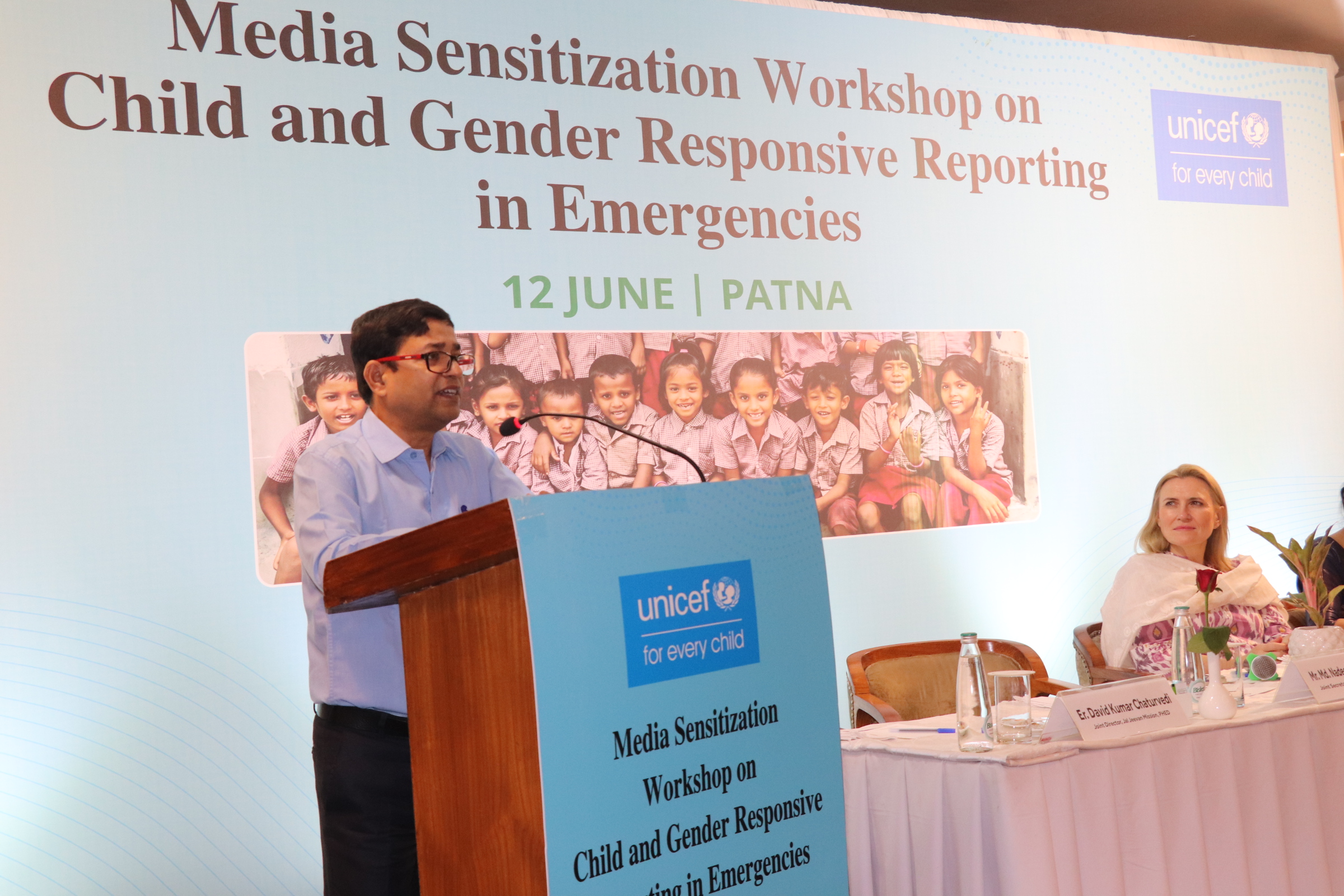
Addressing the gathering, Md Nadeemul Ghaffar Siddiqui, Joint Secretary in the Disaster Management Department, Government of Bihar, outlined the state’s efforts to strengthen disaster preparedness and resilience.
He said Bihar has intensified measures to improve early warning systems, preparedness planning and inter-departmental coordination to respond effectively to a wide range of emergencies, including floods, heatwaves and other climate-related hazards.
Siddiqui noted that the department has undertaken coordinated efforts to enhance resilience at the block, district and state levels. He also urged media organisations to prioritise fact-checked information while highlighting the work of frontline rescue and relief personnel during disasters.
‘Every Disaster Statistic Represents A Child’
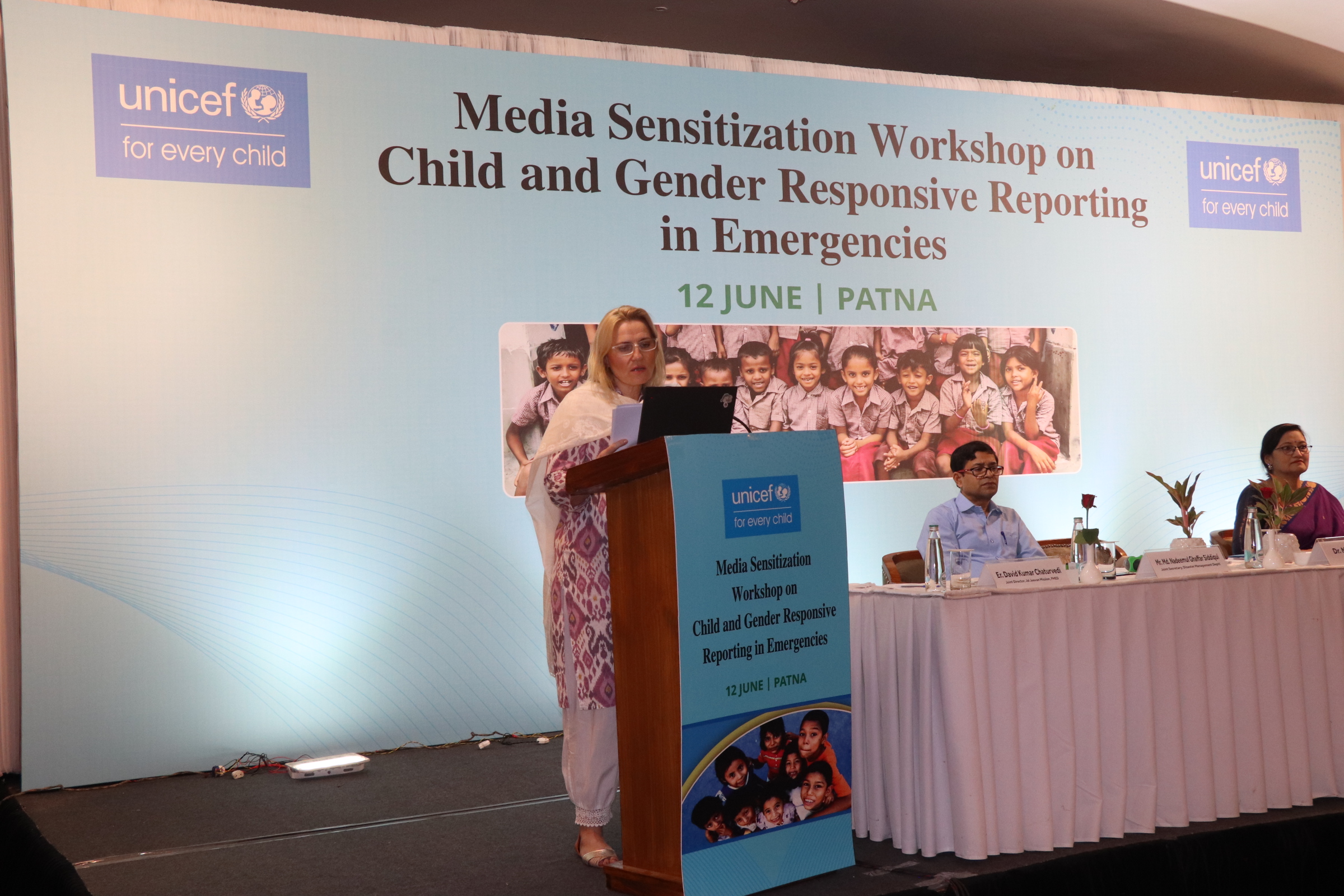
Dr Monika Nielsen, Chief of Field Office, UNICEF Bihar, stressed the importance of placing children and women at the centre of disaster reporting.
She told participants that behind every disaster statistic is a child whose story deserves to be told with care and sensitivity.
“Children and women are at the centre of every climate story, if we look carefully enough. Yet their particular realities — the girl at risk of leaving school permanently, the expectant mother far from a functioning health facility, the toddler whose immunisation is delayed for months — too rarely make it into the frame,” she said.
Dr Nielsen added that the workshop was designed to equip participants with practical tools for more inclusive and responsible reporting.
She also acknowledged the role of Bihar’s media in amplifying issues related to child nutrition, immunisation, newborn survival and child protection.
“Over the years, journalists in this state have amplified our work on child nutrition, immunisation, newborn survival and child protection in ways no report or press release alone ever could. You have given faces and names to statistics,” she said.
Ethics Of Crisis Reporting Discussed
The workshop’s technical session focused on newsroom practices and ethical considerations during emergency reporting.
Media and communication expert Minnati Chaklanavis led discussions on informed consent, protecting the identity of children and avoiding sensationalism in coverage of disasters and crises.
Participants were encouraged to ensure that the dignity and rights of affected individuals are protected, even amid the pressures of breaking news coverage.
The session emphasised that vulnerable populations should not suffer additional harm through insensitive reporting practices.
Climate Change’s Impact On Vulnerable Communities
Sudhakar Reddy, WASH Specialist at UNICEF, discussed the science of climate change and its disproportionate impact on children, women and marginalised communities.
He highlighted how climate-related events can affect access to clean water, disrupt education, health services and nutrition programmes, and deepen existing social vulnerabilities.
The discussion explored the role of the media in helping the public understand these interconnected challenges and their long-term implications.
Media’s Role In Disaster Communication
The workshop concluded with an interactive session during which participants discussed the evolving role of the media in disaster communication, climate awareness and public accountability.
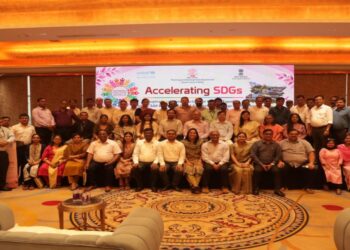
Journalists, communication professionals and government representatives exchanged views on improving the quality of emergency reporting and ensuring that coverage remains accurate, sensitive and focused on those most affected by disasters. The programme concluded with a group photograph and lunch.