Patna: Bihar Chief Minister Nitish Kumar has filed his nomination for the Rajya Sabha, signalling a major shift in his long political career and indicating that he may soon step away from state politics to focus on national-level responsibilities.

Nitish Kumar submitted his nomination papers on March 5. Although he has not yet resigned as Chief Minister, political observers believe he could step down from the post at any time in the coming days.
The veteran leader has served as Bihar’s Chief Minister for nearly two decades across multiple terms. His move to the Rajya Sabha is being seen as a significant development in Bihar’s political landscape.

Sources indicate that the decision was not sudden and had been under discussion for some time. Political developments over the past few weeks, including high-level meetings between leaders of the ruling alliance, reportedly played a role in shaping the transition plan.
According to political sources, discussions about a possible leadership change in Bihar intensified during Union Home Minister Amit Shah’s three-day visit to the Seemanchal region in late February.
On February 25, Shah arrived in Kishanganj, where he held official meetings with senior officers from the Sashastra Seema Bal (SSB), Intelligence Bureau and other security agencies to review border-related issues. Later that night, a closed-door meeting was reportedly held at the residence of Bihar minister Dilip Jaiswal. The meeting was attended by several senior leaders of the ruling alliance, including Deputy Chief Minister Samrat Choudhary, state BJP president Sanjay Saraogi, Union Minister Nityanand Rai and others.
Sources familiar with the discussions said Bihar BJP leaders raised concerns about governance issues and alleged that administrative officials were exerting excessive influence in running the government. The meeting is believed to have included discussions about Nitish Kumar’s possible transition to national politics.
Following the Seemanchal visit, further consultations reportedly took place in New Delhi between Amit Shah and senior Janata Dal (United) leaders, including national working president Sanjay Jha and Union Minister Rajiv Ranjan Singh, popularly known as Lalan Singh.
According to sources, multiple rounds of meetings were held within a week to discuss the future political arrangement in Bihar and to persuade Nitish Kumar to accept the Rajya Sabha move. After each round of discussions, Sanjay Jha reportedly briefed the Chief Minister at his residence in Patna.
Sources said Nitish Kumar initially agreed to the proposal shortly before Holi but later reconsidered following discussions within his family. As the nomination deadline approached, intense deliberations continued within the party and the ruling alliance.
Eventually, Nitish Kumar decided to proceed with the plan, reportedly stating that a commitment had already been made to the BJP leadership. On Thursday morning, he announced his decision to enter the Rajya Sabha through a post on social media platform X.
Political analysts say several factors may have influenced the development. Some observers believe concerns over governance and the growing influence of the bureaucracy within the administration had created tensions between political leaders and officials.
Others point to questions raised in recent months about Nitish Kumar’s health and public appearances, which had become a subject of political debate. Opposition leaders, including Leader of Opposition Tejashwi Yadav, had repeatedly criticised the Chief Minister’s functioning in recent legislative sessions.
Another factor being discussed in political circles is the potential entry of Nitish Kumar’s son, Nishant Kumar, into active politics. Nitish Kumar has long maintained a public stance against dynastic politics, often criticising political families in Bihar.
However, some political observers believe that stepping away from the Chief Minister’s post could create space for Nishant Kumar’s political entry, though there has been no official confirmation about such a move.
Experts say the transition could help ease political pressure within the ruling alliance and prevent possible internal dissent within the Janata Dal (United).
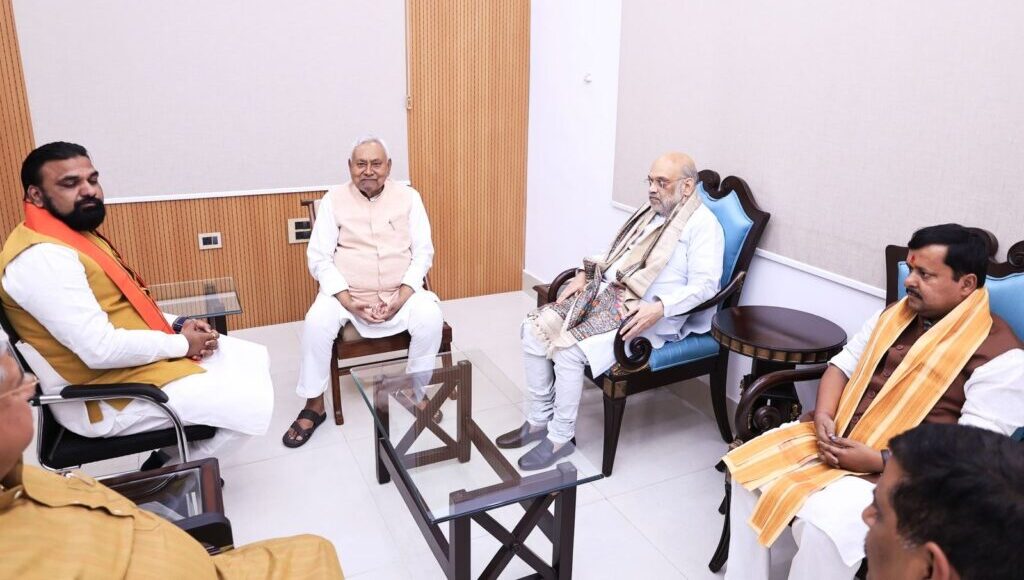
Nitish Kumar filed his nomination papers for the Rajya Sabha in the presence of several senior leaders, including Union Home Minister Amit Shah, Deputy Chief Ministers Samrat Choudhary and Vijay Kumar Sinha, along with other political leaders.