Patna: As the first phase of election campaigning in Bihar concluded on Tuesday evening, the political debate in the state has once again been dominated by an old phrase — “Jungle Raj.” Despite two decades having passed since the Lalu-Rabri era ended, the ruling National Democratic Alliance (NDA) has revived the term as its central campaign theme ahead of voting on November 6 for 121 assembly constituencies across 18 districts, and November 11 for 122 seats in 20 districts.

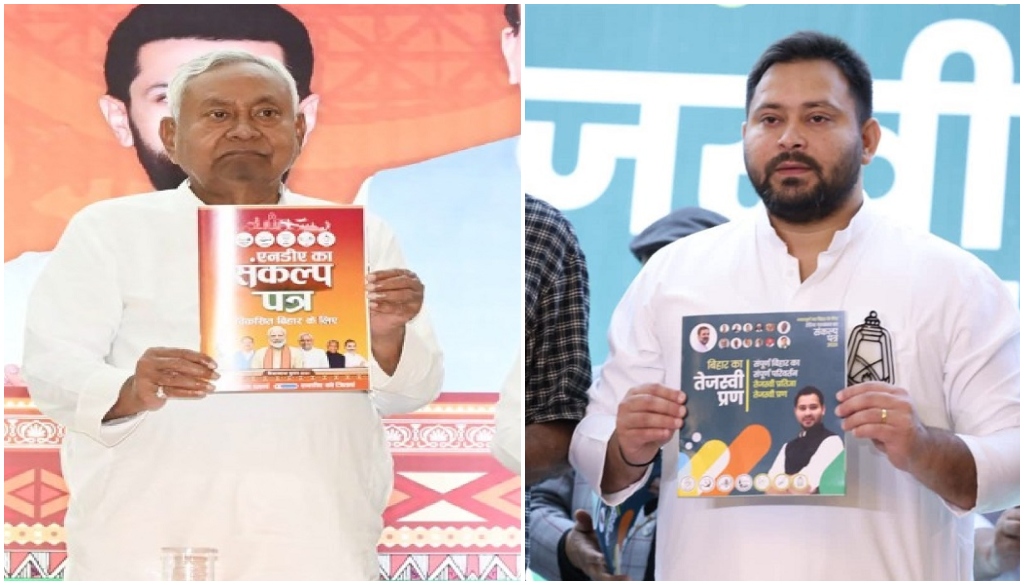
Prime Minister Narendra Modi, Chief Minister Nitish Kumar, and Home Minister Amit Shah have repeatedly invoked “Jungle Raj” to target the Rashtriya Janata Dal (RJD) and the Grand Alliance led by Tejashwi Yadav, while the opposition has countered with issues of unemployment, corruption, and law and order under the present government.
Modi, Nitish, Shah Lead NDA’s “Jungle Raj” Charge
PM Modi first raised the slogan during his October 24 rallies in Samastipur and Begusarai, where he referred to “Jungle Raj” more than 30 times in his 30-minute speech. “Once again NDA government, once again good governance — Bihar will keep the people of Jungle Raj away,” he declared.

At a rally in Samastipur, CM Nitish Kumar said, “Before 2005, people were afraid to step out after evening. There were frequent Hindu-Muslim clashes, schools were deserted, and lawlessness was widespread. Today, peace and progress define Bihar.”
Home Minister Amit Shah, speaking in Chhapra, asked the crowd, “Do you want development or Jungle Raj?” The audience shouted back, “Development.” Shah replied, “This is a clear sign that people do not want a return to Lalu’s rule.”
Meanwhile, Grand Alliance leaders have responded with a counter narrative. “Under Nitish Kumar, 60,000 murders have taken place in 20 years. Law and order have collapsed,” Tejashwi Yadav said, calling the current regime a “reign of goons.”
How the Term “Jungle Raj” Entered Bihar Politics
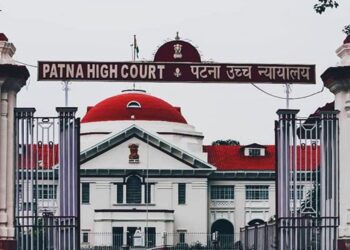
The phrase “Jungle Raj” first entered the political vocabulary of Bihar in 1997, when the Patna High Court remarked during a flood-related hearing that the situation in the city had become “like Jungle Raj.” Opposition parties — particularly the BJP and the Samata Party (now JD-U) — amplified the phrase, linking it to the Lalu-Rabri administration.
During the 1990–2005 period, Bihar witnessed a surge in crime. According to NCRB and SCRB data, 58 massacres occurred between 1991 and 2001, claiming 566 lives, and 1,527 kidnapping-for-ransom cases were recorded between 2001 and 2004. The number fell to 429 between 2006 and 2009 after Nitish Kumar assumed power.
Why NDA Revived the “Jungle Raj” Narrative
Political analysts believe there are three major reasons why the NDA continues to rely on this two-decade-old issue.
1. Countering Anti-Incumbency
“After 20 years in power, Nitish Kumar and the NDA face strong anti-incumbency,” said political analyst Sajjan Kumar Singh. “The ‘Jungle Raj’ narrative helps remind voters of the disorder before 2005, contrasting it with the relative peace and development under Nitish.”
He added that the data supports the contrast. Bihar’s per capita income was around 45% of the national average in 1990-91, but dropped to 25% by 2000. The state’s GDP share in India fell from 4.5% to 2.8% during that period. After 2005, the growth rate rose to nearly 11% between 2004–05 and 2010–11, compared to 3.5% during the last five years of Rabri Devi’s tenure.
2. Mobilizing Women Voters
In the 2020 elections, women voter turnout exceeded men’s by five percentage points — 59.7% compared to 54.6%. The NDA won 90 of the 167 constituencies where women voted in higher numbers. “Women remember the insecurity of the 1990s. Security is a key emotional issue,” Singh said. “By recalling Jungle Raj, the NDA hopes to consolidate female voters again.”
3. Re-Energizing Party Workers
Senior journalist Sanjay Singh called the 2025 polls a “cold election.” “There’s little excitement on the ground. The opposition cadre is aggressive, while NDA workers seem complacent. By raising Jungle Raj, the NDA wants to reignite its base and emotionally charge its workers,” he explained.
Why Tejashwi Can’t Escape the “Jungle Raj” Shadow
Analysts say Tejashwi Yadav struggles to shed his party’s legacy for two reasons — its candidates and its social base.
Strongmen Candidates:
Of the 143 seats contested by the RJD, at least nine candidates are either former strongmen or their relatives, including Ritlal Yadav (Danapur), Veena Devi (Mokama), and Osama Shahabuddin (Raghunathpur). “Only the face has changed in 20 years; the system remains the same,” said Prashant Kishor, founder of the Jansuraj Party.
Caste Equation:
Tejashwi’s candidate list reveals that nearly 49% (70 out of 143) belong to the Muslim-Yadav (MY) combination — the same base built by his father, Lalu Prasad Yadav. “He talks of A-to-Z social justice but hasn’t gone beyond MY politics,” said analyst Abhiranjan Kumar. “This continues to alienate EBC and Dalit voters.”
Impact on the Election
Experts believe the “Jungle Raj” narrative remains potent because it revives old memories. “It’s the one issue Tejashwi can’t answer,” said senior journalist Manikant Thakur. “In 2020, PM Modi successfully turned the campaign around by invoking it. This time, too, the NDA hopes to repeat that playbook.”
As Bihar heads into polling, the campaign lines are clear — the NDA seeks to remind voters of fear and disorder from the past, while the Grand Alliance promises jobs and change for the future. Whether voters choose memory or aspiration will be decided when ballots open on November 6.