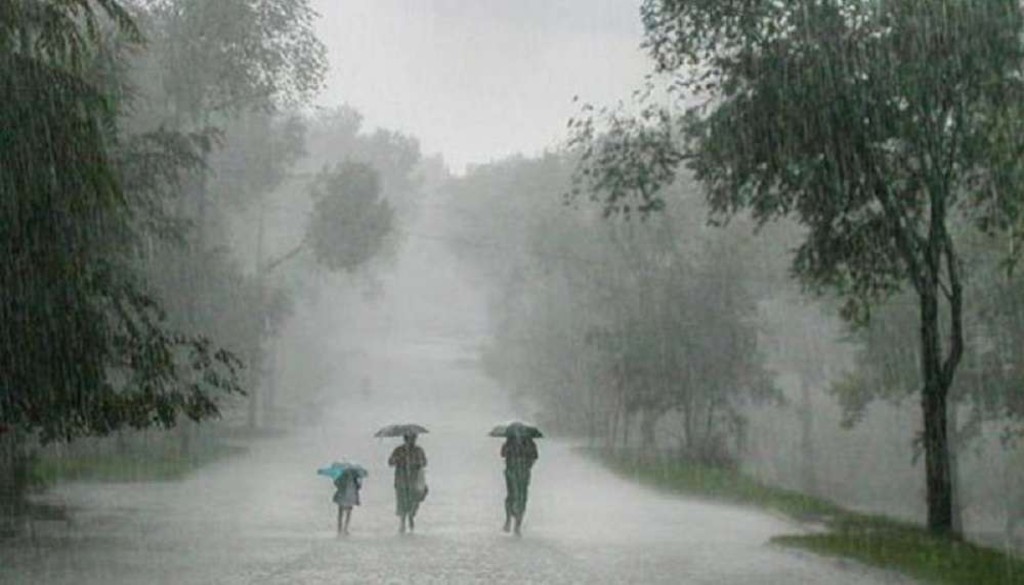
Patna: The southwest monsoon is now fully active across Bihar, with the India Meteorological Department (IMD) issuing a rainfall alert in all 38 districts of the state for Monday. An orange alert has been sounded for 19 districts, including Patna, Nalanda, and Gayaji, warning of heavy rainfall, while the remaining 19 districts are under a yellow alert.

The IMD has urged residents in affected areas to remain alert and take necessary precautions to avoid rain-related hazards such as waterlogging, lightning strikes, road accidents, and potential landslides.
Heavy Rainfall and Waterlogging in Multiple Cities
On Sunday, seven districts including Patna, Chapra, Siwan, Jehanabad, Nalanda, Bettiah, and Darbhanga experienced intense rainfall. In Darbhanga, the city streets were flooded within 30 minutes of downpour, disrupting daily life.

Meanwhile, Patna received heavy rain throughout the day, with overcast skies dominating the weather. In other cities, similar conditions prevailed, with periodic rain showers and rising humidity.
Two Killed by Lightning Strikes in Buxar and Nalanda
The extreme weather claimed two lives on Sunday. In Nalanda, Surja Devi (45), a resident of Sirsia Bigha village in the Nursarai police station area, died after being struck by lightning.
In Buxar’s Kukurbhunka village, Mohit Kumar (12), son of Mirza Ram, lost his life when he was returning home from the fields and was struck by lightning.
Temperature Trends and Rain Forecast
According to the IMD, no significant change in maximum temperature is expected in the next 24 to 48 hours. However, a 2 to 4°C drop is likely in some areas. The minimum temperature is expected to remain stable for the next 4 to 5 days.
On Sunday, Chhapra emerged as the hottest district, recording a maximum of 36.1°C, followed by Darbhanga and Motihari at 36.0°C.
Southwest Monsoon Covers India Ahead of Schedule
The IMD confirmed that the southwest monsoon has now covered the entire country ahead of its usual schedule. Traditionally expected by July 8, this year the monsoon reached all regions, including Rajasthan, western Uttar Pradesh, Haryana, and Delhi by June 29.
Experts say the early onset will benefit Kharif crop sowing and help replenish groundwater and reservoir levels, providing much-needed relief to the agriculture sector.