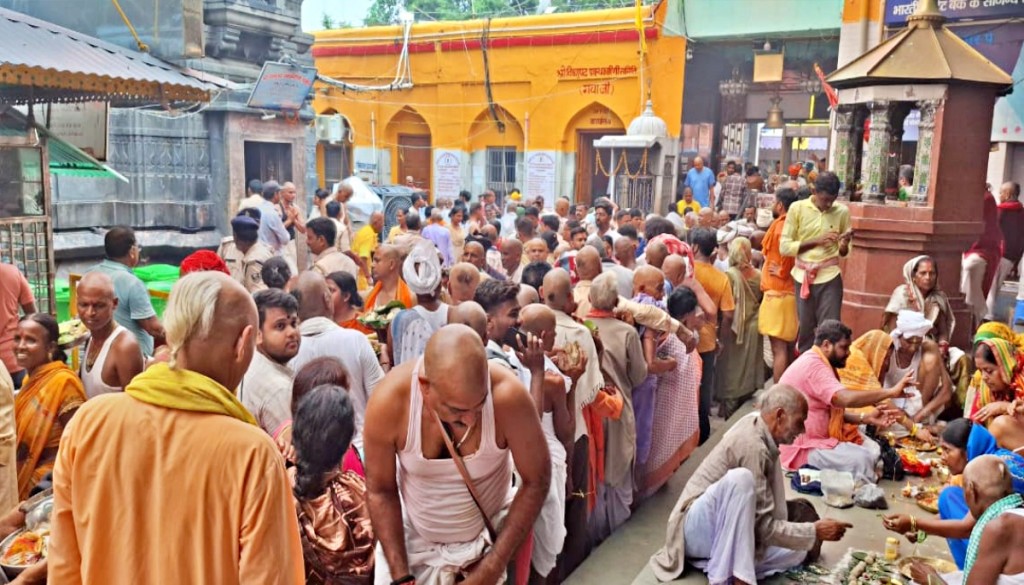
Gayaji: The world-famous Pitru Paksha Mela in Gaya, Bihar, reached a spiritual peak on Monday, as thousands of devotees gathered at Sita Kund and Ram Gaya to perform the ninth-day rituals of Pind Daan, offerings made for the salvation of ancestors.

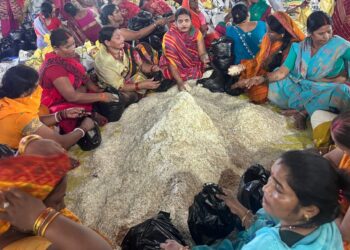
At Sita Kund, the ritual takes a distinctive form: pilgrims use sand balls to represent their forebears, continuing a centuries-old tradition said to have been established by Mata Sita herself. According to local mythology, Sita performed Pind Daan for her father-in-law, King Dasharatha, using a sand ball when auspicious timing demanded swift action, setting the precedent for generations of devotees.
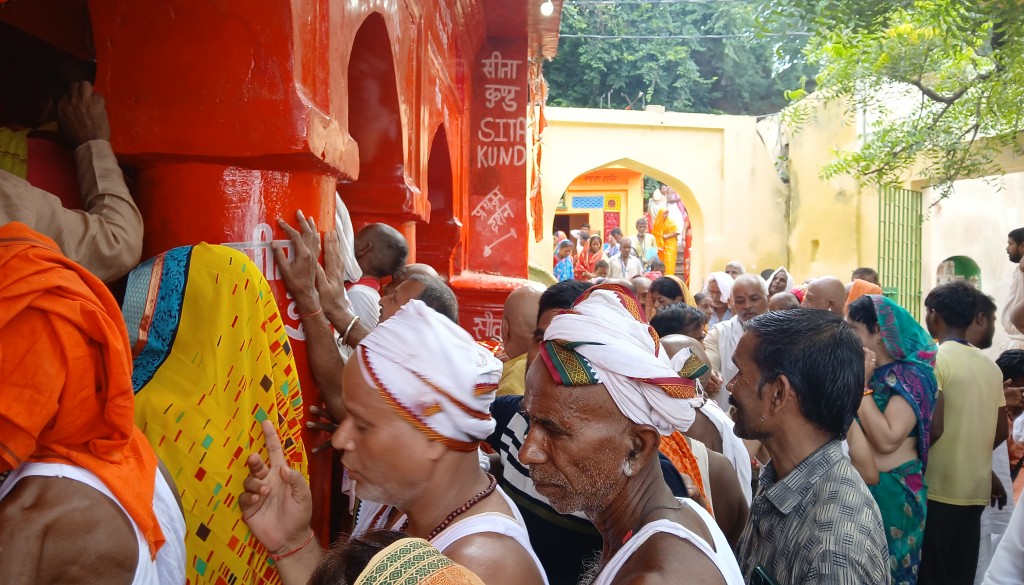

Ram Gaya, situated nearby, is another focal point of the fair. Believed to be the site where Lord Rama, Lakshman, and Sita performed Pind Daan for King Dasharatha, it draws devotees who follow elaborate rituals to ensure the spiritual liberation of their ancestors.
The mythological narratives surrounding these sites remain deeply embedded in the practice. As the story goes, when Sita fashioned a pind from the sand of the Falgu River, the sacred Akshayvat tree affirmed the act, earning its enduring reverence, while the river itself was cursed to flow underground. These legends continue to imbue the rituals with profound spiritual significance.
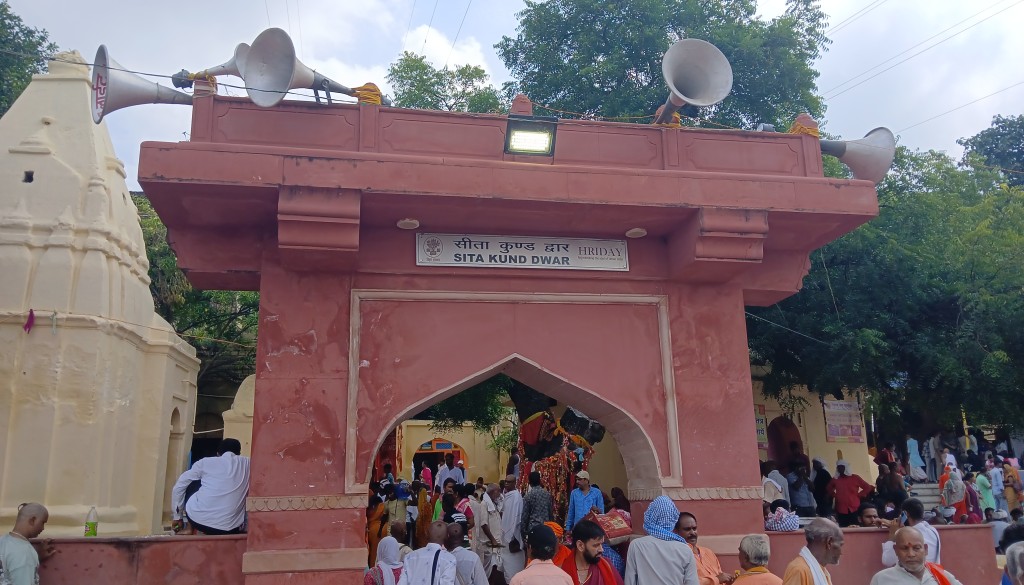
Millions of pilgrims from across India and abroad attend the Pitru Paksha Mela annually, offering Pind Daan with devotion at both Sita Kund and Ram Gaya. “Today, on the ninth day of Gaya Shraadh, there is a special ritual of Pind Daan in Sita Kund and Ram Gaya,” said Gayapal Panda Gajadhar Lal Katariyar. “Pilgrims offer Pind Daan with sand balls as per tradition. This not only provides salvation to their ancestors but also brings spiritual peace and satisfaction to the devotees. The fair is a unique example of keeping this mythological tradition alive.”