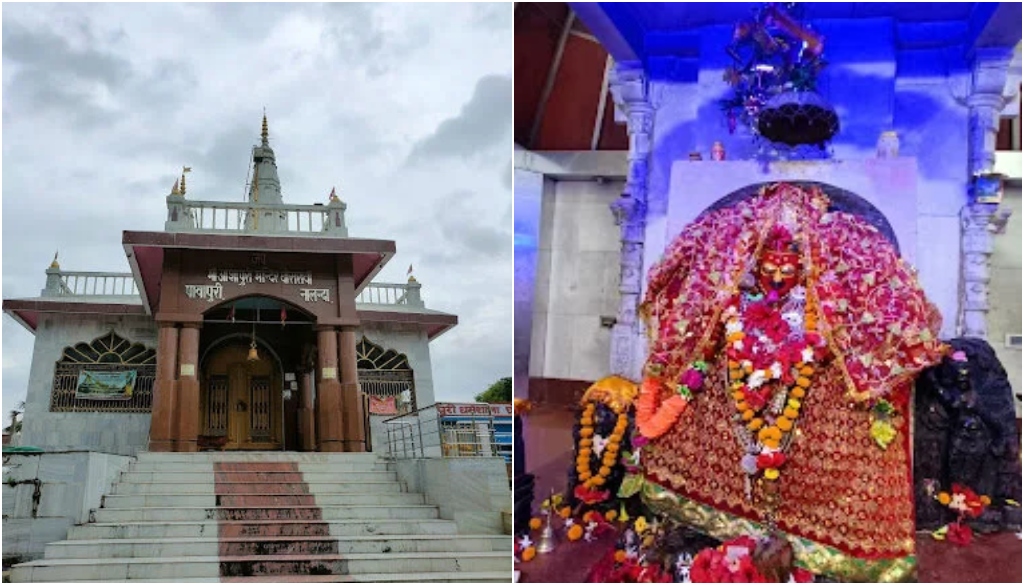
Nalanda: With the onset of Sharad Navratri, the nine-day festival dedicated to Goddess Durga, temples across India have opened their doors to millions of worshippers. But at the Ashapuri Temple in Ghosrawa village, Nalanda district, women are barred from entering the premises during the festival.

For the duration of Navratri – both in the Ashwin and Chaitra months – women are not permitted to enter even the outer complex of the temple, while men are also restricted from the sanctum sanctorum. The ban, locals say, is tied to rituals that have been carried out for centuries.
According to priests, only three designated men are allowed inside the sanctum sanctorum during the festival, where the recitation of the Chandi Path – a sacred Hindu text – takes place for several hours each day. Alongside, tantric rites are performed, which temple authorities claim can generate energies that could adversely affect women if they are present.

“This practice has been handed down through generations,” a temple caretaker told reporters. “It is not about discrimination but about preserving the sanctity of the rituals.”
Historians trace the tradition back to the 9th century, when the site was a prominent Buddhist meditation centre that attracted monks and tantric practitioners from across the region. The rituals associated with Navratri are believed to have emerged from this legacy.
Women and men alike are permitted to enter only after a special havan (fire ritual) on the final day of Navratri, which is believed to purify the space of any negative forces.
Despite the restrictions, the temple remains a popular pilgrimage site, drawing devotees from Bihar, Jharkhand, West Bengal and Odisha. Many believe that prayers offered at Ashapuri Temple are always fulfilled – a belief that has sustained its reputation for centuries.