Patna: Ahead of the Bihar assembly elections, the debate on reservation has once again taken center stage. This time, it has been triggered by Congress MP and Leader of the Opposition Rahul Gandhi, who has raised a strong demand for expanding reservation benefits for the Extremely Backward Classes (EBC). His move has unsettled both the BJP and the JD(U), as neither party can openly oppose or fully support the demand without risking political fallout.

The reservation issue is not new to Bihar politics. In 2015, the BJP suffered a major setback after RSS chief Mohan Bhagwat called for a review of the reservation policy. Ten years later, the issue has resurfaced, and Congress is trying to use it to its advantage.
What promises did the Grand Alliance make for the EBCs?
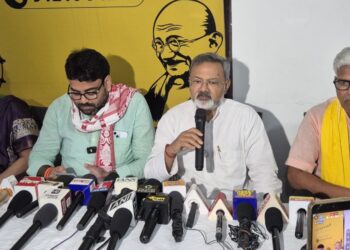
On September 24 in Patna, Rahul Gandhi, Mallikarjun Kharge, Tejashwi Yadav, and Mukesh Sahni—along with Left leaders—released the Ati Pichhda Nyay Sankalp (Social Justice Resolution). It listed ten major promises, including:

- Sending laws granting more than 50% reservation to the Centre for inclusion in the 9th Schedule.
- Increasing reservation in Panchayats and Municipalities from 20% to 30%.
- Implementing reservation in private colleges and universities.
- Enacting a Prevention of Atrocities Against Most Backward Classes Act.
- Allocating land to landless SC/ST/OBC/EBC families for housing.
- Abolishing the “Not Found Suitable” criteria in government job recruitment.
- Establishing a Reservation Regulatory Authority to oversee and safeguard caste-based reservations.
How much reservation is applicable in Bihar now?
Currently, Bihar provides 60% reservation in government jobs—16% for SC, 1% for ST, 18% for EBC, 15% for BC, and 10% for economically weaker sections among upper castes.
In November 2023, the Nitish Kumar government passed a law raising the quota to 75%, but the Patna High Court struck it down in June 2024, calling it unconstitutional and violative of equality. The matter is now pending before the Supreme Court.
What are the constitutional hurdles?
The 1992 Indira Sawhney case capped reservations at 50%, except in “extraordinary circumstances.” This has prevented states like Maharashtra, Gujarat, Rajasthan, and Haryana from pushing through additional caste quotas.
Experts say the only way forward is through Article 31C (which protects laws promoting socio-economic justice) and inclusion in the 9th Schedule, which limits judicial review. However, such inclusion requires central government approval—something unlikely under the BJP-led Centre.
Tamil Nadu, with 69% reservation, is the model often cited by Congress.
Why is Rahul Gandhi playing the EBC card in Bihar?
- To capture Nitish Kumar’s traditional base
- Nitish Kumar’s political rise has long been powered by the EBC community. With his health and influence reportedly weakening, political parties are eyeing this crucial vote bank. Rahul Gandhi has made multiple visits to Bihar in the past year, signaling Congress’s intent to woo this demographic.
- The Grand Alliance needs 5–7% more votes to win
- In 2020, the NDA won with 125 seats against the Grand Alliance’s 110, despite just a narrow vote difference (37.9% vs 39%). A CSDS-Lokniti post-poll survey showed that 58% of EBC voters backed the NDA, while only 18% sided with the RJD-led alliance.
By securing even a fraction of the 36% EBC vote share (as per the 2023 caste census), the Grand Alliance could tilt the balance in its favor.
Historical context: how EBCs shaped Bihar politics
- 1990–2005: Lalu Yadav consolidated EBC support but gradually lost it due to governance issues.
- 2005–2020: Nitish Kumar built his career on EBC empowerment, helping him stay in power for two decades.
- 2010 elections: 63% of EBCs voted for the NDA.
- 2015 elections: When Nitish allied with Lalu, the Grand Alliance swept 178 seats with 42.9% votes.
- 2020 elections: EBC votes again split, giving the NDA a narrow edge.
EBCs now decide the outcome in nearly 120 of 243 Assembly seats, especially in Mithila, Kosi, Tirhut, and Magadh regions.
National impact of Rahul Gandhi’s demand
- Changing dynamics of power
- Rahul Gandhi has been championing the slogan “jitni aabadi, utna haq” (rights proportional to population). Political observers say that just as Mandal politics reshaped India in the 1990s, Rahul’s EBC push could alter the current narrative dominated by Hindutva.
- Expanding reservation debates nationwide
- With the Centre approving a caste census earlier this year, pressure to review reservation caps is mounting. Rahul’s insistence on breaching the 50% barrier could set the stage for larger national reforms.
Will reservation spread to the private sector?
Rahul Gandhi has already hinted at this. On September 24, the Congress resolution promised reservations in private colleges and universities. Earlier, in Darbhanga, he said he would push for quotas in private institutions as well.
This isn’t new—Manmohan Singh had floated the idea in 2006, but faced strong industry pushback. Business groups argued that such quotas would hurt efficiency and competitiveness. Instead, they promised to promote SC/ST entrepreneurs voluntarily.
Now, with growing demands for social justice, the debate could reignite, particularly if opposition parties rally behind Rahul’s proposal.
Conclusion
The EBC issue has emerged as a decisive factor in Bihar’s electoral landscape. With 36% of the population belonging to the EBC category, even a 5–7% shift in votes could decide whether the NDA retains power or the Grand Alliance stages a comeback.
Nationally, Rahul Gandhi’s demand not only revives Mandal-era politics but also tests the BJP’s ability to balance its Hindutva plank with caste realities. Whether Congress succeeds in turning the EBC card into a winning formula will determine not just Bihar’s future, but also the contours of Indian politics in the years ahead.