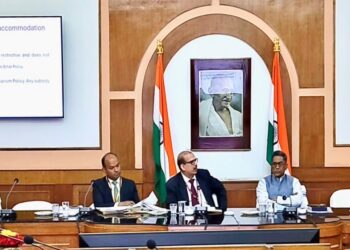
Patna: In a move designed to disrupt the political landscape of Bihar’s capital, Jan Suraaj today announced its first list of 51 candidates for the upcoming Assembly elections, naming noted mathematician and academic Professor K.C. Sinha as its contender for the high-profile Kumhrar Assembly seat.

The Kumhrar constituency is considered the most critical urban segment in Patna, historically acting as a barometer for the political mood in the state capital. The decision to field a non-political figure in this key battleground has immediately sent ripples through Patna’s political circles, especially as the seat has been a steadfast Bharatiya Janata Party (BJP) stronghold for several consecutive terms.
The Strategy: “Face Connected to the People”

Professor Sinha’s candidacy aligns perfectly with Jan Suraaj’s core election strategy, which is centered on the slogan “Bihar for Change.”
Jan Suraaj founder Prashant Kishor has repeatedly emphasized his focus on candidates with a clean image, deep local ties, and no past political baggage. Sinha, who retired as Principal of Patna University and served as Vice Chancellor of Nalanda Open University, embodies this approach.
Born in Bhojpur in 1954, Sinha has been an active, organizational member of the Jan Suraaj Abhiyan since its inception and has played a key role in public communication efforts. By fielding an academic veteran, Jan Suraaj aims to leverage the anti-incumbency sentiment and appeal to voters seeking a governance shift away from traditional, career politicians.
The Kumhrar Challenge
The announcement directly challenges the BJP, which has yet to declare its candidate for Kumhrar. The current MLA, Arun Kumar Sinha, has secured multiple victories here, cementing the party’s dominance.
The choice of Kumhrar as a stage for this major candidate announcement signals Jan Suraaj’s intent to compete directly and aggressively in urban areas, moving beyond the traditional rural focus of many regional parties. The release of 51 names marks a significant step for Jan Suraaj in formalizing its presence as the third front in a typically bipolar electoral contest, while the major alliances continue their internal seat-sharing discussions.