Patna: The four-day Chhath festival, one of Bihar’s most significant religious observances, will begin on Saturday with the ritual of Nahai-Khaai, performed during Anuradha Nakshatra and Shobhan Yoga. Devotees will bathe in the Ganges River, offer prayers to Lord Bhaskar (the Sun God), and prepare the traditional Nahai-Khaai prasad as they begin their four-day vow of devotion and fasting.

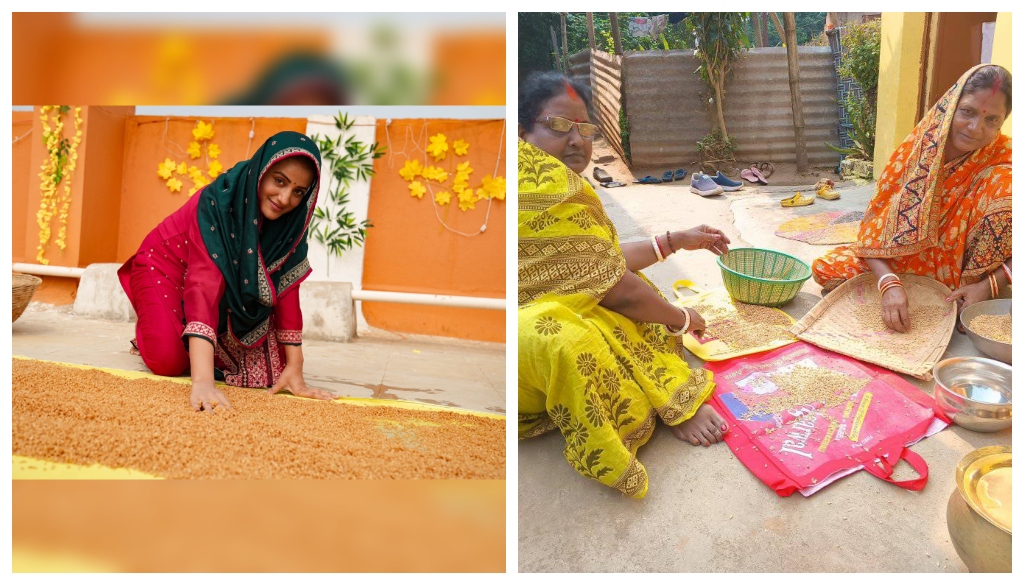
As part of the ritual, devotees will offer arwa rice, chana dal, pumpkin curry, and gooseberry chutney to the deity before partaking in the meal themselves. The ceremony marks the spiritual cleansing and initiation of the Mahavrat.
According to astrologers, on the second day—Sunday evening—devotees will prepare Kharna prasad, consisting of jaggery kheer, roti, and bananas, under Jyeshtha and Moola Nakshatras.

On October 27, devotees will offer Arghya to the setting sun in the Purvashadha Nakshatra, marking the third day of the fast. The final day, October 28, will see offerings to the rising sun under the Uttarashadha Nakshatra, coinciding with Ambhaychar and Amalakirti Yogas, formations astrologers consider highly auspicious.
अठारहवीं शताब्दी के उत्तरार्ध (सन् १७९५-१८०० ईस्वी) में पटना के पावन गंगा तट पर छठ पर्व का भव्य दृश्य। नौकाओं, श्रद्धालुओं और घाटों की सजीव झाँकी ऐतिहासिक सांस्कृतिक परंपरा का साक्ष्य प्रस्तुत करती है। #GlobalChhath pic.twitter.com/ht7EgRY8C8
— Bihar Foundation (@biharfoundation) October 22, 2025
Astrologers note that this year’s celestial configuration is particularly rare. Venus will be positioned in the tenth house from the Moon, while most other planets will align in the second and twelfth houses, creating favourable planetary yogas said to enhance the spiritual power of the fast. Sunrise in Patna on October 28 is expected at 5:45 am.
Local priests advise that devotees begin evening prayers around half an hour before sunset, and morning prayers after the rising sun turns red. After making offerings to the rising sun, vratins (devotees) will break their 36-hour fast by partaking of prasad, marking the conclusion of the festival.
Astrologers also recommended chanting the Surya Mantra—“Om Ghrini Suryaya Namah”—along with the Gayatri Mantra or Aditya Hridaya Stotra, which are believed to bring divine blessings and purification.
Adding mythological context, astrologers explained that, according to the Markandeya Purana and Valmiki Ramayana, Suryadev (the Sun God) is regarded as Chhathi Maiya’s brother. As per the texts, Sita is said to have observed the Chhath fast on the banks of the Ganga in Munger after Lord Rama’s victory over Ravana, while Draupadi’s observance of the fast helped restore the Pandavas’ lost kingdom.
Chhathi Maiya, described in scriptures as the mental daughter of Lord Brahma, is also associated with Katyayani Devi, worshipped on Shashthi Tithi. The offering of sugarcane during Chhath is said to symbolise devotion to the Sun and acknowledge the life-giving power of light and energy.
This year’s celebrations, marked by rare planetary alignments, are expected to witness record participation as millions of devotees across Bihar, Jharkhand, and eastern Uttar Pradesh gather at riverbanks, ponds, and ghats to worship the setting and rising sun with deep reverence.