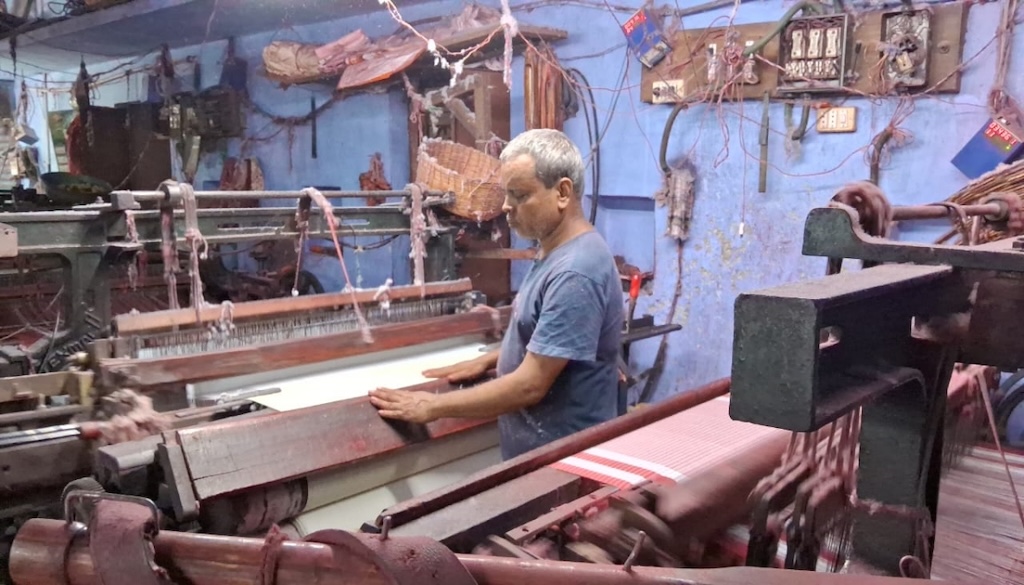
Bhagalpur: The unrelenting clatter of power looms in Bhagalpur — long accepted as an unavoidable part of the district’s weaving tradition — may soon become a thing of the past. The Indian Institute of Information Technology (IIIT) Bhagalpur has developed a prototype of a “soundless loom”, designed to reduce noise levels by 70–80% compared with traditional machines.

The innovation, led by IIIT registrar and researcher Dr Gaurav Kumar, aims to provide relief to more than 70,000 people employed in the region’s textile industry, particularly in Nathnagar and Champanagar, where looms operate inside almost every household. While Bhagalpuri silk and linen fabrics remain in high demand, the loud mechanical noise generated by looms has caused widespread hearing problems, headaches and communication difficulties for weavers working long hours in confined spaces.
Dr Kumar said the team modified the loom’s mechanical system to reduce vibration and friction — the main sources of noise — and is working to replace the traditional picking mechanism with an actuator. “If we can fully integrate an actuator, the loom will become soundless, which will greatly benefit weavers,” he said. The prototype was developed during his PhD research, in collaboration with MTech student Juwan Chaudhary.

The soundless loom is currently at the prototype stage, with field trials planned in local weaving clusters in the coming months. If successful, IIIT Bhagalpur hopes to mass-produce the model and make it affordable for weavers.
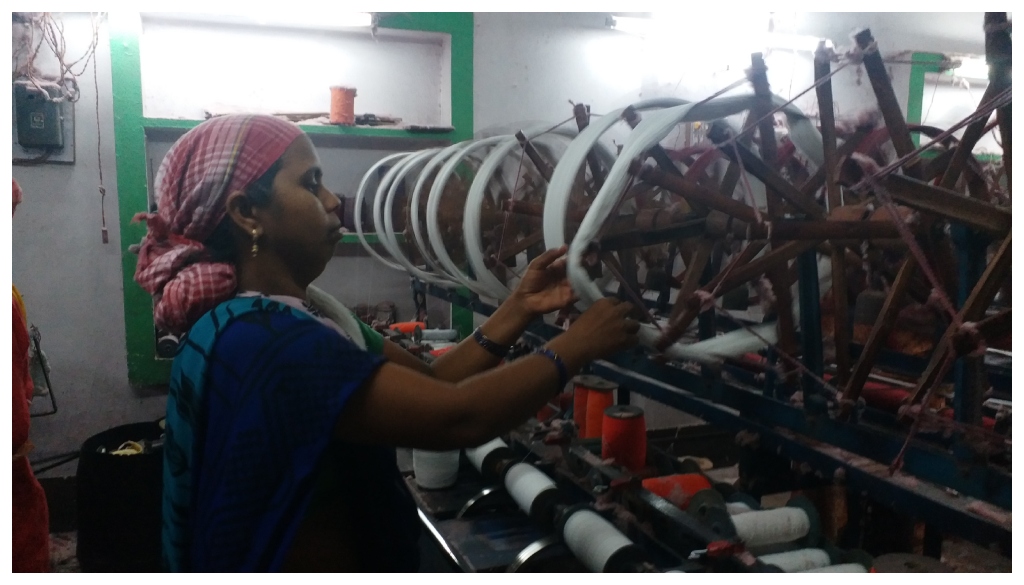
Weavers working with silk, dull sheets and linen — key textile products in Bhagalpur’s economy — have welcomed the development. Many suffer from long-term hearing loss due to continuous exposure to loom noise. “Our objective is to improve working conditions and the environment for weavers,” Dr Kumar said. “This technology will not only protect their health but also increase productivity.”
The research team has visited weaving households in Champanagar and Jagdishpur to study working patterns and gather feedback. The initiative is being seen as a significant step towards integrating traditional industries with modern engineering solutions, with potential to enhance both welfare and output in Bhagalpur’s renowned silk sector.
Officials and textile groups say that if the silent loom becomes commercially viable, it could transform the lives of thousands of weavers and strengthen the identity of Bhagalpuri silk in national and global markets.