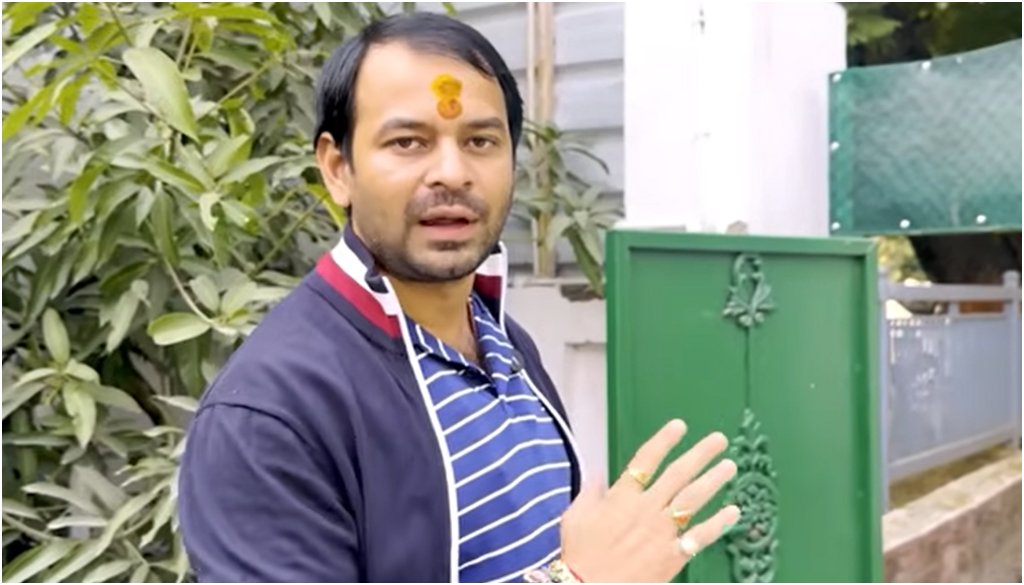
Patna: RJD leader and former minister Tej Pratap Yadav is under scrutiny after reports surfaced that he has not paid the electricity bill for his private residence in Tej Pratap Nagar, Beur, for nearly three years. Despite outstanding dues exceeding Rs 3.56 lakh, the power connection to the property remains active.

According to official records, the consumer account linked to Tej Pratap’s Beur residence (Account No. 101232456) has not seen any bill payments since July 20, 2022, when an amount of Rs 1,04,799 was deposited. The latest bill dated November 2025 shows energy dues of Rs 2,30,160.54, a late fee of Rs 23,681.59, and other charges totaling Rs 71,142.15 — bringing the outstanding bill to Rs 3,24,974.28. Including the current billing cycle, the total dues stand at Rs 3,56,135.
The electricity connection at the residence was issued in the name of Tej Pratap Yadav on July 7, 2012. Despite the long-standing default, officials have not disconnected the connection — raising questions over special treatment for political figures. As per current rules, supply to any consumer with dues beyond Rs 25,000 should be disconnected.

While most households in Bihar now have smart meters ensuring prepaid billing, Tej Pratap’s residence reportedly has a postpaid connection, allowing uninterrupted usage without recharge. Sources say the RJD leader frequently visits the Beur house, although he currently lives in his official government accommodation.
Amid growing criticism, South Bihar Power Distribution Company Limited General Manager Arvind Kumar clarified that no exemptions are granted to public representatives. “We only go by the consumer ID. We do not identify who the person is,” he said, adding that action is being taken against defaulters across the region.
Following concerns over rising unpaid dues — despite the free 125-unit electricity scheme — Kumar has directed all zonal engineers to intensify bill recovery. The company is also hiring temporary staff to chase top defaulters and improve revenue collection till March 2026.
The development has sparked public debate over whether VVIP consumers are being shielded from strict regulations that apply to ordinary citizens, whose electricity gets disconnected immediately after their meter balance runs out. The unanswered question remains: why are rules different for some?