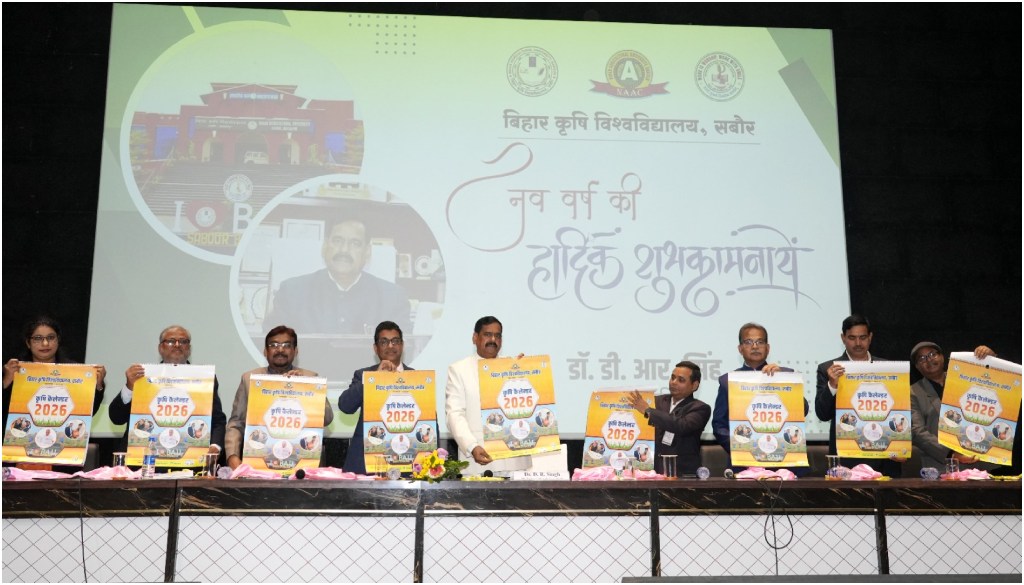
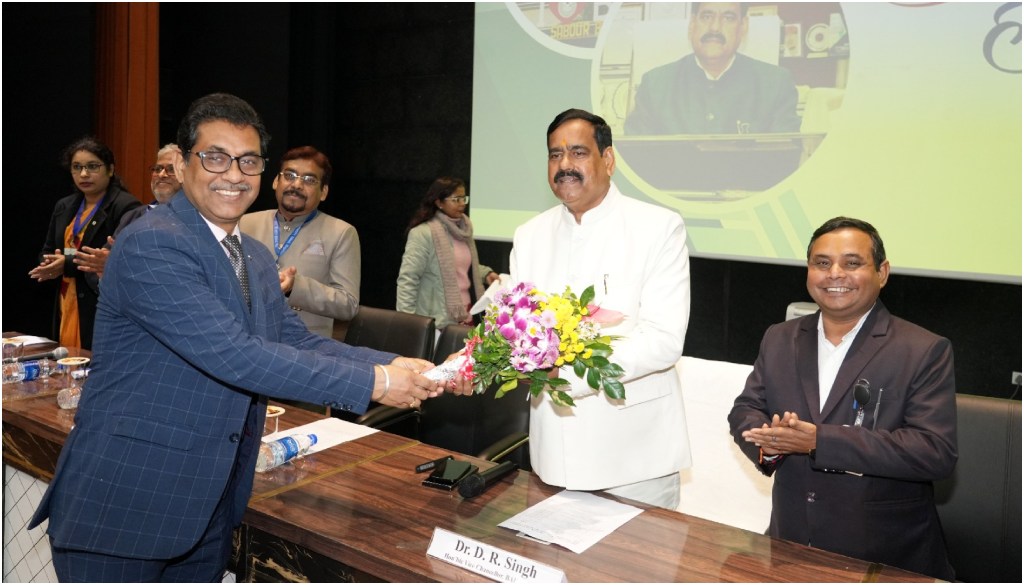
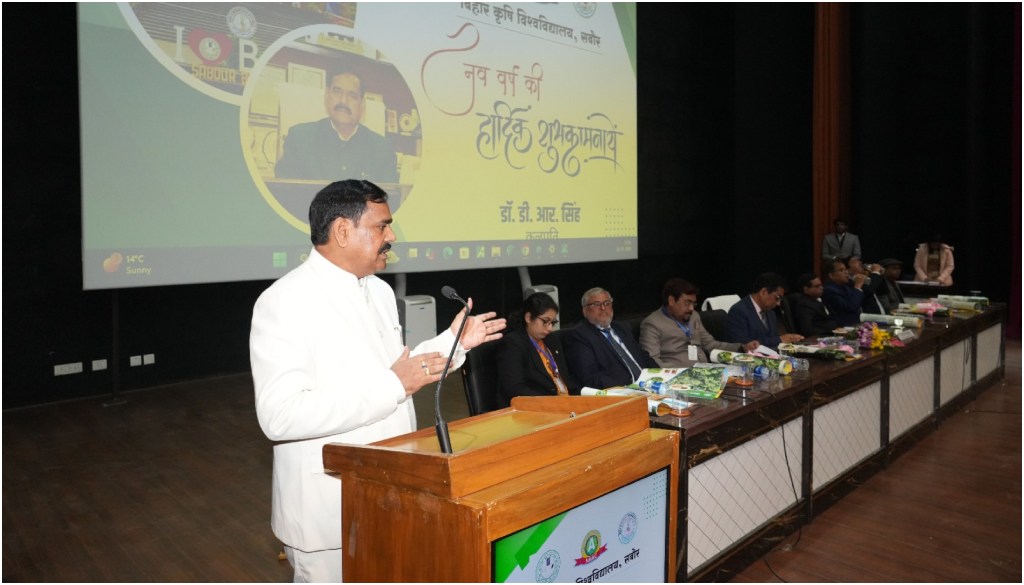
Bhagalpur: Bihar Agricultural University (BAU), Sabour, ushered in New Year 2026 with a formal programme at the Karpuri Thakur Auditorium, combining reflection on the institution’s recent achievements with an outline of its priorities for the year ahead.

Presiding over the event, the vice-chancellor, D R Singh, described 2025 as a “year of achievements” for the university, citing national accreditations such as NAAC and NIRF, six newly granted patents and BAU’s designation by NITI Aayog as a nodal centre for eastern India. He announced that 2026 would be observed as the “Year of Goals and Product Development”, with a renewed emphasis on translating research into tangible outcomes for farmers and society.
Opening the programme, the dean of the faculty of agriculture drew on the symbolism of Janus, the Roman god of beginnings, to underline the need for both reflection and forward planning. He stressed the importance of strengthening academic activity, fostering discipline among students and encouraging innovation through collective effort.

Several senior officials outlined recent reforms and new initiatives. The director of research, Anil Kumar Singh, said BAU was steadily consolidating its academic and scientific standing through collaborative work by faculty, staff and students. The dean of postgraduate studies, S K Pathak, announced a near doubling of postgraduate and PhD seats, the introduction of Best Teacher and Best PhD Thesis awards, and new top-up fellowships for research in oilseeds, pulses and makhana (fox nut).
Student welfare measures were also highlighted. Shweta Shambhavi, director of student welfare, said all fellowships had been shifted to a cashless, online system, while steps were under way to streamline book grants and expand campus medical services. Plans were also outlined for improved banking, pharmacy, postal and shopping facilities, alongside an All India educational tour for students.
During the ceremony, the vice-chancellor inaugurated and released a number of publications and projects, including the Agricultural Calendar 2026, BAU Achievements, BAU Happenings and an international conference brochure. A large-scale digital soil mapping project, described as the biggest of its kind in Bihar, was also launched. The three-year project will cover all 38 districts of the state and is expected to provide employment to around 60 students.
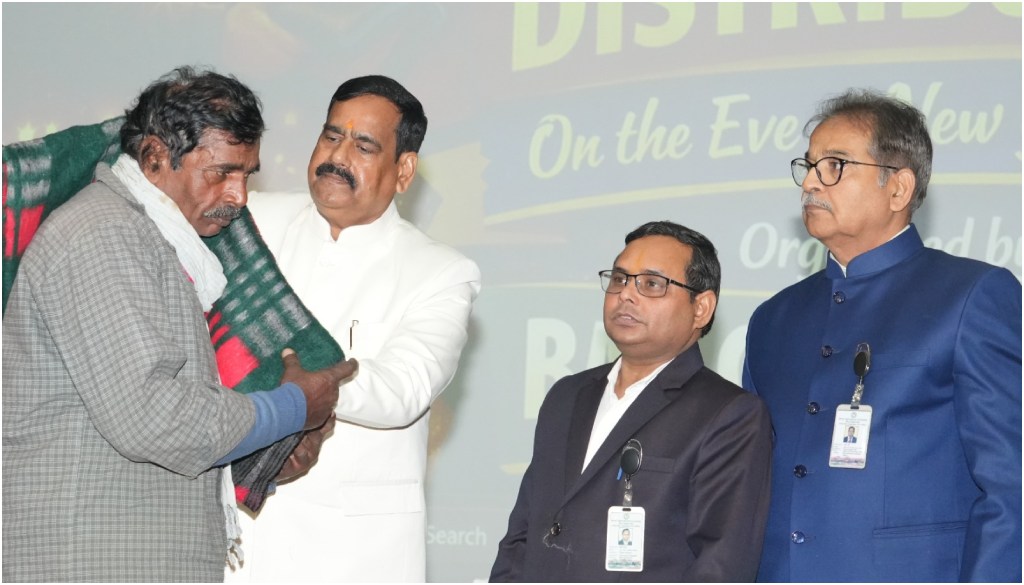
In a gesture underscoring social responsibility, BAU distributed blankets to more than 30 labourers working in the university’s farm and soil science departments. Singh said the initiative reflected the institution’s recognition of the essential role played by its workforce, particularly during the winter season.
Looking ahead, the vice-chancellor said BAU would intensify its “One Scientist, One Product” initiative, with a special focus on makhana, a crop closely associated with Bihar. He also announced that scientists would be encouraged to produce short technical videos to communicate research findings directly to farmers and the wider public.
Institutional goals for 2026 include evaluating the impact of work carried out in the university’s 43 laboratories, expanding NABL-accredited facilities, improving research output and citations, and pursuing global visibility through QS rankings. Faculty members were urged to integrate artificial intelligence into at least 10% of their work.
The university also reported that its community radio station, FM Green, has been listed with the Central Bureau of Communication, enabling it to broadcast government advertisements, including campaigns linked to rural development initiatives.
The programme concluded with a presentation on BAU’s achievements in 2025, followed by a vote of thanks from the registrar, Mizanul Haque. Light refreshments were served to attendees at the end of the event.