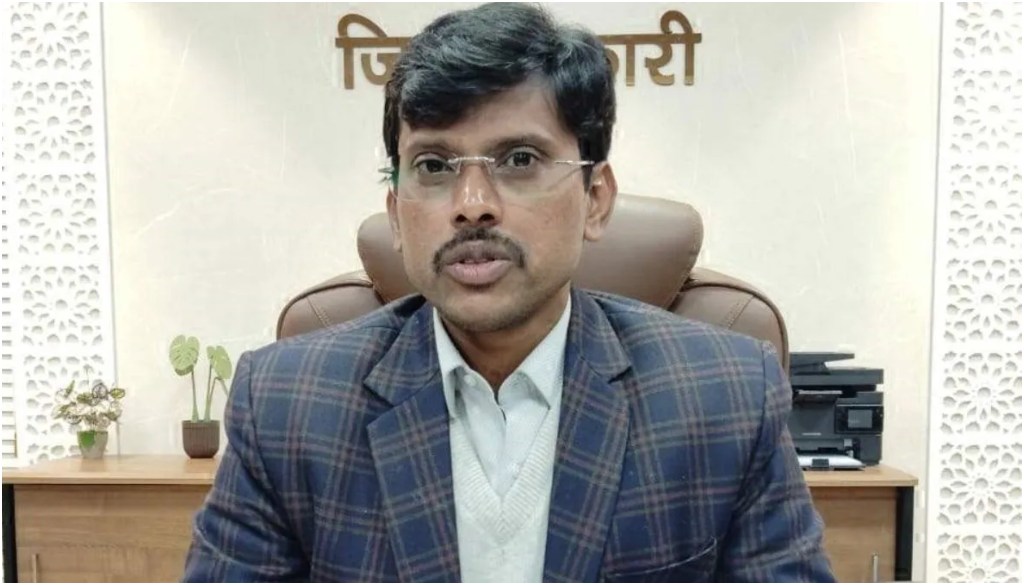
Patna: In homes long marked by silence, children who once relied only on gestures are beginning to hear, speak and smile. The change is the result not of a medical breakthrough but of an administrative initiative that has brought together existing welfare schemes to deliver early diagnosis and treatment for deaf and hard-of-hearing children across Bihar.

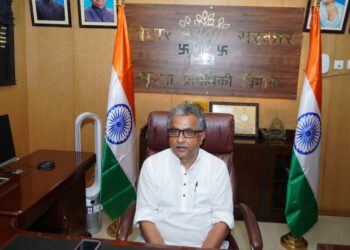
The programme, called Shravan Shruti, was devised by the district magistrate, Dr Thiyagarajan S M, after he encountered the struggle of a low-income family in Gaya whose child was born deaf. Reviewing central and state schemes, he developed a model that identifies affected children early, provides hearing aids or cochlear implants, and supports families through up to two years of free speech therapy and physiotherapy.
Crucially, the scheme also covers the indirect costs that often keep poorer families from treatment, including travel, food and accommodation for parents during surgery and follow-up therapy. “Poverty should not be the reason a child is excluded from the mainstream,” an official involved in the programme said.

After Dr Thiyagarajan took charge in Patna, the initiative was launched as a pilot in Phulwarisharif and Danapur in June. In August 2025, it was rolled out statewide by Bihar’s health and law minister, Mangal Pandey. The programme has since been selected for a national summit on best practices, and the state health minister has recommended its inclusion in national policy.
Big impact, no extra budget
Cochlear implants can restore hearing in children under six, but the costs are prohibitive: surgery and equipment can cost Rs 7–10 lakh, followed by prolonged speech therapy. Shravan Shruti addresses this without a separate budget by converging funds from the state health committee, the social welfare department and the central government’s ADIP scheme, which supports the purchase of assistive devices for people with disabilities.
As Bihar lacks a central government–affiliated cochlear implant centre, the state partnered with the S N Mehrotra Memorial ENT Foundation in Kanpur, Uttar Pradesh. Screening drives were launched using panels of audiologists and available otoacoustic emission machines, with teams visiting Anganwadi centres to identify children with hearing impairments.
More than 350,000 children have been screened so far. Of these, 1,769 have received hearing aids, 105 have been identified as candidates for cochlear implants, and 80 have already undergone surgery. Many are now leading what doctors describe as normal lives after completing speech therapy.
In Patna alone, 66,434 children were examined between July and November. Hearing problems were detected in 160 children, and after further tests, 56 were identified for implants. Forty-five were referred to Kanpur, and 32 have already had successful surgeries. The district has set a target of 500 cochlear implant surgeries over the next six months, involving multiple departments, civil society groups and parents.
Breaking a generational silence
Dr Thiyagarajan recalls a family in Gaya’s Gurua block where deafness had persisted across three generations. Through Shravan Shruti, a child in that family has become the first to hear and speak. “That moment became the driving force,” he said.
In India, an estimated five to eight in every 1,000 children are born deaf or hard of hearing. Specialists say that if identified before the age of six, hearing and speech can be largely restored through timely treatment and therapy; delays can make language development far more difficult. Officials behind the programme emphasise that parental participation remains critical.