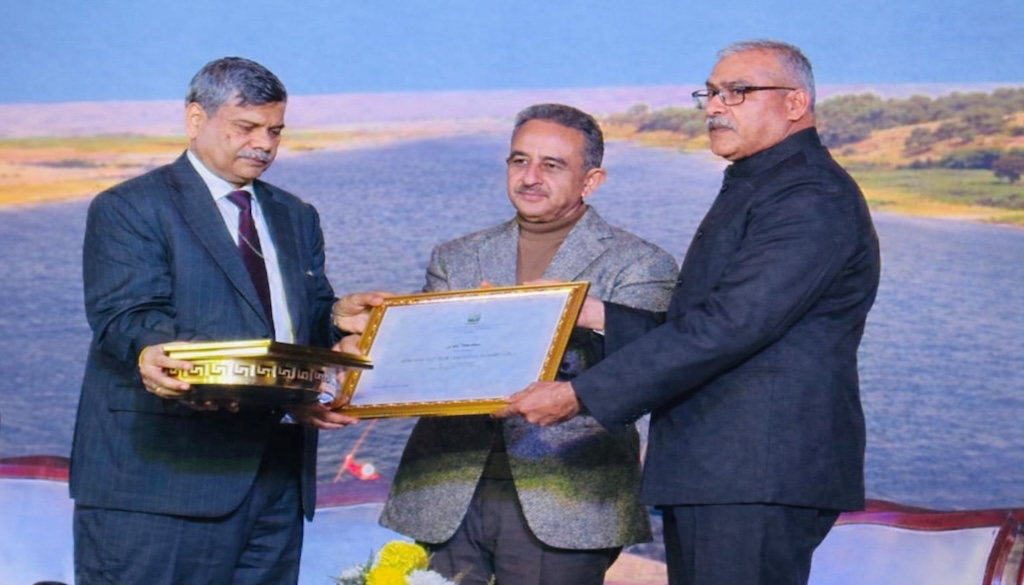
Patna/New Delhi: Bihar’s wetlands moved further into the global conservation spotlight on Monday as the Ministry of Environment, Forest and Climate Change presented Ramsar certificates for three newly designated sites in the state.

The certificates were handed to S Chandrasekar, member secretary of the State Wetlands Authority, at a function in New Delhi. Such certificates are formally issued following the declaration of a wetland as a Ramsar site, marking its inclusion under the international framework for wetland conservation established by the Ramsar Convention.
The presentation coincided with World Wetlands Day, observed annually on February 2 to mark the adoption of the Ramsar Convention in Iran in 1971. The global theme for 2026 — Wetlands and Traditional Knowledge: Celebrating Cultural Heritage — places emphasis on the role of indigenous and local communities in conserving wetlands over generations, recognising these landscapes as living cultural spaces rather than only ecological assets.

Bihar’s expanding Ramsar footprint
Bihar’s profile on the global conservation map has steadily grown in recent years. Kabar Lake, the state’s first Ramsar site and Asia’s largest freshwater oxbow lake, remains a vital habitat for more than 220 bird species. The Nagi and Nakti Bird Sanctuaries, added to the Ramsar list in 2024, have since emerged as important destinations for migratory birds and eco-tourism.
With the inclusion of Gokul Reservoir in Buxar, Udaipur Lake in West Champaran, and Gogabil in Katihar in 2025, India’s total number of Ramsar sites has risen to 98, six of them now located in Bihar. These oxbow lakes play a crucial role as natural buffers along the Ganges and Gandak river systems, helping to regulate floods and sustain local biodiversity.
Why wetlands matter
Wetlands — ranging from marshes and swamps to lakes and riverbanks — are often described as the “kidneys of the earth” for their ability to filter water, recharge groundwater and moderate floods, while supporting rich ecosystems. In Bihar alone, 4,316 wetlands larger than 2.25 hectares have been georeferenced, underlining both the scale of the state’s wetland resources and the responsibility to protect them.
Officials say the latest recognition is not only an environmental milestone but also a reminder that safeguarding wetlands is intertwined with livelihoods, culture and long-term resilience in a flood-prone state like Bihar.