Patna: Cancer continues to rank among the world’s most serious health challenges, affecting millions of people annually and placing a significant burden on healthcare systems. Medical experts warn that many cancers develop silently without obvious symptoms, making early detection difficult. However, recognising certain warning signs and seeking timely medical assessment can dramatically improve treatment outcomes and survival rates.

Cancer is a broad term describing diseases characterised by uncontrolled growth of abnormal cells that can invade surrounding tissues and spread to distant organs through the blood and lymphatic systems a process known as metastasis. With more than 100 types of cancer identified, symptoms and progression vary widely, yet clinicians say awareness of common early indicators remains crucial for prompt diagnosis.
Among the most frequently reported early warning signs is unexplained weight loss, which the World Health Organization notes may result from metabolic changes and reduced appetite caused by tumour activity. Persistent or unexplained pain is another potential indicator, particularly when it worsens over time or is accompanied by neurological symptoms. Dermatological changes including alterations in moles, irregular pigmentation, or bleeding skin lesions may also signal malignancy, especially skin cancers such as melanoma.

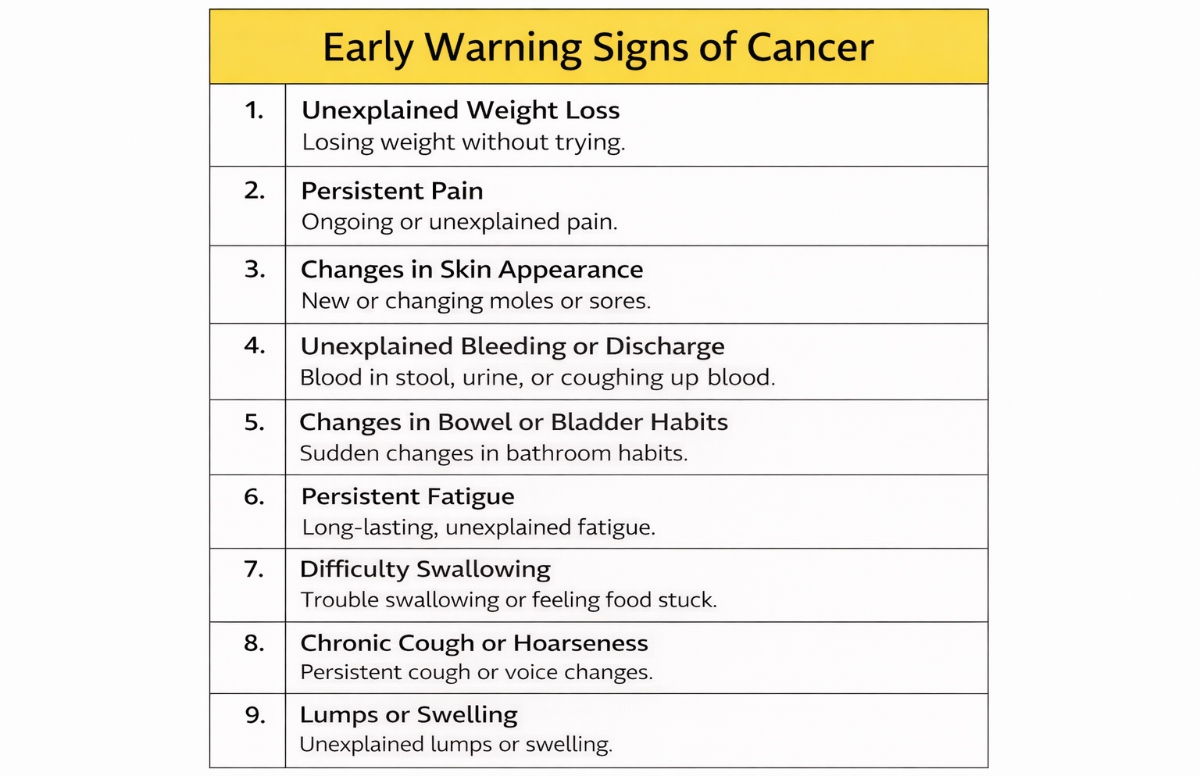 Other concerning symptoms include abnormal bleeding or discharge, such as blood in stool, coughing up blood, or irregular vaginal bleeding. Sudden changes in bowel or bladder habits, including persistent diarrhoea, constipation, or blood in urine, can also warrant investigation, according to the National Cancer Institute. Persistent fatigue that does not improve with rest may indicate blood cancers like leukaemia, while difficulty swallowing could suggest malignancies affecting the throat, oesophagus, or stomach.
Health professionals also highlight prolonged cough or hoarseness as possible signs of lung or laryngeal cancer, particularly when symptoms persist for weeks. Additionally, unexplained lumps or swelling including breast lumps or enlarged lymph nodes should be evaluated promptly, as early detection significantly improves treatment success and prognosis.
Experts emphasise that these symptoms do not necessarily indicate cancer and may be linked to less serious conditions. Nevertheless, individuals experiencing persistent or unexplained changes are encouraged to seek medical advice rather than delay evaluation. Diagnostic investigations may include blood tests, imaging scans, or biopsy to determine the underlying cause.
Ultimately, awareness remains a powerful tool in cancer control. Early recognition of warning signs enables faster diagnosis, expands treatment options, and improves survival outcomes. Doctors stress that any unusual or persistent symptom should be taken seriously, reinforcing the importance of routine health monitoring and timely consultation with healthcare professionals.