Patna: The installation of outdoor exhibits at the Buddha Samyak Darshan Museum and Memorial Stupa in Bihar is nearing completion, officials said, as finishing touches are applied to the newly built complex that has already begun attracting visitors from across India and abroad.

According to the state’s building construction department, sculptures and key Buddhist symbols have now been installed across the site. These include a statue of the Buddha in the Bhumisparsha Mudra (earth-touching gesture), a Lichchavi pillar, a statue of Tara and the Eight Auspicious Symbols of Buddhism: the conch, Dharmachakra, endless knot (Ananta Bandha), twin fish, victory banner, treasure vase, parasol and lotus.
Four major events from the life of the Buddha have also been depicted within the complex.

Kumar Ravi, secretary of the building construction department, said the installation work in the stupa complex was in its final stages. Sculptures and symbols associated with the Buddha have been created by artists from Odisha, Jaipur and Bihar, he said, adding that a prayer wheel has also been installed in the Smriti Stupa.
He said the depiction of Buddhist iconography and scenes from the Buddha’s life was almost complete, while landscaping and beautification work across the premises was also in its concluding phase.
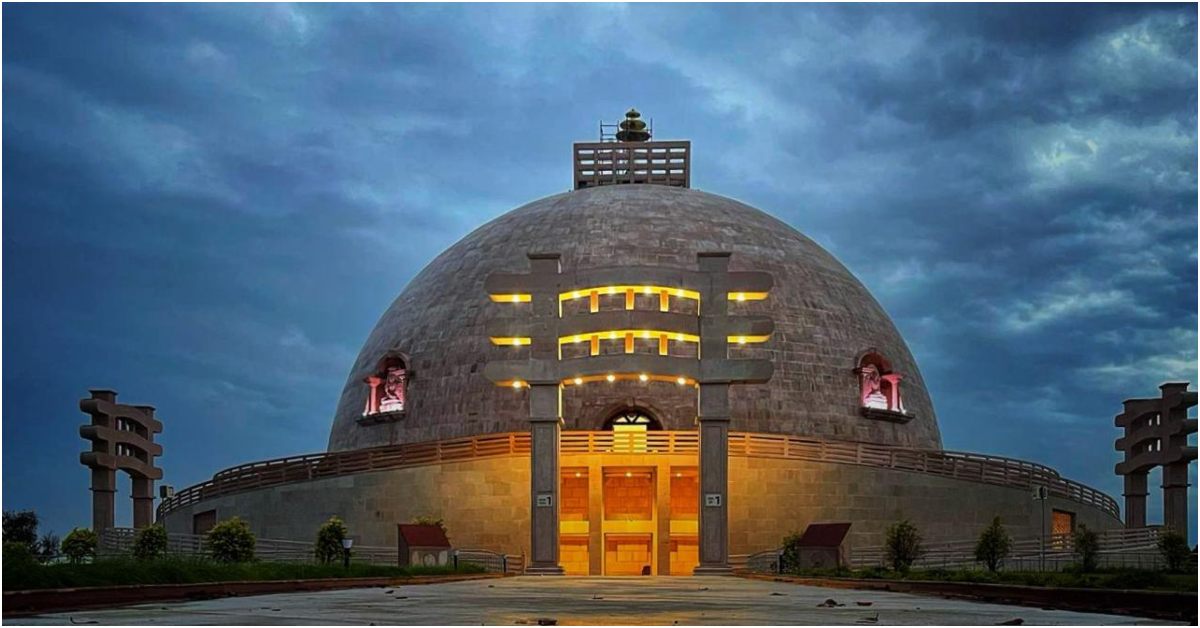
The memorial stupa, located near the sacred Pushkarni pond and the ancient mud site, was inaugurated on July 29, 2025. Built entirely of stone, it combines elements of traditional Buddhist architecture with modern engineering techniques.
Designed in keeping with classical Buddhist architectural principles, the stupa features four ceremonial gateways, a parapet, a circumambulatory path and statues of the Buddha on all four sides. Ramps with railings provide access around the structure.
The monument rises to a height of 35 metres, with an internal diameter of 37.8 metres and an external diameter of 49.8 metres. Officials said 42,373 sandstone blocks were used in its construction.
Pink sandstone was sourced from the Vanshi Paharpur quarry in Rajasthan and assembled using a tongue-and-groove technique, a method intended to enhance structural stability.
Authorities said the museum and memorial stupa have already emerged as a major attraction, drawing significant footfall and strengthening the site’s position as a centre for Buddhist heritage tourism.